
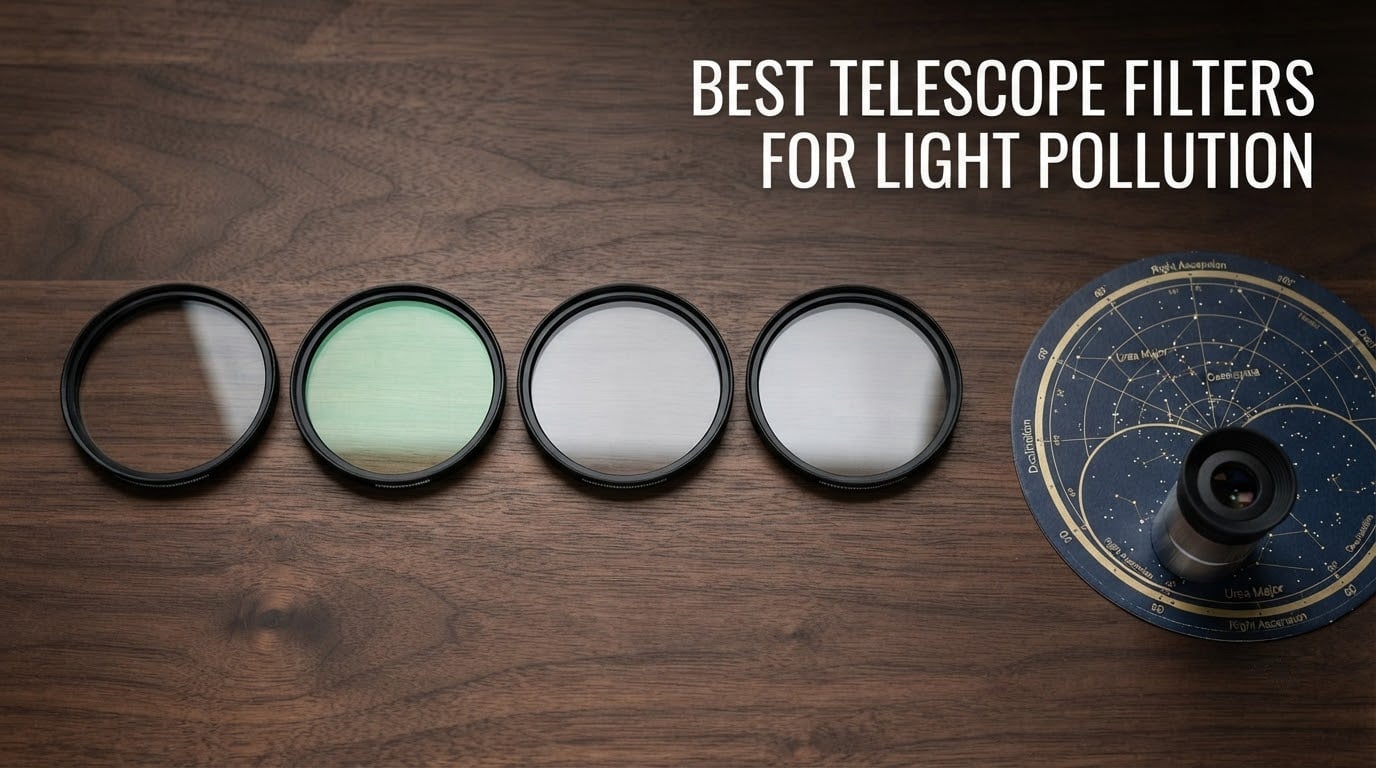
A light pollution filter is a glass filter that screws into a 1.25 inch or 2 inch barrel and blocks the narrow wavelengths emitted by streetlights, while passing the emission-line wavelengths of nebulae. That contrast between the two is the whole idea: a bright suburban sky drowns faint detail, and a filter raises the signal-to-noise ratio so emission nebulae, planetary nebulae and supernova remnants become visible from a backyard or balcony.
Updated for October 2026, we compared 10 telescope filters built for light-polluted skies, from broadband UHC designs that work in the eyepiece to 7nm dual-band filters built purely for imaging. We looked hard at bandpass width, transmission figures, thread size and the real complaints owners report after months of use, not just the spec sheet.
One warning before the list, because it is the single most expensive mistake in this category. A UHC or O-III filter is a visual filter, and a CLS filter is mostly a visual filter. None of them will rescue a broadband galaxy image, and most of them make life harder for a photographer shooting reflection nebulae or star clusters. Pick the filter that matches your target type and your instrument, not the one with the longest feature list.
That last point is why the picks below are split by job. Observers on a Bortle 6 to Bortle 8 sky want a UHC or O-III filter in the eyepiece. Photographers with a colour astronomy camera want a CLS, L-Pro or dual-band filter. Spending on the wrong family is the most common way people waste money here, and forum threads about filter choice repeat that mistake constantly.
Table of Contents
Top 3 Telescope Filters for Light Pollution in 2026
Our three headline picks cover the three realistic use cases: a visual filter, a value imaging filter and a premium narrowband filter. The reasoning behind each badge runs through the individual reviews below.

SVBONY 1.25 inch UHC Filter
- Blocks artificial light wavelengths
- Boosts emission nebula contrast
- Standard 1.25 inch thread
- Multi-coated glass in aluminum frame

SVBONY SV220 2 inch Dual-Band
- 7nm H-alpha and O-III bands
- Over 94% peak transmission
- M48 thread for 2 inch imaging
- Works under moonlight

Optolong L-eXtreme 7nm 2 inch
- 7nm H-alpha and O-III passband
- Single-filter colour imaging
- Built for bright and moonlit skies
- 2 inch multi-coated cell
All 10 Telescope Filters Compared in 2026
Here is the full lineup in one place, with each filter’s job and the two or three specifications that actually separate one from another. Visual filters sit in 1.25 inch barrels; imaging filters are 2 inch, usually M48 threaded, and often need a step-up ring to reach a camera thread.
| Product | Specifications | Action |
|---|---|---|
| SVBONY 1.25 inch UHC Telescope Filter |
|
Check Latest Price |
 Astromania 1.25 inch UHC Telescope Filter Astromania 1.25 inch UHC Telescope Filter |
|
Check Latest Price |
 Astromania 1.25 inch O-III Narrowband Filter Astromania 1.25 inch O-III Narrowband Filter |
|
Check Latest Price |
 Celestron Oxygen III 1.25 inch Narrowband Filter Celestron Oxygen III 1.25 inch Narrowband Filter |
|
Check Latest Price |
 SVBONY CLS 1.25 inch Light Pollution Filter SVBONY CLS 1.25 inch Light Pollution Filter |
|
Check Latest Price |
| SVBONY SV220 2 inch 7nm Dual-Band Filter |
|
Check Latest Price |
 Optolong L-Enhance 2 inch Dual Narrowband Filter Optolong L-Enhance 2 inch Dual Narrowband Filter |
|
Check Latest Price |
 Optolong L-Pro 2 inch Light Pollution Filter Optolong L-Pro 2 inch Light Pollution Filter |
|
Check Latest Price |
| Optolong L-eXtreme 7nm Dual Narrowband 2 inch |
|
Check Latest Price |
 Astromania 2 inch Hydrogen-alpha 12nm Narrowband Filter Astromania 2 inch Hydrogen-alpha 12nm Narrowband Filter |
|
Check Latest Price |
Quick verdicts, one line each. If you only read one line, read these.
Visual, suburban or city sky: the SVBONY 1.25 inch UHC filter is the safest first buy, with 609 ratings backing it.
Visual, budget entry: the Astromania 1.25 inch UHC filter blocks sodium and mercury light and is inspected before it ships.
Visual, oxygen-line targets: the Astromania O-III filter passes the 496nm and 501nm lines at roughly 95% transmission.
Visual, with warranty backing: the Celestron O-III filter carries a two-year limited warranty and StarBright XLT coating.
Imaging on an unmodified DSLR: the SVBONY CLS filter passes the main nebula lines and blocks sodium and mercury emission.
Imaging on a colour CMOS camera: the SVBONY SV220 is the value pick, with 7nm bands and over 94% peak transmission.
Imaging on a fast refractor: the Optolong L-Enhance bandpass is wide enough to absorb the blue shift on fast optics.
Imaging across target types: the Optolong L-Pro keeps more natural star colour than a dual narrowband filter.
Imaging, maximum cleanliness: the Optolong L-eXtreme holds a flawless 5.0 average from 52 ratings.
Imaging on a mono camera: the Astromania 2 inch H-alpha filter gave one reviewer a measured 9.1nm FWHM band at 85% peak transmission.
1. SVBONY 1.25 inch UHC Telescope Filter – The All-Round Visual Pick
SVBONY Telescope Filter, 1.25″ UHC Filter Improve Contrast for Telescope
1.25 inch thread
Multi-coated glass in aluminum frame
Suits visual and imaging
Pros
- Consistently boosts emission nebula contrast and darkens the sky background
- Large owner base with hundreds of reports of targets that were invisible unfiltered
- Standard 1.25 inch thread fits virtually all eyepieces
- Optical glass in an aluminum frame with multi-coating
Cons
- Broadband passband is less effective against modern LED street lighting
- Visual gain varies with aperture and target
- Filters out infrared light that some CMOS cameras pick up as glow
This is the filter we keep coming back to, and the reason is dull but persuasive: it has 609 ratings averaging 4.6 stars, with 73% of owners handing over five stars. That is a much larger evidence base than anything else in this roundup, and the reviews describe a consistent result rather than a lucky streak.
Owners report that the Veil, the Lagoon and Omega go from invisible to at least detectable under suburban and urban skies once the filter goes in, usually alongside averted vision. Several describe the first time a dark sky background appeared behind a nebula as the moment the filter justified its place. The optical glass and multi-coating get called out for clean, sharp views, and the fit is reported as straightforward across standard 1.25 inch accessories.
The honest limitation is that this is a broadband design, so it works by subtracting the most offensive artificial light rather than by isolating a nebula line. Owners on LED-dominated streets report a smaller improvement than those under sodium or mercury vapour. The visual benefit also depends on aperture and target, and a handful of units have shown a colour cast that needed replacing.
One more quirk worth knowing: the filter passes infrared, which some users like for guide-scope work and others dislike because CMOS sensors pick up background glow from that part of the spectrum. If your camera is very IR-sensitive, that is an argument for a different filter on the imaging train.
Is this the right filter if I am just starting out?
Yes. It has the largest owner base in the group, the standard 1.25 inch thread works with almost any eyepiece, and it does something useful on the widest range of targets of any visual filter here. You can buy it before you know whether visual observing is for you and it will not have been a wasted purchase.
The comparison that comes up constantly in forum threads is the jump from a generic UHC design to a premium band. Owners of this filter frequently compare it favourably with filters costing several times as much, which is exactly the value argument that matters when you are not yet sure how often you will use it.
When will this filter disappoint me?
If your sky is lit by modern LED street lamps, expect the gain to be real but smaller than the marketing implies. The design targets the older sodium and mercury lines more effectively than broadband white LED light, and no amount of enthusiasm in a review changes that physics.
It will also disappoint if you put it in front of a galaxy or a reflection nebula and expect the background to black out. It is a nebula filter, and the community consensus is consistent on that point.
2. Astromania 1.25 inch UHC Telescope Filter – Best Entry for Beginners
Astromania Telescope Filter 1.25 Inch UHC Filter Improve Contrast Nebula
1.25 inch thread
Optical glass in aluminum frame
Moisture resistant cell
Pros
- Reveals nebula structure that general broadband filters leave hidden
- Blocks mercury and sodium-vapour street lighting
- Individually inspected and marked with O-III and H-beta transmittance
- Thread quality and fit reported as smooth and secure
Cons
- Noticeable overall reduction in brightness when used visually
- Contrast gain more modest than some competing UHC designs
- Limited gains on star clusters and galaxies
This is the second 1.25 inch UHC option that earns a place here, and the reason is the inspection step. Each unit is individually inspected and inscribed with its O-III and H-beta transmittance percentages, which is a small thing that tells you something real about how the seller handles quality.
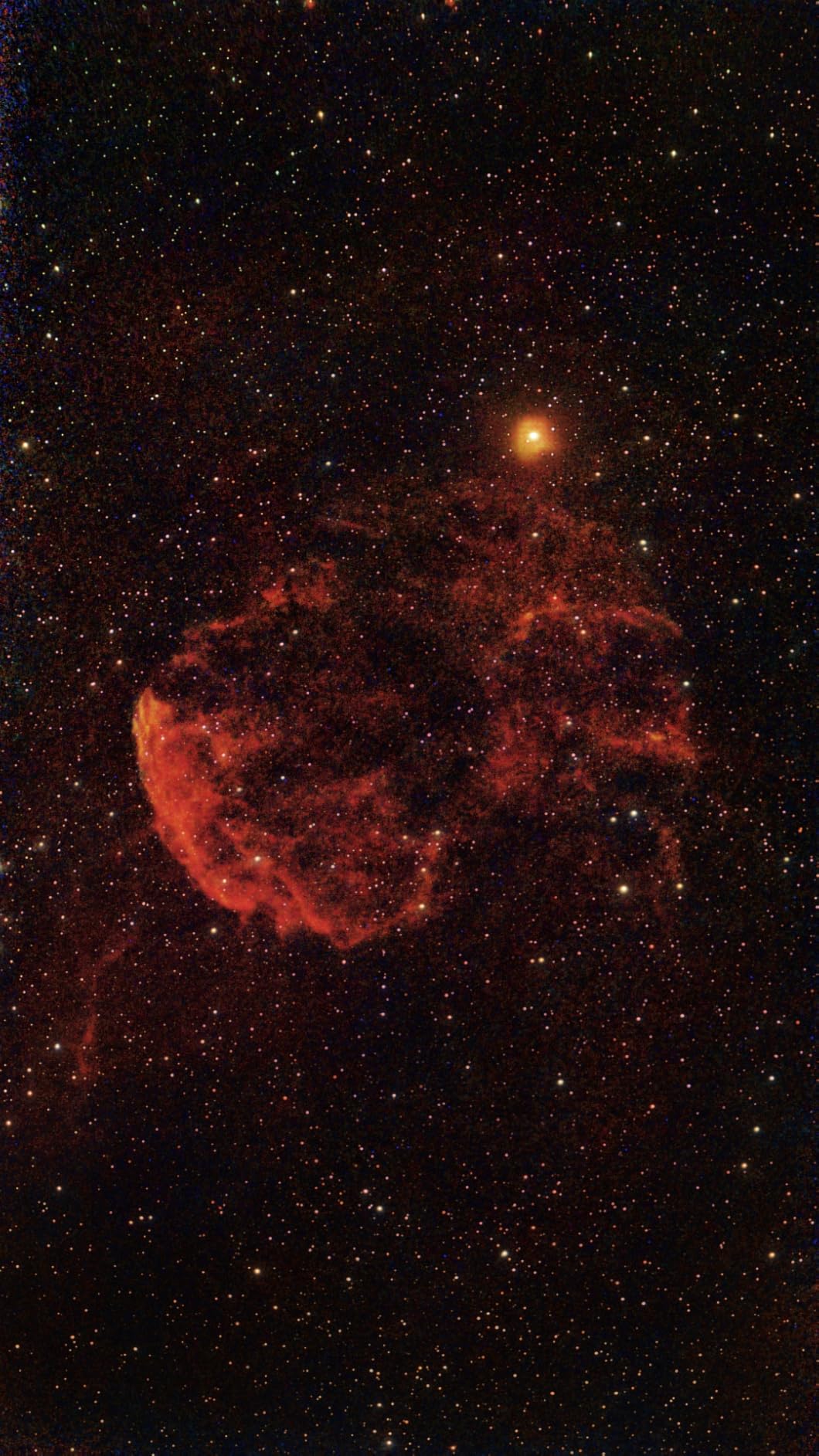
Owners in heavily light-polluted areas report the filter turning barely-visible targets such as the Veil, the Lagoon, the Trifid and the Eagle into identifiable objects, and several describe finally seeing specific structure such as the dark lane in the Lagoon. Imaging users pair it with smart telescopes and 2 inch adapters and report solid results on oxygen-line targets like the Jellyfish.
At 8.53 grams the filter is light enough that it will not unbalance a small telescope, and the housing is listed as moisture resistant, which matters on a long night. The thread quality comes up repeatedly as smooth and secure, with no reports of it binding or cross-threading.
What you give up against the SVBONY option is a little brightness and a little contrast. Owners describe an overall light loss that matters more on a small aperture than a large one, and a few report that the contrast gain did not match what they expected from a higher-priced design. It is not a weak filter, just a modest one.
Should I buy this instead of a more expensive UHC filter?
If your main light pollution is sodium and mercury vapour, it does the job. The people who upgrade later are usually chasing more contrast, not correcting a fault, so the sensible order is to start here, learn what a filter actually does for your sky, and only then decide the step up is worth it.
It is also the one to pick if you use a small aperture instrument. A brighter-filter design punishes small scopes harder, and this one keeps enough light to be usable on a grab-and-go telescope.
Is it useful for anything other than emission nebulae?
Limited, and the reviews say so plainly. Star clusters and galaxies are the two targets owners mention as underwhelming, which is the same constraint every broadband visual filter shares. It also works with smart telescopes and astro cameras through adapters, which broadens its use beyond an evening at the eyepiece.
3. Astromania 1.25 inch O-III Narrowband Filter – Best for Planetary Nebulae
Astromania O-III Filter 1.25inch Telescope Filter Narrowband Nebula Filters
Passes 496nm and 501nm at about 95%
Dichroic coating
1.25 inch thread
Pros
- Passes the doubly-ionized oxygen lines at about 95% transmission
- Anti-reflection coating suppresses glare and ghosting
- Individually inspected and inscribed with transmittance
- Improves contrast at light-polluted and dark sky sites
Cons
- Passes very little infrared which can cause star halos on some setups
- Green-shifted one-shot colour images needing roughly double the exposure
- Little benefit on hydrogen-dominated targets such as M42
An O-III filter is not a light pollution filter in the general sense. It passes the doubly-ionized oxygen lines between 496nm and 501nm at roughly 95% transmission and blocks virtually everything else, which makes it the most surgical instrument in this roundup and the one that changes your view the most dramatically on the right target.
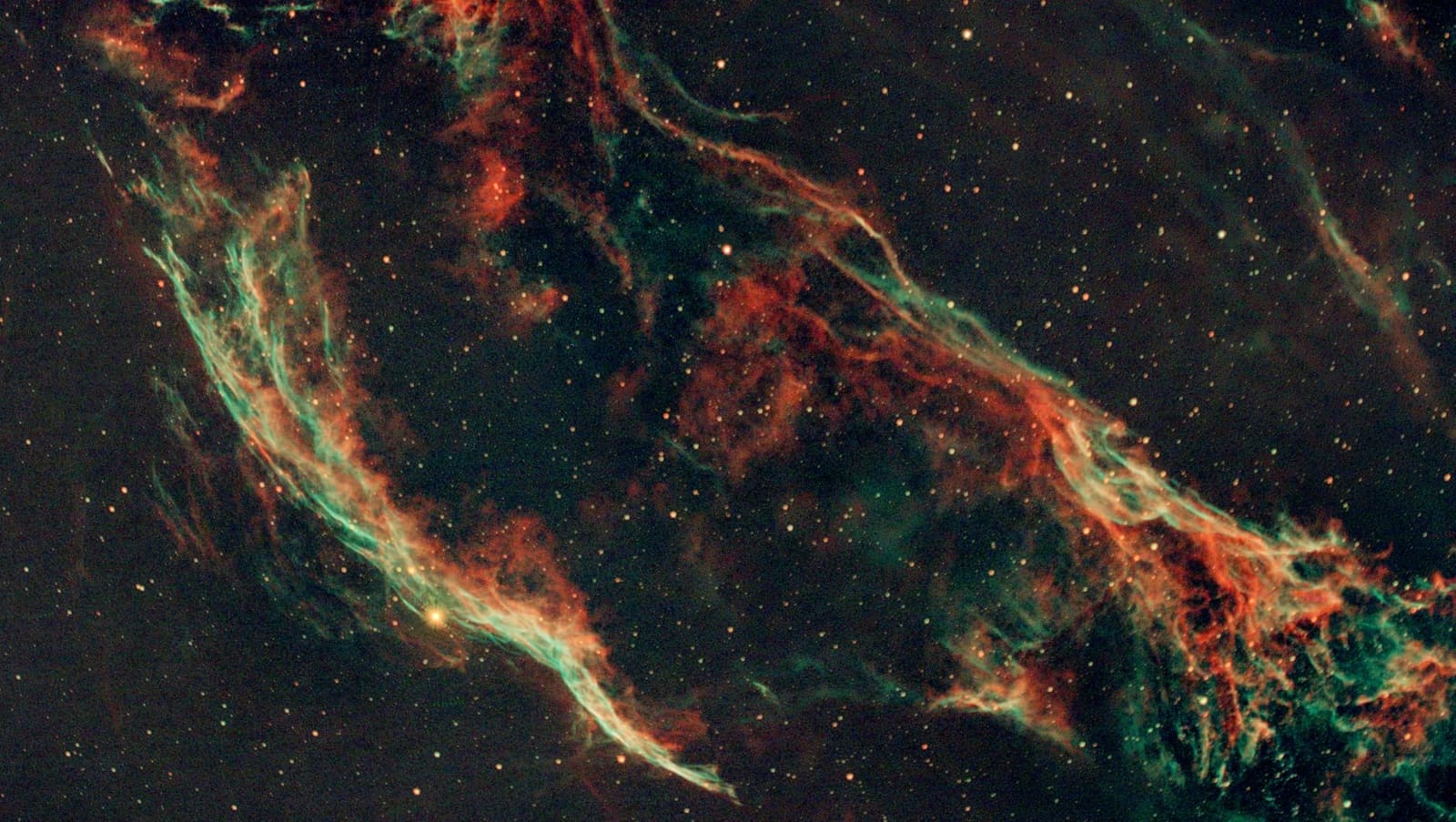
Long-form owner tests compare it directly against UHC filters and report that it wins decisively on oxygen-line targets like the Veil, the Cat’s Eye and the Dumbbell, while UHC filters remain better on hydrogen-rich objects. One reviewer ran spectroscopic testing and confirmed roughly 95% peak transmission in the O-III band, which matches the specification.
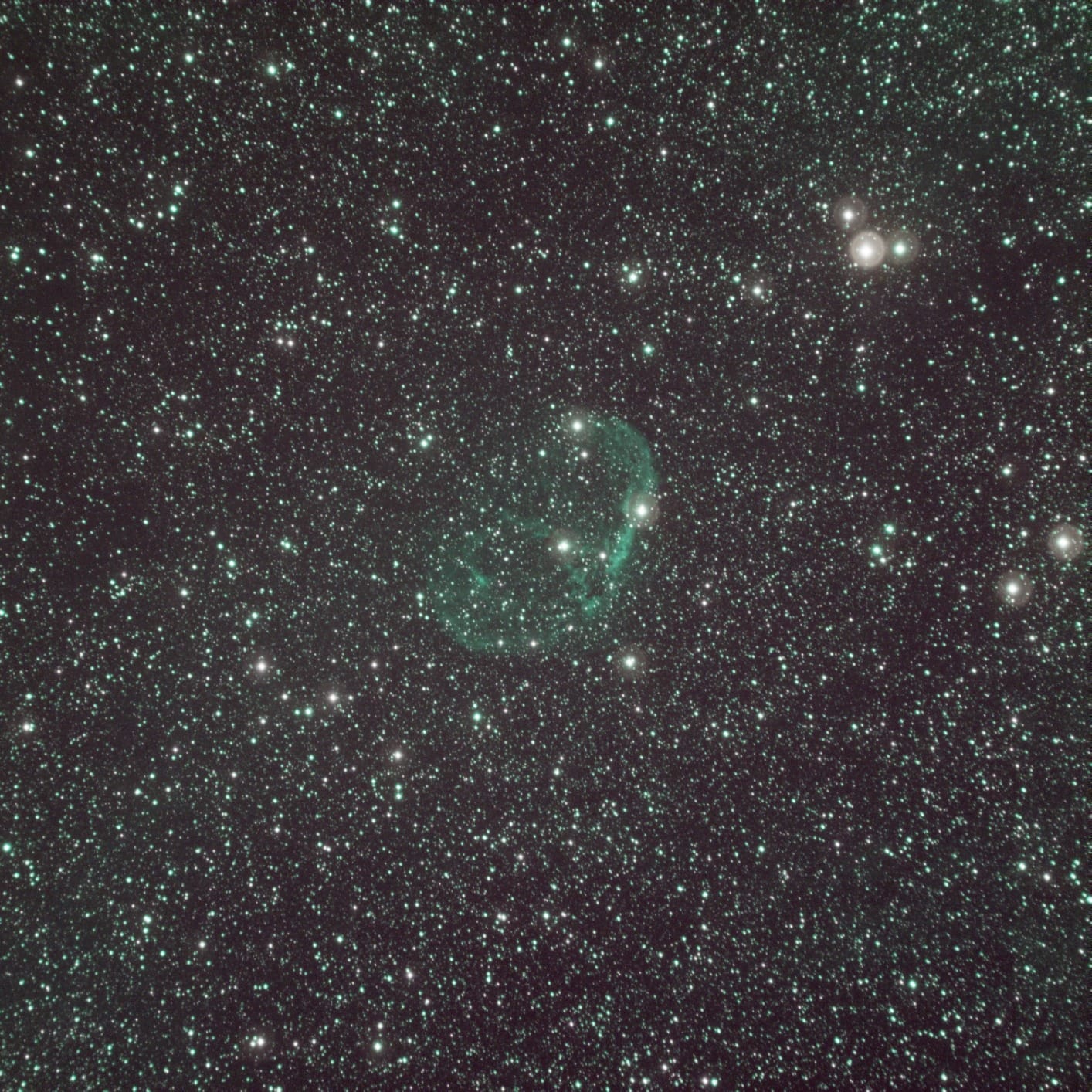
The catch for photographers is real and consistent. A single narrowband produces a heavily green-shifted one-shot colour image that needs roughly double the exposure time, and because it passes very little infrared, some camera combinations show pronounced halos around stars. The spectral plot covers only the visible range, so infrared behaviour is not documented by the manufacturer.
For visual work that trade is worth making every time. Reviewers report the filter improving contrast at dark sites as well as light-polluted ones, which is unusual in this category and means it is not redundant if you travel.
Which targets should I point this at?
Oxygen-line targets, specifically: planetary nebulae, supernova remnants and the Veil complex. If your list is mostly those, this filter will outperform anything broadband in the roundup. Owners report the best results on the Veil, the Cat’s Eye and the Dumbbell in particular.
Do not bother with it on M42 and similar hydrogen-dominated objects. Owners consistently report little benefit there, because the light you want is in a band the filter deliberately removes.
Should a mono imager buy this filter?
Only after checking your infrared-cut requirements. Mono imagers get the cleanest data from a filter like this, but the narrow infrared leakage that is a mild annoyance on a colour camera can dominate a mono frame from a typical CMOS sensor. The reviews flag this as a setup-specific problem rather than a fault in the filter.
4. Celestron Oxygen III Narrowband Filter – Best Warranty-Backed Visual Filter
Celestron Oxygen III Narrowband Telescope Specialized Filter – 1.25″
Isolates 496nm and 501nm oxygen lines
StarBright XLT coating
1.25 inch thread
Pros
- Isolates the 496nm and 501nm oxygen lines and darkens the sky background
- Backed by a two-year limited warranty and established manufacturer support
- Owners locate the Owl
- Crab
- Monkey Head and Casper nebulae only with the filter
- StarBright XLT coating keeps the view clean
Cons
- Blocks background stars almost completely so targets must be centred first
- Needs a reasonably large aperture to deliver real gains
- Supplied plastic retail packaging widely criticised as impractical
This is the oldest filter in the roundup, and the two-year limited warranty is the reason it is here. Warranty length in this category correlates with how long a manufacturer expects the coating to last, and few of the cheaper options offer anything at all.
Visual observers report that it converts targets such as the Veil, the Helix, the Ring and the Owl from invisible or marginal into clearly structured objects, particularly on 8-inch-class apertures. The black background and slight blue shift of bright nebulae is described as striking. Several owners also use it as a mild lunar and planetary contrast aid.
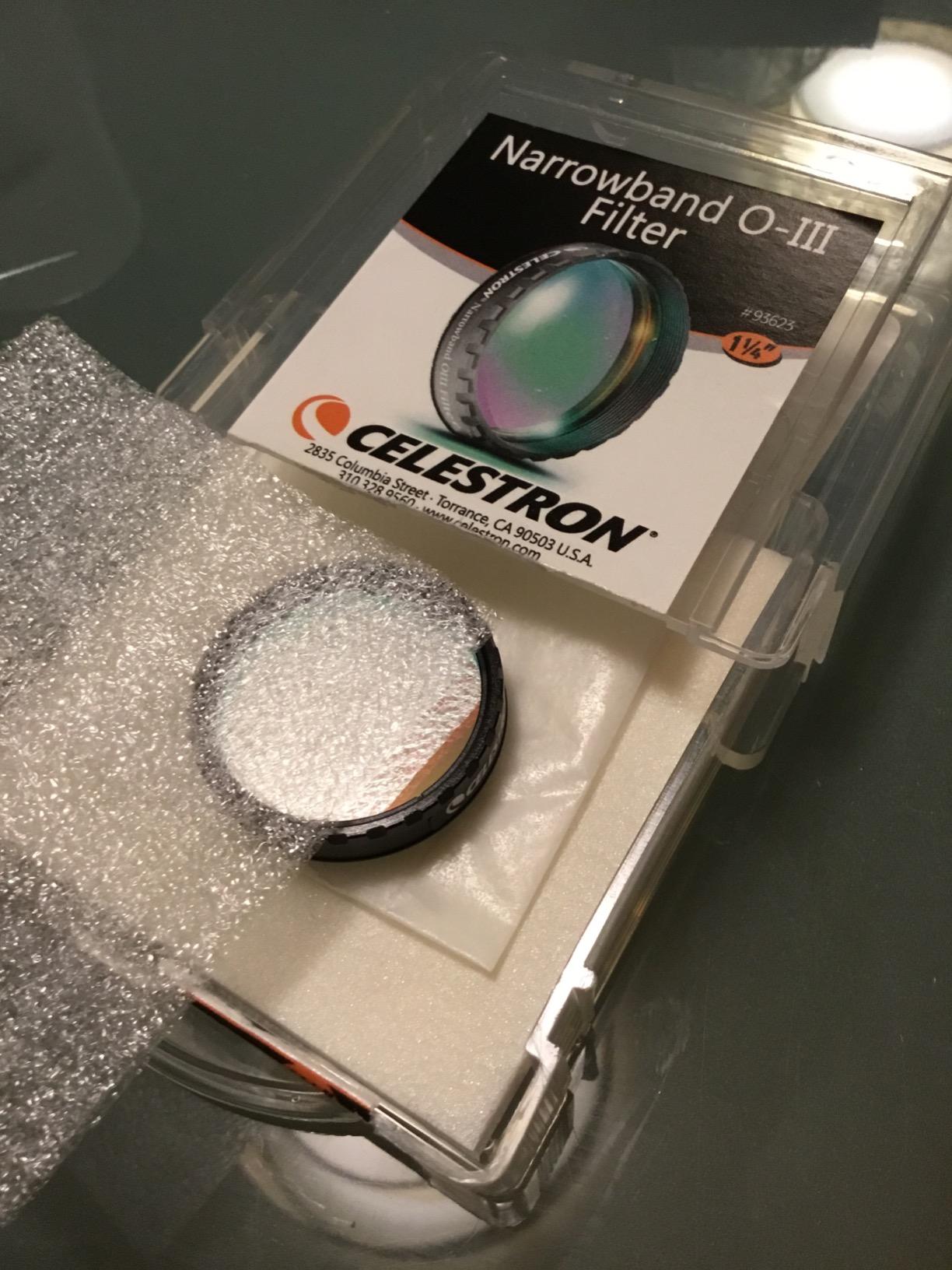
There is a practical problem that catches people out. The filter blocks background stars almost completely, so if the target is not already centred in the field, threading it in means hunting for the object blind. Centre the target first, then add the filter. This is a fixed habit worth building rather than a defect.
A second limitation is aperture. Reviewers repeatedly note that below about 6 inches the light loss dominates and the improvement is small. The plastic retail packaging is the most commonly criticised element in the reviews, with several describing the factory case as unusable, so plan on buying a proper filter case.
Does aperture decide whether this filter is worth it?
Very much so. On an 8-inch-class scope the owners describe a transformation; below 6 inches they describe a marginal change. Check your aperture against that threshold before buying. A large Dobsonian owner gets far more from this filter than someone with a small tabletop refractor.
The good news is the result is not confined to urban skies. The same owners report gains at darker sites, so it stays useful if you travel to darker ground.
Is this an all-purpose light pollution filter?
No, and the reviews are explicit that it is a narrowband target-specific filter rather than a general light pollution filter. It blocks nearly the whole spectrum apart from two oxygen lines, which is a spectacular trade for the right object and a disappointing one for anything else. Treat it as a second filter, not a first one.
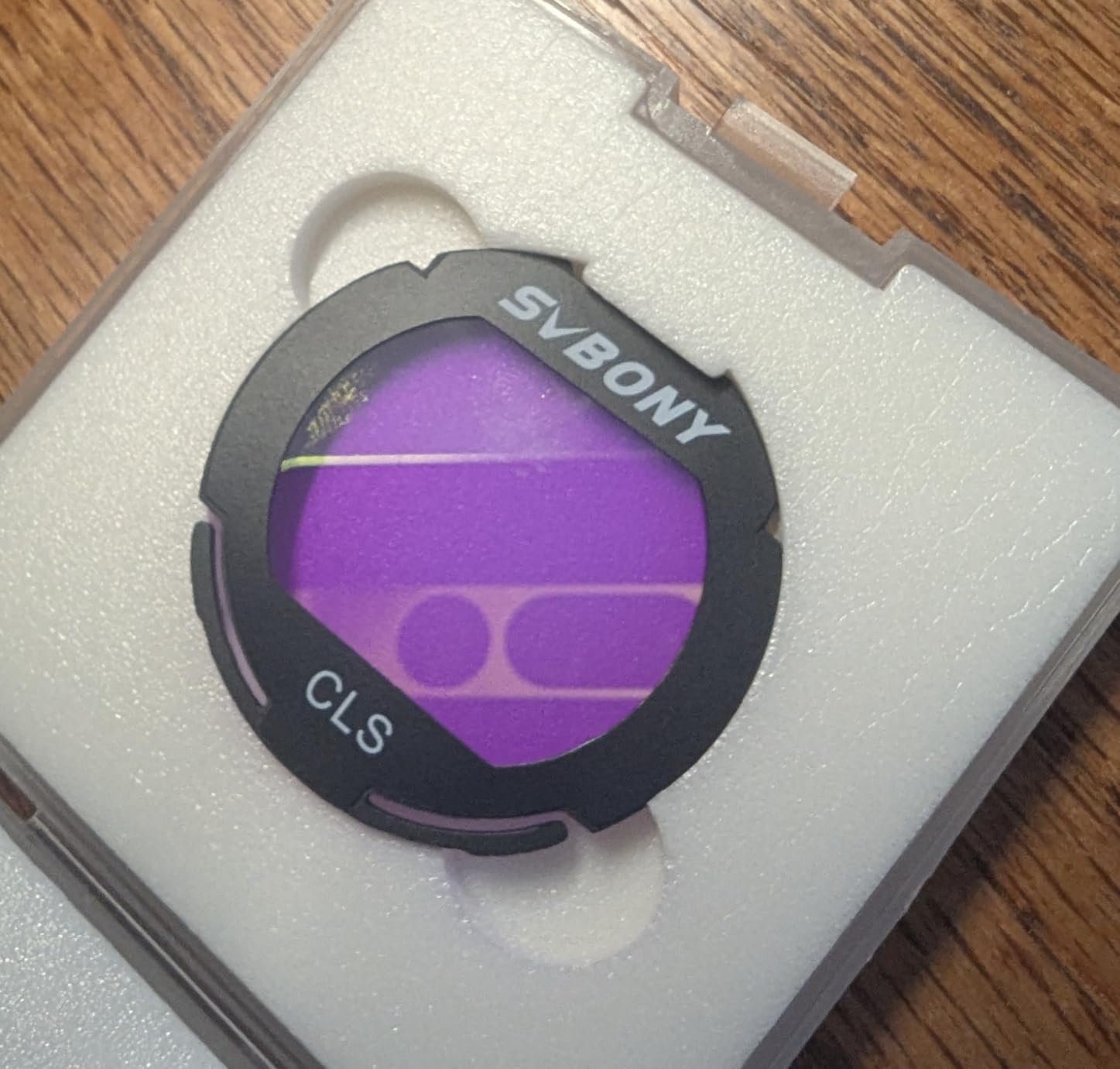
5. SVBONY CLS 1.25 inch Light Pollution Filter – Best for DSLR Astrophotography
SVBONY Telescope Filters, CLS 1.25″, Light Pollution Broadband Filter
1.25 inch thread for CCD and unmodified DSLR
Passes Ha, O-III, SII and H-beta
Pros
- Passes about 90% of the main nebula emission lines
- Suppresses roughly 99.9% of off-band light at sodium and mercury lines
- Keeps natural colour without the cast of narrowband filters
- Ion-assisted deposition coating resists scratching
Cons
- Improvement is real but incremental for some visual users
- Less effective against modern LED street lamps
- Off-band rejection less aggressive than dedicated narrowband filters
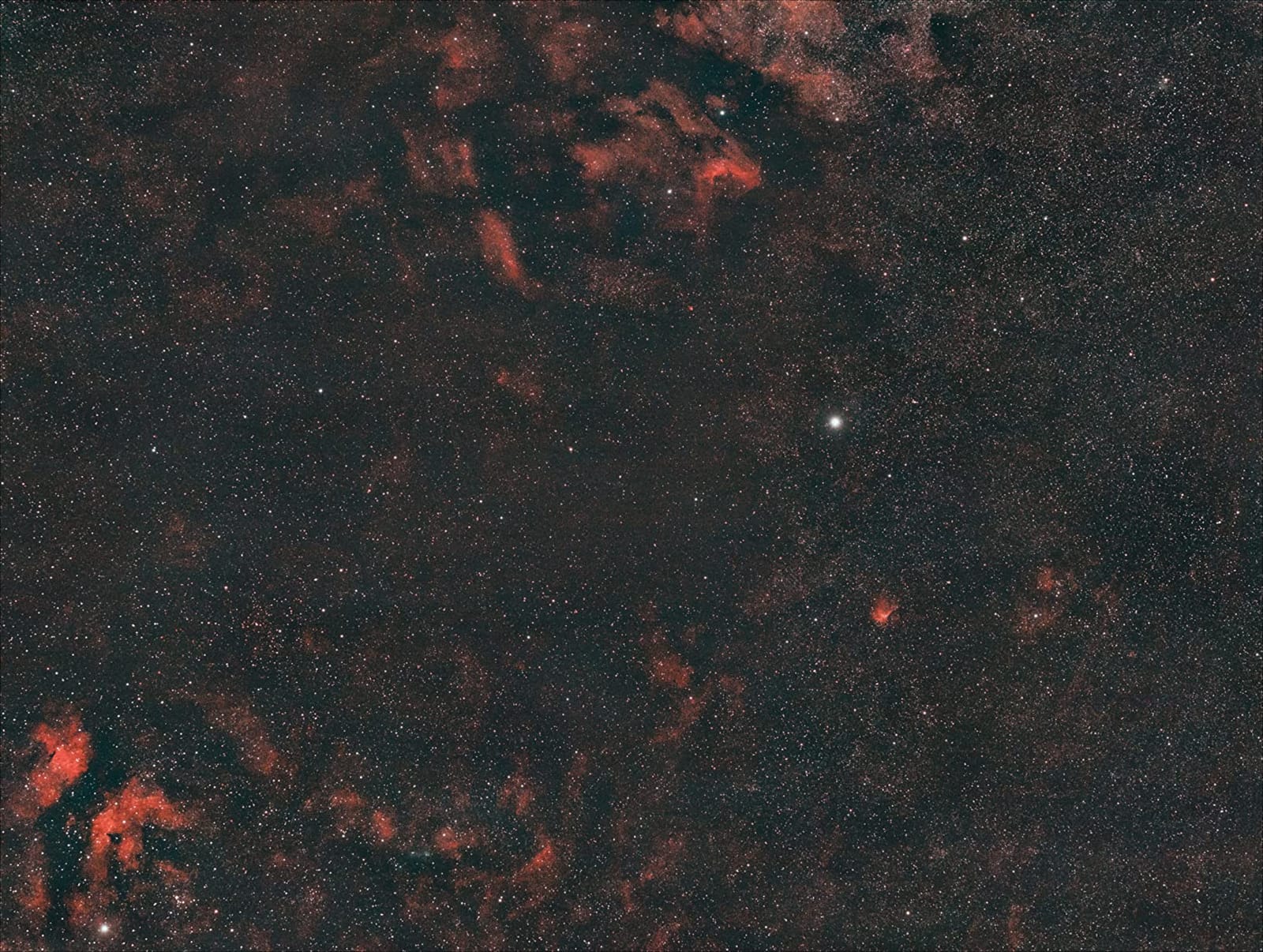
CLS filters have a bad reputation in this hobby, and part of it is deserved: they get bought by photographers expecting them to remove light pollution, then used in an eyepiece. Judged as a camera filter for a colour CCD or an unmodified DSLR, this one does what it claims. It passes about 90% of the main nebula emission lines and holds off-band transmission to 0.1% at the sodium 589nm and mercury 435nm and 578nm lines.
Owners treat it as a city-shooting workhorse for one-shot colour work, with several reviews describing it turning a washed-out urban sky into usable data while preserving natural colour better than a narrowband alternative. Independent comparisons cited by owners place its optical performance close to filters costing several times more.
The coating detail matters more than it sounds. Ion-assisted deposition resists scratching, and a planetary rotation system during deposition keeps the coating homogeneous, which is why the central wavelength stays stable across temperature changes. That matters on a long night when the temperature drops and a coating that shifts mid-session ruins your calibration frames.
The small 1.25 inch cell is an advantage too. It is easy to position close to the sensor, where it sits in front of less of the light cone. The honest caveat is that off-band rejection is not as aggressive as a dedicated narrowband filter, so broadband gradients can remain in your data and still need correcting in post.
Is a CLS filter worth it for an unmodified DSLR?
For nebulae under sodium and mercury lighting, yes. That combination is exactly what the transmission figures describe. For galaxies, clusters and comets the improvement is much smaller, and the people who regret CLS purchases are almost always the ones shooting broadband targets or under LED lighting.
Visual users are split. Several report a clear contrast boost on the Orion Nebula from a Bortle 9 sky, while others judge the effect underwhelming. If visual work is your main interest, a UHC filter in the roundup is the better buy for the same money class.
Will it handle my LED street lights?
Less well than the older sodium and mercury sources it was designed around, and this is the recurring caveat in the reviews. The filter does real work regardless, but a photographer who knows they are under LED lighting should be looking at a dual-band or multi-bandpass filter instead, which is why the two options below exist.
6. SVBONY SV220 2 inch 7nm Dual-Band Filter – Best Value for Imaging
SVBONY SV220 Telescope Filter, 2″ 7nm Dual-Band Nebula Filter for Deep Sky
7nm H-alpha and O-III bands
Over 94% peak transmission
M48x0.75 thread, 2 inch
Pros
- Compares favourably against dual narrowband filters from premium brands
- Substantially reduces star bloat and overexposure
- Blocks enough moonlight to image nebulae through a full moon
- 2 inch size avoids vignetting on APS-C and larger sensors
Cons
- Passes only H-alpha and O-III so galaxies and clusters are out
- Can produce halos around bright stars
- Needs fast optics to deliver real benefit
This is the pick that undercuts the category’s usual assumption about price. Multiple owners post matched side-by-side comparisons against well-known premium dual-band filters and report indistinguishable stacked output, and one review contrasts three and a half hours of data from this filter against 10.5 hours with a competing dual-band filter on an identical rig and processing chain.
The specifications back up the owner reports. It passes O-III at 500.7nm and H-alpha at 656.3nm in 7nm bands with over 94% peak transmission and strong out-of-band rejection, in a waterproof optical glass cell with an anodized aluminum frame and an M48x0.75 thread. With 120 ratings averaging 4.8 stars and 83% at five stars, the satisfaction level is high.
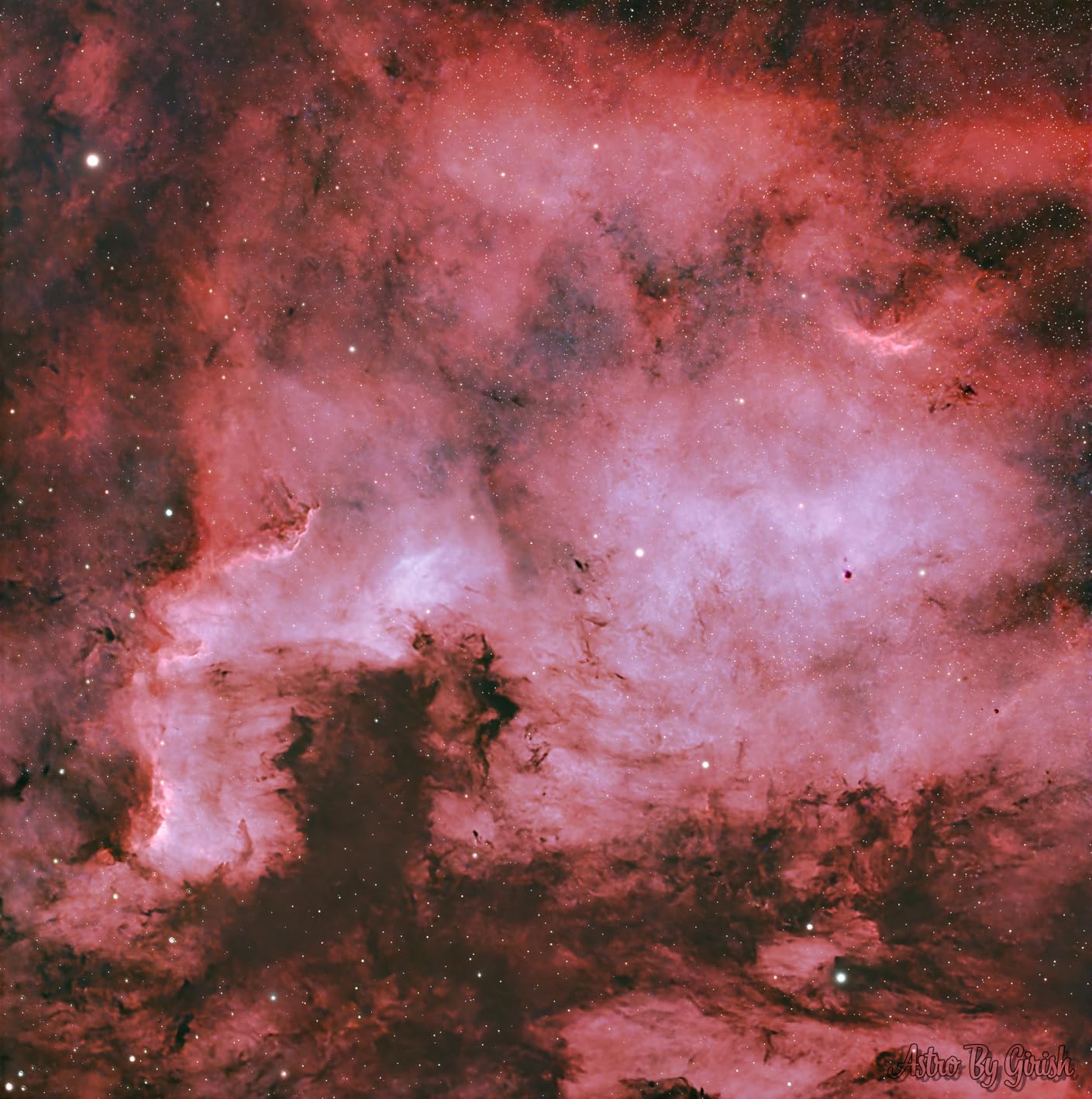
What it does well photographers care about: suppressed star bloat, far less post-processing effort, and enough moonlight suppression to image emission nebulae through a full moon from a city. The 2 inch size avoids vignetting on APS-C and larger one-shot colour cameras, which removes a common failure mode in cheaper filters.
It comes with a spectrum diagram in the box, which is a small touch that lets you check the delivered curve rather than trusting a description. The weight of 30 g and a 50 g listed net figure vary by source, so treat the packaging as the authoritative number.
Is this the right filter for a one-shot colour camera?
Yes, that is exactly what it is built for. The supplied instructions state compatibility with colour CMOS, CCD and digital cameras, and reviewers report clean colour results from a single filter rather than a multi-band set. On an APS-C or full-frame sensor the 2 inch aperture avoids the corner vignetting that 1.25 inch imaging filters cause.
Budget the focal ratio carefully. The manufacturer states it cannot be used with smart telescopes or with telescopes slower than f/4, and users report little or no benefit on slower systems. Check your own focal ratio before ordering.
What will this filter refuse to photograph?
Galaxies, reflection nebulae and star clusters. It passes only H-alpha and O-III, so anything lit mainly by broadband starlight comes back as an empty frame. This is the filter to buy when your target list is emission nebulae, not when it is everything.
Occasional minor surface defects do get reported, though reviewers note these are largely removed by flat calibration frames. Star halos around bright stars are the other recurring mention.
7. Optolong L-Enhance 2 inch Dual Narrowband Filter – Best for Fast Refractors
Optolong 2″ L-Enhance Dual Narrowband Light Pollution Filter (H-Alpha and H-Beta/O-III)
Dual narrowband H-alpha and H-beta/O-III
M48x0.75 thread, 2 inch
Multi-layer AR coatings
Pros
- Produces clean high-contrast nebula data from Bortle 5 through Bortle 9
- Bandpass wide enough to tolerate blue shift on fast optics
- Passes enough light on an unmodified DSLR to focus with a Bahtinov mask
- Fits the Vaonis Vespera filter holder once the blank is removed
Cons
- Requires longer individual exposures because a lot of light is blocked
- Narrow passband can mute star colour
- Not suitable for imaging galaxies
Fast optics cause most dual narrowband failures. At f/2 or f/3, the light cone angle shifts the effective position of a narrow band far enough that the emission line can fall outside the passband, and the frame comes back dark. The L-Enhance’s bandpass is wide enough to absorb that shift, which owners identify as the reason it works on their fast refractors when narrower designs do not.
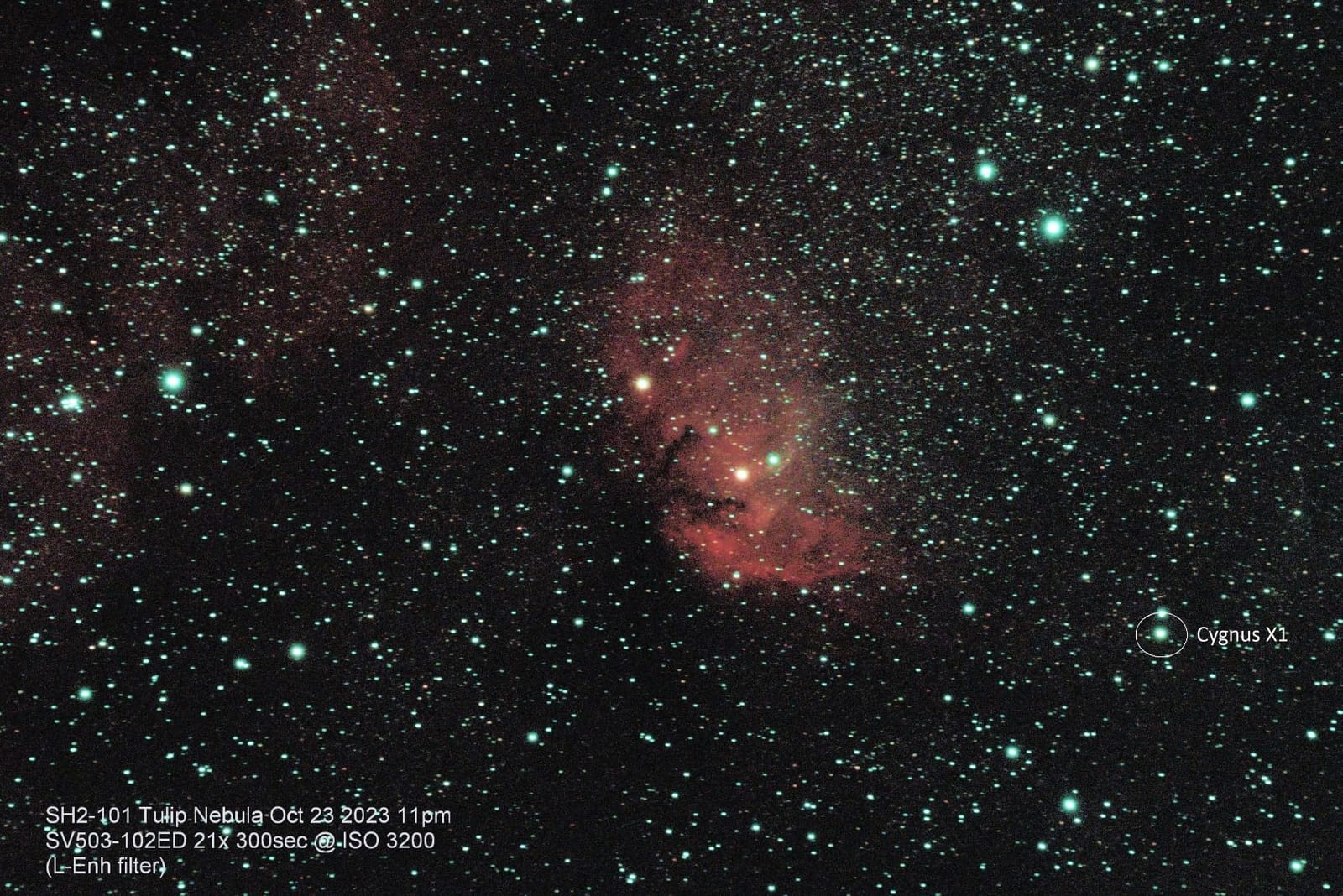
Reviewers call it a lifeline for unmodified DSLRs in suburban and urban skies, reporting that it suppresses gradients and white light well enough to extend exposures on targets that were previously hopeless, NGC 7000 among them. Focus remains achievable with a Bahtinov mask, which would not be true of a much narrower filter.
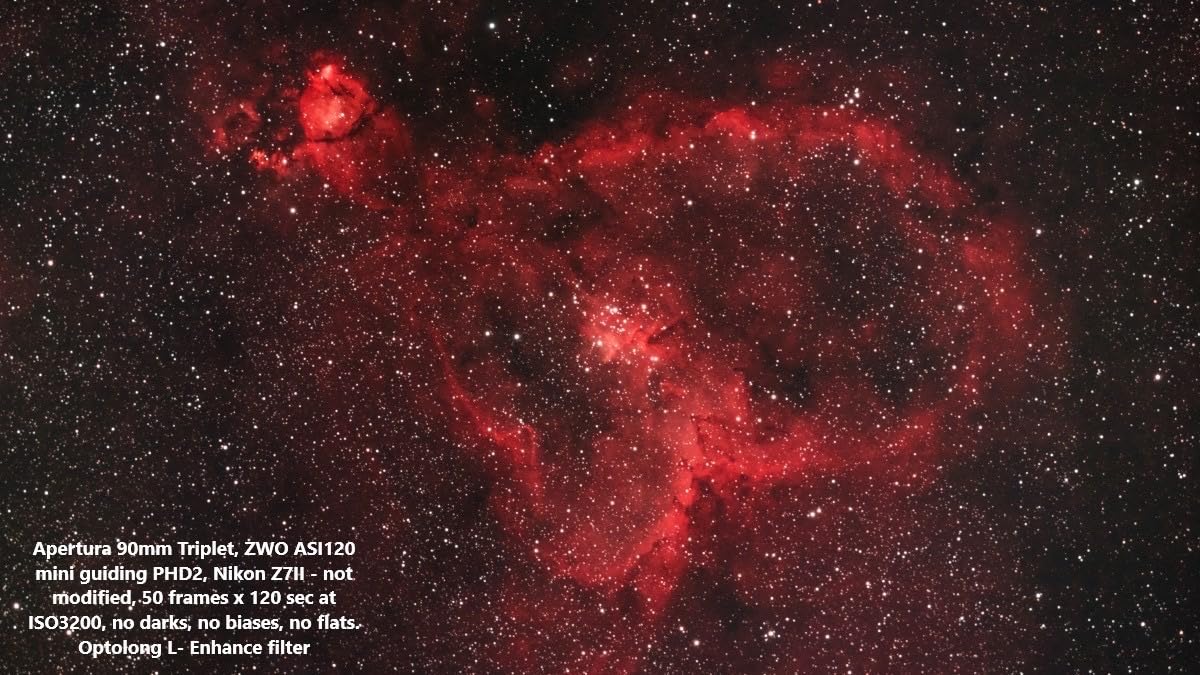
It also drops into the Vaonis Vespera smart telescope filter holder once the plastic blank is removed, a compatibility detail that comes up often enough to be worth knowing. The glass and build quality are consistently praised as premium, and the multi-layer anti-reflective coatings are the reason flare control holds up on bright targets.
Cost is the most-cited drawback, and it is a real one. Owners who buy it anyway generally do so because nothing cheaper handles their specific combination of fast scope, bright sky and one-shot colour camera. Exposure times roughly double relative to a UHC filter, and star colour is muted.
Do I need a filter this capable for a suburban sky?
If you shoot one-shot colour from a fast refractor, yes. That is the specific situation this filter is engineered for, and the reviews are consistent that it recovers data from skies where a UHC or CLS filter would leave you gradient-limited. If you shoot on a slower Newtonian with a mono camera, the cheaper dual-band option in this list does the job.
Buyers report usable results from Bortle 5 suburban skies up to Bortle 9 city centres, which is about as wide a range as any single filter in this roundup covers.
What is the cost of that extra rejection?
Time. A large amount of light is blocked, so individual exposures must be roughly twice as long, and the narrow passband makes star colour preservation harder than with a broadband filter. Plan your session length accordingly, and decide before you start whether colour-accurate stars matter more to your final image than contrast on the nebula.
8. Optolong L-Pro 2 inch Light Pollution Filter – Best All-Round Imaging Filter
Optolong 2″ L-Pro Light Pollution Filter
Multi-bandpass with sharp roll-off
Around 90% transmission at nebula lines
2 inch, 48 mm thread
Pros
- Preserves natural star colour far better than dual narrowband filters
- Roughly 90% transmission at the major nebula emission lines keeps exposures manageable
- Precise sharp roll-off at the principal light-pollutant lines
- CNC-machined cell with black anodised finish minimises reflections
Cons
- Cuts overall colour and visible light giving a slightly tunnel-like star field
- Residual light-pollution gradients still need correcting in post
- Less aggressive than a true dual narrowband filter for faint nebulae
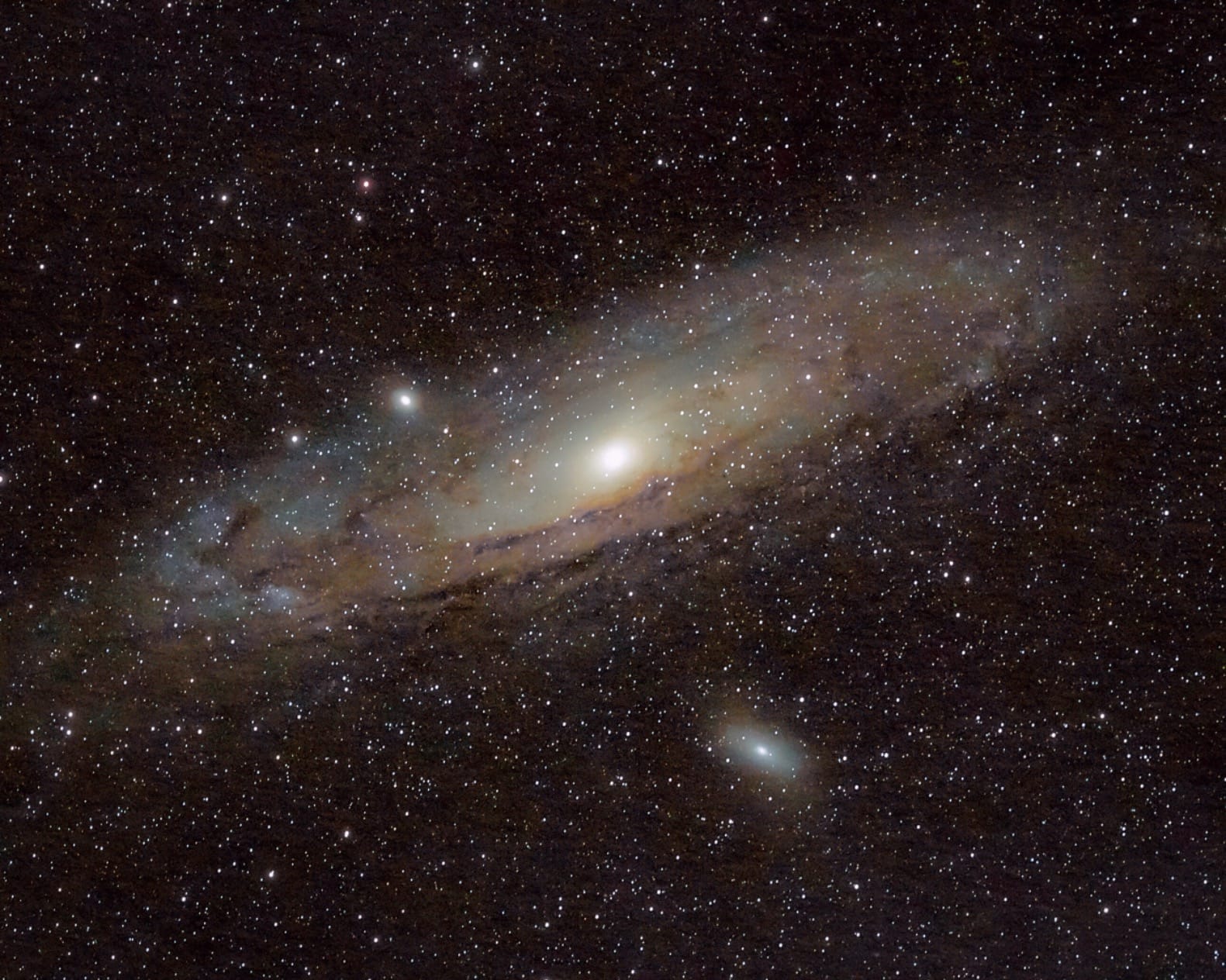
The L-Pro occupies the middle ground, and owners describe it in exactly those terms: a compromise between a broadband filter and a dual narrowband filter. It recovers strong contrast in Bortle 7 to Bortle 9 skies while keeping fairly natural colour, which is why reviewers call it their default for galaxies, clusters and comets as well as some nebulae.
Around 90% transmission at the major nebula emission lines means your exposure times stay manageable, and the roll-off at the light-pollutant lines is precise and sharp rather than gradual. The CNC-machined aerospace grade aluminium cell with a black anodised finish is designed to extinguish internal reflections, which shows up as cleaner flat frames.
Reviewers recommend it primarily for APS-C sized sensors, where the 2 inch aperture and the filter’s behaviour are a good match. Several describe the optical quality as matching what they get from specialist astronomy retailers rather than a general photographic filter house.
The caveats are honest ones. It still removes a lot of colour, and users describe a slightly tunnel-like star field before cropping, plus residual gradients that continue to need correction in post-processing. The faintest emission nebulae are better served by a dual narrowband filter, which is a real limitation if faint targets are your focus.
Should I buy this instead of a dual-band filter?
If your target list is mixed, yes. This is the filter that does not force you to choose between emission nebulae and everything else. It is also the safer first serious imaging filter, because a dual-band purchased too early tends to produce a folder of dark frames for targets it cannot see.
If you have already decided that emission nebulae are the only thing you will ever shoot, go to a dual narrowband filter instead. The faintest targets will not come through this one in a reasonable session length.
How much processing work is left afterwards?
Less than with no filter, more than with a dual-band. Reviewers consistently report that residual light-pollution gradients still require correction, so budget time for gradient removal in your stacking workflow. The saving is that your stars stay closer to natural colour, so colour correction is a smaller job than with a narrowband filter.
9. Optolong L-eXtreme 7nm Dual Narrowband Filter 2 inch – Best for Narrowband Image Quality
Optolong L-Extreme 7nm Dual Narrowband Filter (H-Alpha and O-III) (2″)
7nm H-alpha and O-III dual band
Multi-coated glass in a 2 inch cell
48 mm thread
Pros
- Flawless owner record with 95% five-star ratings and nothing below four stars
- Resolves emission nebulae from Bortle 5 suburban skies and Bortle 8 downtown parks
- Separates cleanly into narrowband channels in PixInsight with mono cameras
- 7nm bandwidth described as the sweet spot
Cons
- Needs a reasonably fast optical system to deliver benefit
- Only suitable for emission nebulae since it passes just two lines
- Reduces light available for star tracking on some mono setups
This has the highest average rating in the roundup at 5.0 stars, with 95% of 52 ratings at five stars and nothing below four. It sits on fewer ratings than the SVBONY filters, and we have weighted that: a longer record is worth more than a slightly higher average. But if owner satisfaction is the metric, this one leads.
Reviewers describe results from a one-shot colour camera on a RedCat 51 in suburban skies, and from a 300mm f/4.9 with an APS-C camera from a Bortle 8 downtown park where few stars were visible to the unaided eye. Mono imagers report the filter separates cleanly into H-alpha and O-III channels in PixInsight.
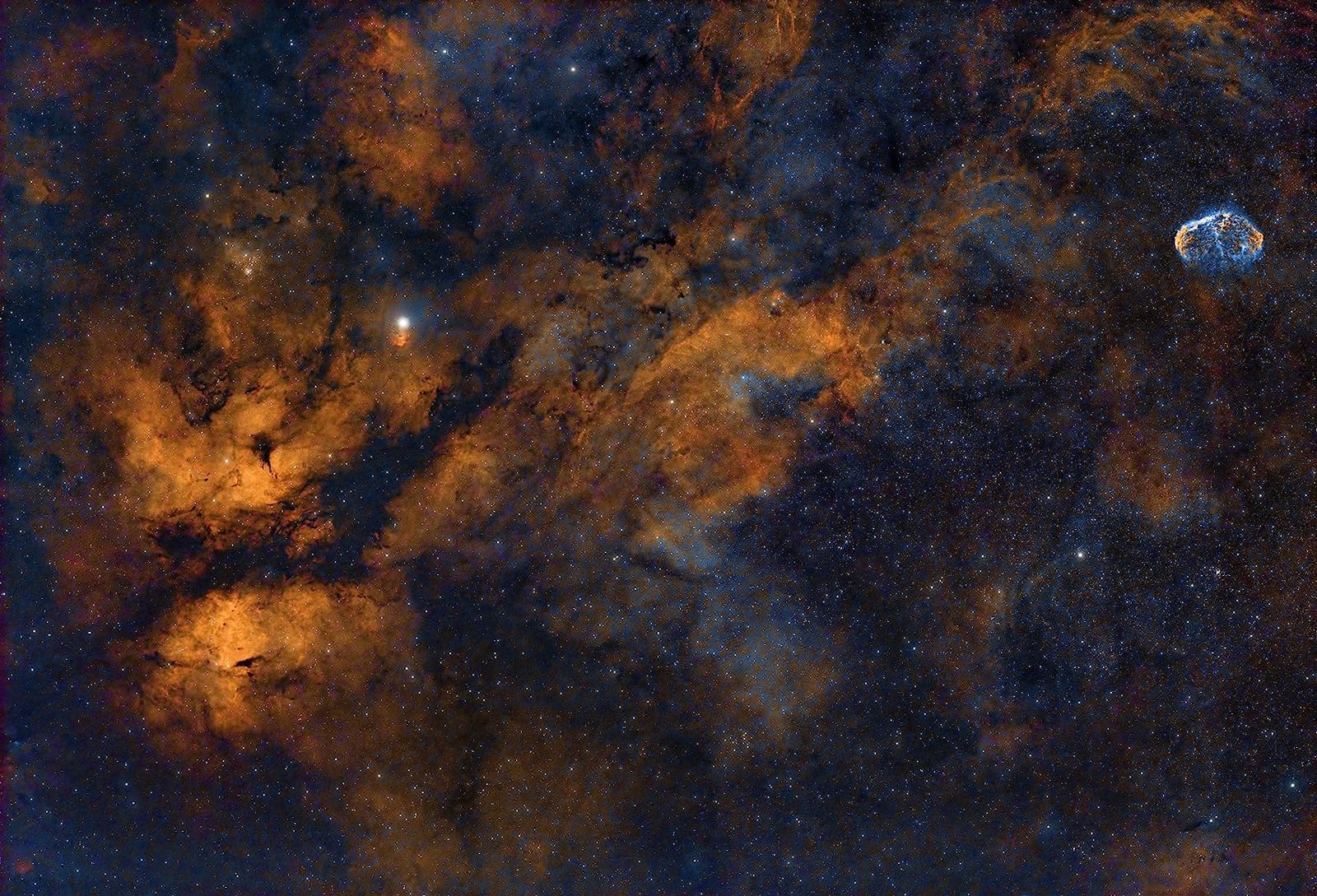
On the 7nm bandwidth specifically, owners describe it as the sweet spot: narrower than nothing matters at this level, and less restrictive than ultra-narrow designs that demand very fast optics and long exposures. The build and glass quality are consistently praised as visibly premium.
There is one practical wrinkle that mono imagers should think through. Several users question pairing it with a dual mono setup because the reduced light available can weaken star tracking. That is a rig-design question rather than a fault in the filter, but it will cost you sessions if you discover it mid-project.
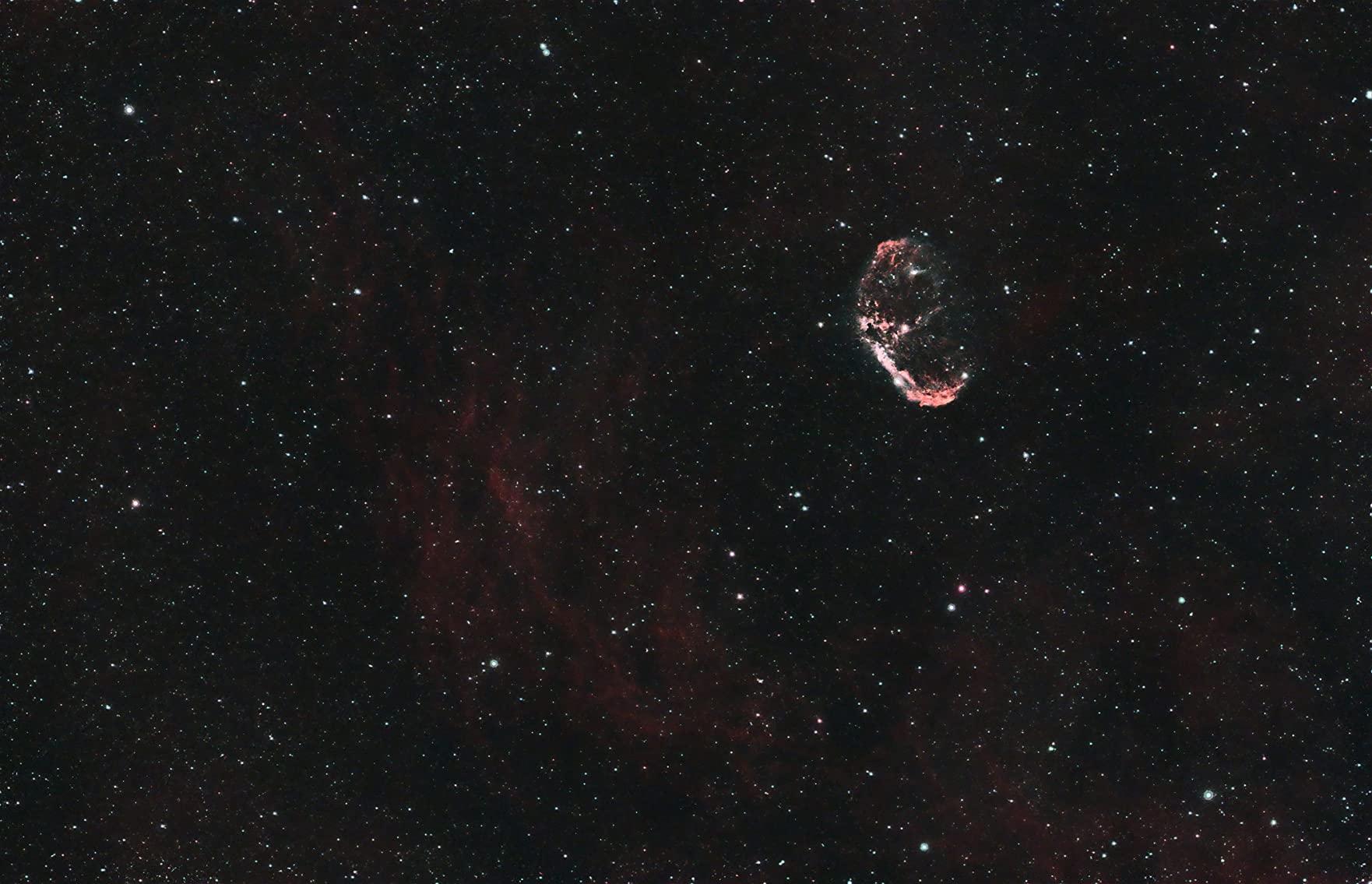
Is 7nm the right bandwidth, or should I go narrower?
For most setups, 7nm is the practical answer, and owner reports are close to unanimous on that. Narrower designs demand faster optics and longer exposures without a large gain in final image quality. If your optical train is fast, this bandwidth is comfortably inside the usable range.
If your telescope is slow, a wider dual-band like the SV220 or the L-Enhance is the better match. Fast optics plus a narrow band is the winning combination, and slow optics plus a narrow band is the losing one.
What should I not expect it to do?
Anything that is not an emission nebula. It passes just H-alpha and O-III, so galaxies, reflection nebulae and star clusters are out. It is also the most expensive option in this roundup, and for a beginner under bright skies that cost is better spent confirming your targets before committing.
10. Astromania 2 inch Hydrogen-alpha 12nm Narrowband Filter – Best for Mono Cameras
Astromania Telescope Nebula Filter, 2 inch Narrowband NBPF Hydrogen-a 12nm
12nm band centred on 656nm H-alpha
About 90% transmission at H-alpha
Metal cell for 2 inch
Pros
- Spectrometer testing confirms a 9.1nm FWHM band at 85% peak transmission
- Blocks to under 1% transmission from roughly 400nm to 975nm
- Clean narrowband H-alpha data on M9
- M16 and the Horsehead from city skies
- Threads smoothly into 2 inch barrels and 1.25 inch nosepieces
Cons
- Yields almost nothing on an unmodified DSLR
- Exposure times three to five times longer than unfiltered
- Thick cell will not fit some filter drawers and filter wheels
This filter has the lowest average in the roundup at 4.1 stars, with 10% one-star reviews, and the reason is almost entirely camera choice. Enthusiasts with a modified DSLR or a dedicated mono or colour astronomy camera report superb results. Unmodified DSLR owners repeatedly report completely dark or disappointing frames.
The physics behind that split is straightforward. H-alpha sits deep in the red at 656nm, and the infrared-cut filter built into an unmodified DSLR blocks it. If your camera has that filter in place, this purchase will disappoint you no matter how good the glass is.
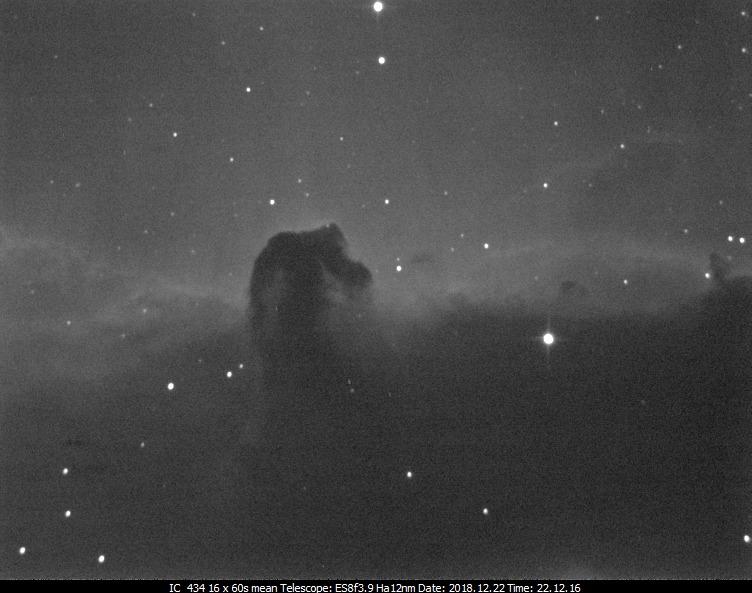
The measured performance is genuinely good for those setups. One reviewer with a spectrometer confirmed the band is correctly centred at 656.3nm with about 9.1nm FWHM and 85% peak transmission, blocking to under 1% from roughly 400nm to 975nm. That blocking range is why it attenuates moonlight as well as light pollution, and city imagers report clean H-alpha data on M9, M16 and the Horsehead from Bortle 8 skies.
The trade for that blocking is exposure time. Passing one line means exposures run three to five times longer than unfiltered, so plan sessions around it. The metal cell also runs thick, which will not fit some filter drawers and filter wheels, and a small number of units arrive non-functional and appear completely dark.
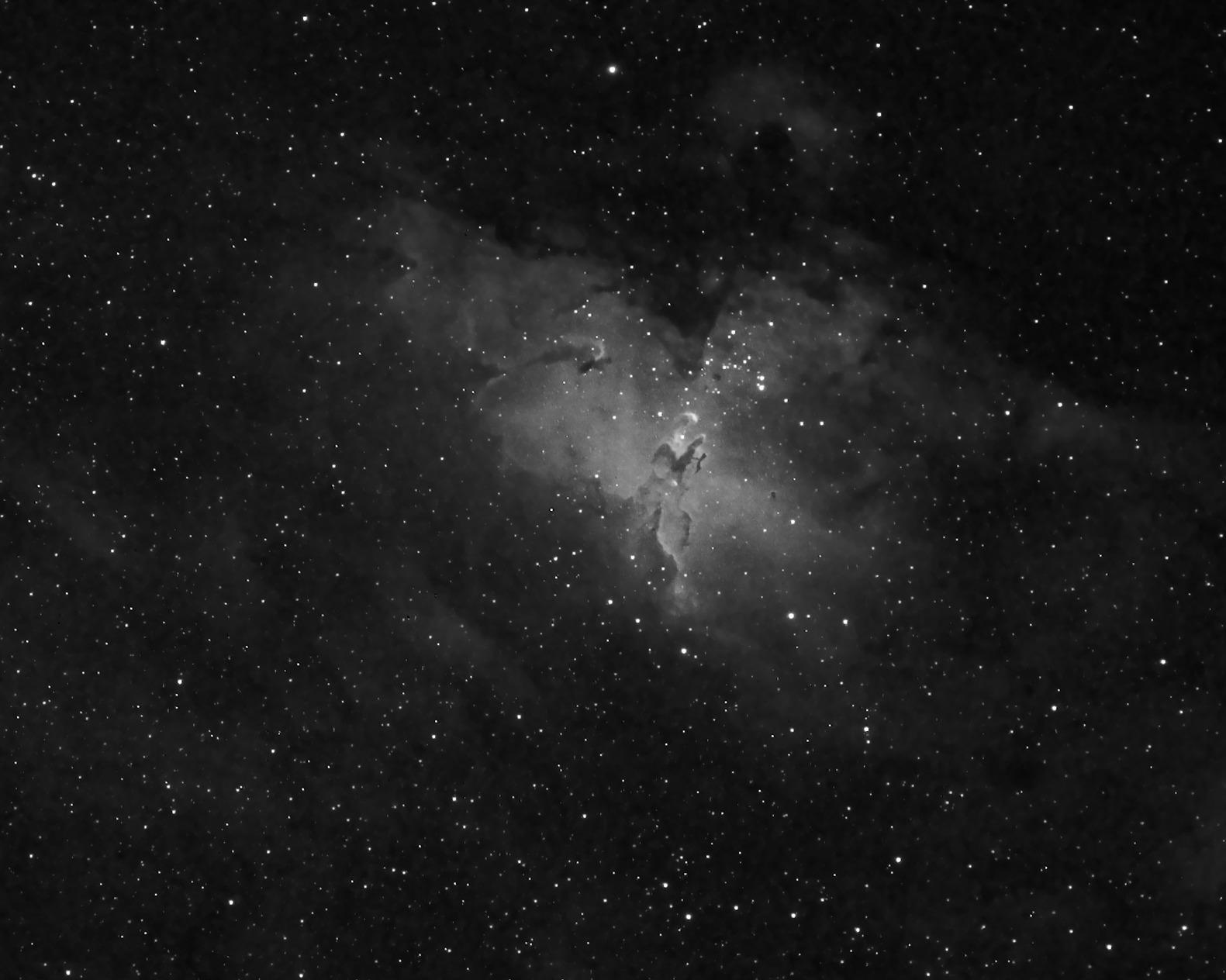
Is this filter worth the low average rating?
Only with the right camera. With a mono or modified setup the independent measurements back the specification, and owners report narrowband results at a fraction of the cost of the big-name H-alpha filters. With an unmodified DSLR it is one of the worst purchases in this roundup.
Check your camera before you order. The reviews are unambiguous on this, and it is the difference between a 4.1 and what the filter can actually deliver.
Will it physically fit my setup?
Measure first. The metal cell threads into 2 inch barrels and 1.25 inch nosepieces, and owners report it threading smoothly, but the cell thickness will not fit some filter drawers and filter wheels. If your imaging train uses a wheel, verify the cell height against your clearance before buying.
Buying Guide: Choosing a Light Pollution Filter in 2026
Artificial light from sodium, mercury and LED streetlamps sits at specific wavelengths that fall between the H-alpha, O-III and SII lines that nebulae emit. Filters selectively block the polluted bands and pass the target’s own light, which raises contrast and the signal-to-noise ratio. Understanding that mechanism is what lets you pick correctly, because every design decision below follows from how wide or narrow a band it blocks.
Broadband, narrowband or dual-band
These three families behave very differently, and mixing them up is what leads to disappointed buyers.
Broadband (UHC, CLS, L-Pro): passes a wide spread of visible light while suppressing the strongest pollution lines. More targets stay visible, contrast gain is moderate, and colour is closer to natural. This is the family to start with if you are unsure what you will shoot.
Narrowband (O-III, H-alpha, SII): passes one narrow band and blocks almost everything else. Contrast on the right target is spectacular and the background goes genuinely dark, but everything outside that band disappears and your exposure times lengthen sharply.
Dual-band or dual narrowband (SV220, L-Enhance, L-eXtreme): passes H-alpha and O-III simultaneously, so one filter covers most of the emission nebula catalogue in a single exposure. It is an imaging-only design, and it is useless for galaxies, clusters and reflection nebulae.
One useful rule from the community: a UHC filter is a visual filter, an O-III filter is a visual filter, and a CLS filter is largely a visual filter. Photographers should be looking at CLS, L-Pro or dual-band options instead. The reverse is true as well: if your interest is purely visual, skip the expensive imaging filters entirely, because they are not built for the eyepiece.
Matching filter strength to your Bortle class
The Bortle scale runs from 1 to 9 and measures night sky brightness. Matching filter strength to your class is the difference between a filter that helps and one that just darkens the view.
At Bortle 4 to 5, a rural or exurban sky, filter choice matters least. A broadband UHC still adds contrast on emission nebulae, and saving the money for a darker site is usually the better return.
At Bortle 6 to 7, a typical suburban backyard, a broadband filter is genuinely useful and a CLS filter becomes worthwhile for imaging. This is the class where most buyers in this roundup sit.
At Bortle 8 to 9, a city centre or bright inner suburb, narrowband and dual-band designs earn their keep. A broadband filter still improves the image, but the residual gradient often needs correcting in post anyway, which is the argument for going narrower.
At a dark site of Bortle 2 or better, the calculus flips. Forum reports from users travelling to dark skies describe switching to no filter at all, because the sky background is already so low that a filter only removes photons you wanted. Filters bought for city use are not redundant at a dark site; they are simply unnecessary.
Filter size and thread compatibility
Getting the wrong thread is the most common purely mechanical mistake, and it is easy to avoid by checking three things before you order.
First, check the barrel your accessory takes. A 1.25 inch filter, also listed as 31.75mm, threads into standard 1.25 inch eyepieces, diagonal barrels, reducers and visual adapters. That is what the UHC, O-III and CLS filters in this roundup use.
Second, check your camera end. A 2 inch filter, listed as 48mm, mounts in a filter wheel or at the front of a camera adapter, and the thread is nearly always M48x0.75 except for proprietary systems such as Canon EOS. You will usually need a step-up ring to go from an M42 camera thread to M48.
Third, check the clear aperture and cell height. A thicker cell may not clear the filter wheel or drawer on your telescope, which is the specific problem reported with the 2 inch hydrogen-alpha filter in this list. Slim-profile cells exist for exactly this reason.
Finally, remember that M48 and 2 inch are not the same thing. M48 is a thread standard, 2 inch is a barrel size, and they travel together more often than not. A focuser that accepts 2 inch eyepieces does not automatically accept a 2 inch imaging filter without an adapter.
What a light pollution filter cannot fix
This is the section most roundups skip, and it is where the most money is wasted. A light pollution filter cannot make a galaxy brighter, cannot reveal a reflection nebula, and cannot turn a bad telescope into a good one.
Galaxies and star clusters emit mostly broadband starlight, not narrow emission lines. Any filter that isolates H-alpha or O-III will make them fainter or invisible. For these targets, a broadband filter such as an L-Pro is the only sensible choice, and even then the gain is modest. If your target list is galaxies, buy a light pollution filter only with realistic expectations.
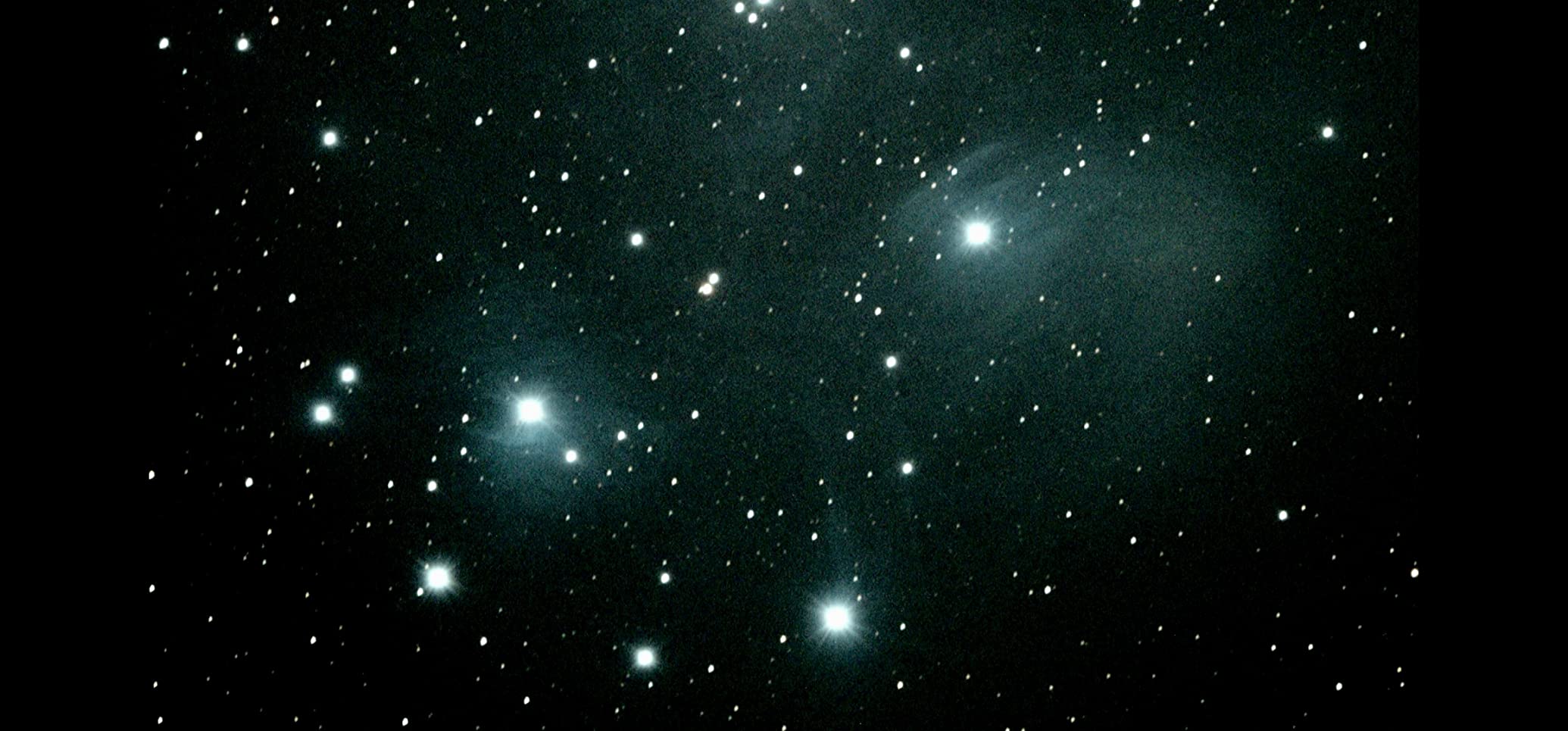
Reflection nebulae like the Pleiades and the Heart are lit by reflected starlight and are also invisible through a dual-band filter. The same applies to integrated flux nebula targets. This limitation gets repeated constantly in forum threads and appears in almost no roundup page.
Star colour. Narrowband and dual-band filters make stars blue or colour-shifted, because they pass almost no green or blue continuum from the stars themselves. You will need a colour correction pass in post. Photographers report this shift as a mild colour cast that needs correcting, and on some targets it is significant.
Over-darkened backgrounds. A filter that kills the background too thoroughly also cuts the nebula brightness, which pushes exposure times up substantially. This is the trade behind the longer exposures reviewers report for dual-band filters, and it is why a mid-strength filter often produces the better finished image even when a stronger one shows more on paper.
A poor telescope or a poor sky. No filter compensates for a misaligned collimation, dew, light leakage down the optical train, or a sky so bright that your signal never rises above it. A user moving from a 12 inch f/4.9 to a 16 inch f/4.5 reported that light pollution loss of contrast remained the limiting factor, which tells you aperture does not solve skyglow.
LED skyglow in 2026 and the legacy sodium problem
Most of the transmission figures quoted in this category were measured against sodium and mercury vapour lamps, the two sources that dominated street lighting for decades. Sodium produces a narrow line at 589nm, and mercury produces lines at 435nm and 578nm. Those specific figures appear repeatedly in filter specifications, including the CLS filter in this roundup.
LED street lighting emits a broader, less concentrated spectrum, and in many suburbs it has largely replaced the older sources. The practical consequence appears as a repeated caveat in the reviews of every broadband filter here: they work best against sodium and mercury lighting and are less effective against modern LED street lamps.
This is not a reason to skip a broadband filter. Owners under mixed lighting still report meaningful improvement, and the older sources are rarely fully gone. It is a reason to prefer narrowband and dual-band designs when you know your sky is LED-dominated, because those filters do not depend on hitting a specific pollution line. They block everything outside the nebula’s own emission, whatever the source.
Moon and solar filters are a different category
Moon filters and solar filters are frequently listed beside light pollution filters in shops, and they should never be confused with them. A solar filter is a safety device that reduces sunlight to a level safe for your eye or your camera, and using the wrong one can cause instant and permanent eye damage. A moon filter is a neutral-density filter that reduces brightness and increases contrast on lunar detail without touching the spectrum.
Neither is a light pollution filter. Some owners here use an O-III filter as a mild lunar and planetary contrast aid, which is a legitimate observing use, but it has nothing to do with reducing skyglow. Keep the categories separate when you shop, and never look at the Sun without a certified solar filter over the front aperture.
How we picked
Every product in this roundup was assessed on the same four things: the stated transmission and bandpass figures, the number of owners reporting actual field use, the consistency of the reported result across those reviews, and the frequency of the caveats. We weighted the size of the review base heavily, which is why the filter with 609 ratings takes the top badge ahead of one with a marginally higher average and far fewer ratings.
We also read the negative reviews closely, because they carry more information than the positive ones. A roundup that lists only advantages is not useful, and the community discounts it for good reason. The cons listed against each product above are drawn from what owners actually report, not from generic manufacturer limitations.
For a broader look at how filtering works in a completely different product category, our guide to the best aquarium filters covers the same balance of flow rating and maintenance trade-offs from a different angle. Readers new to the idea of matching a filter to a specific job can start with our canister filter breakdown to get comfortable with specification-first buying, and the same discipline shows up in precision work such as our picks for the best honey strainers and filters or the best double-sieve honey filters, where a single mesh specification changes the finished result entirely.
Frequently Asked Questions
What is the best light pollution filter for a telescope?
The best light pollution filter for a telescope depends on whether you observe or image. For visual use, a 1.25 inch UHC filter is the safest first purchase because it works across the widest range of emission nebulae. For imaging, a 2 inch dual-band or multi-bandpass filter gives stronger results under bright skies. In both cases, match the filter family to your target type rather than to the specification list.
Which UHC filter is best for telescopes?
Our pick is the SVBONY 1.25 inch UHC filter, which has 609 ratings averaging 4.6 stars, by far the largest owner base in this roundup. Owners report that the Veil, the Lagoon and Omega become detectable under suburban and urban skies once it is fitted. The Astromania 1.25 inch UHC is the sensible budget alternative, especially for smaller apertures.
Is a UHC filter good for galaxies?
No. A UHC filter is designed to isolate emission nebula light, and galaxies emit mostly broadband starlight that the filter removes rather than passes. Users report galaxies looking fainter, not brighter, through a UHC filter. For galaxies, star clusters and comets, a broadband multi-bandpass filter such as the Optolong L-Pro is the only sensible option, and even then the gain is modest.
Do telescopes work in light polluted areas?
Yes, with the right target and the right filter. A telescope in a city or suburban sky will show you planets, the Moon, double stars, globular clusters and bright nebulae without any filter at all. A light pollution filter then extends that list to fainter emission nebulae and planetary nebulae by raising contrast. It cannot recover broadband targets such as galaxies, so expectations matter as much as equipment.
What filter is best for viewing the Moon?
A neutral density moon filter, not a light pollution filter. A moon filter reduces overall brightness evenly across the spectrum, which increases contrast on lunar craters and maria without shifting colour or removing entire wavelengths. Using an emission filter such as an O-III on the Moon produces a strong colour cast and very little practical gain for most observers.
What size light pollution filter do I need?
Visual observers need 1.25 inch, also listed as 31.75mm, because that is the standard eyepiece barrel. Photographers need 2 inch, listed as 48mm, usually with an M48x0.75 thread and a step-up ring from the camera’s M42 thread. Check the thread on your accessory, the thread on your camera adapter, and the clear aperture of your filter wheel before ordering, since a thick cell may not clear the wheel.
How do light pollution filters work?
They work by exploiting a gap in the spectrum. Streetlights emit at specific wavelengths, chiefly sodium at 589nm and mercury at 435nm and 578nm, while nebulae emit at H-alpha 656nm, O-III around 500nm and SII 672nm. A filter passes the nebula lines and blocks the pollution lines in between, which raises the signal-to-noise ratio and makes faint objects stand out against the sky background.
Conclusion: Our Light Pollution Filter Picks for 2026
For visual observing from a suburban or urban sky, start with the SVBONY 1.25 inch UHC filter. It has the largest owner base we found at 609 ratings averaging 4.6 stars, it fits almost any eyepiece, and it does something useful on the widest range of targets. If your list is planetary nebulae specifically, step up to an O-III filter such as the Astromania or Celestron model instead.
For astrophotography with a colour camera, the answer changes completely. The SVBONY SV220 is the value pick at 4.8 stars across 120 ratings with 7nm H-alpha and O-III bands and over 94% peak transmission, and owner comparisons against premium dual-band filters are genuinely persuasive. If your target list is mixed, the Optolong L-Pro keeps more natural star colour and will not waste a night on a target it cannot see.
Whatever you choose, check the thread before you order, and check your targets before you buy. A filter that isolates H-alpha and O-III will do nothing for a galaxy, and no filter at all will help if you travel to a Bortle 2 sky. That is the best telescope filter advice we can give: buy for the targets you actually shoot, in the instrument you actually use.