
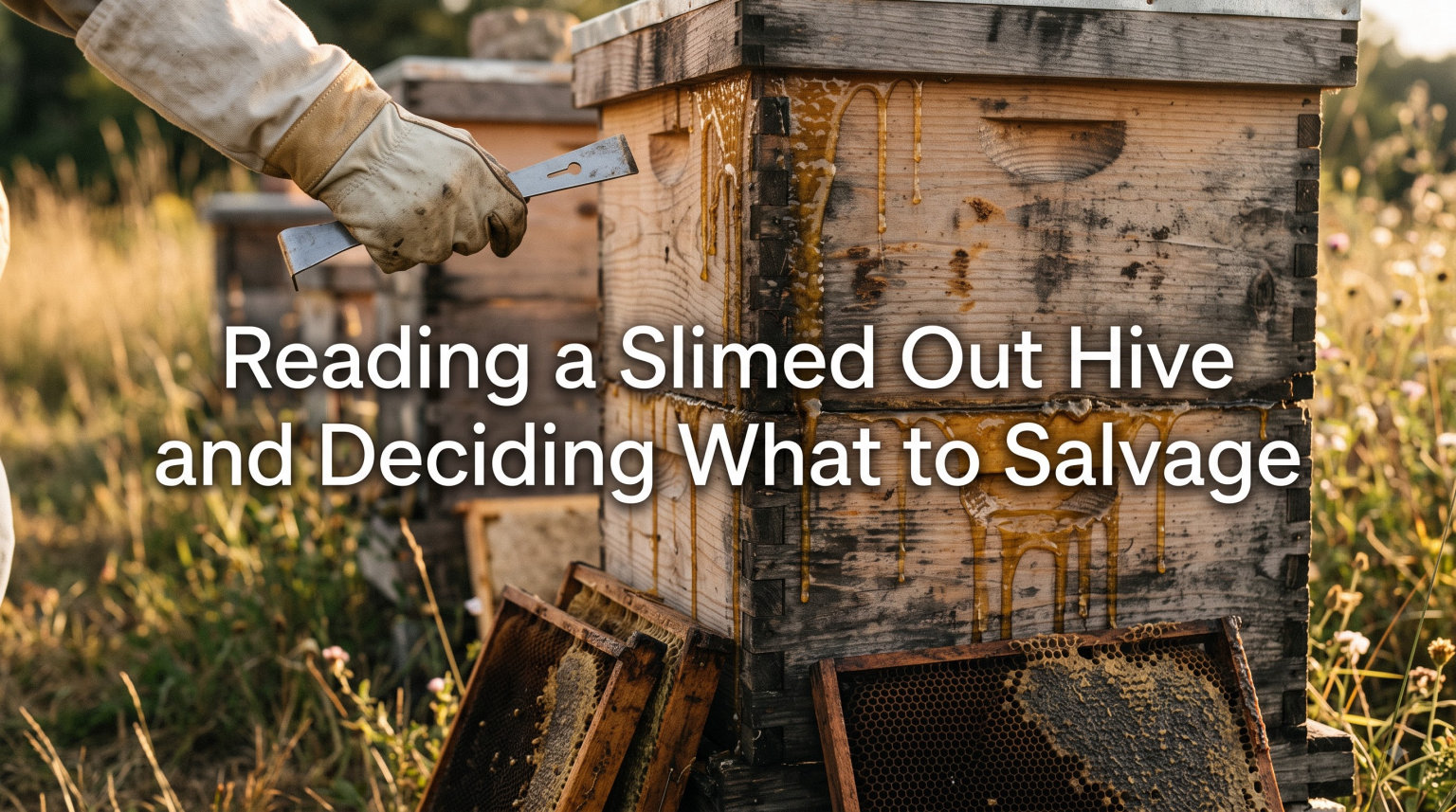
I have walked up to colonies I expected to be thriving and found the frames swimming in a sour, brown slime that smelled like rotten oranges. That moment of standing in front of a slimed out hive is one of the hardest in beekeeping, and the decisions you make in the next hour shape how much you save and how fast your apiary recovers.
This guide walks you through reading a slimed out hive and deciding what to salvage, from the first whiff of fermentation to the final freeze treatment. It is built from real recovery experiences, university extension recommendations, and the kind of practical advice you only get after cleaning dozens of ruined frames on a hot afternoon. Whether you are facing your first slime out or your fifth, the process below will help you act quickly and protect every piece of equipment that can still serve your bees.
Table of Contents
What a Slime Out Is and What Causes It
A slime out happens when small hive beetles overwhelm a weak colony, and the resulting larvae coat the comb in a sticky, fermenting goo. The slime itself is not beetle waste. It is a yeast carried on the larvae that ferments honey and pollen into a runny, brown mess with a sharp sour smell. Once the fermentation gets going, the bees cannot groom it out and they usually abandon the hive.
Small hive beetles are opportunistic pests native to sub-Saharan Africa that have spread across warm and humid regions of the United States, Australia, and the Caribbean. A strong colony of Italian or Carniolan bees can patrol combs, chase adult beetles, and remove larvae before the slime starts. A weak colony, especially one stressed by poor queen quality, drought, or a queenless period, cannot keep up. That is when a slime out begins.
Three things have to line up for a slime out to develop. First, adult beetles must enter the hive, often carried in on equipment or flying in from neighboring apiaries. Second, the colony has to be too weak to remove the eggs and larvae as they appear. Third, humidity and warmth have to support the yeast growth that turns honey and pollen into slime. When all three are present, fermentation can spread through an entire super within a week.
How to Tell if a Hive Has Slime Out Damage
You can usually tell a hive has slime out damage by the smell before you ever open the lid. The fermentation produces a sharp, sour, almost fruity odor that hits you several feet from the entrance. Open the hive and look for brown or orange slime streaking across the tops of frames, larvae tunneling through comb, and bees clustered away from the affected area or gone entirely.
Visible signs inside the hive follow a predictable pattern. The first clue is a small patch of shiny brown slime in one frame, often near a corner the bees are not guarding. Within days, you will see adult beetles scurrying across the surface and small white larvae that look similar to wax moth larvae but are smaller and have rows of spines along the back. Honey in the affected cells looks foamy or watery, and pollen combs take on a dark, wet, sour smell.
Behavioral signs appear even earlier if you know what to watch for. Worker bees may beard heavily outside the hive during the day, even when the weather is mild. You may see bees wrestling adult beetles on the landing board or carrying larvae out of the entrance in a last-ditch effort at hygiene. If the colony is in full retreat, you may find frames of brood that have been completely abandoned while the cluster moves up into a corner or out of the hive altogether.
Immediate Emergency Response Steps
Once you confirm a slime out is in progress, you have a narrow window to save anything useful from the hive. Work fast, work clean, and do not give beetles a chance to migrate to your other colonies. The steps below are the order I use whenever I get a slime out call from a fellow beekeeper.
- Close the hive and move it away from healthy colonies if possible. Even a few hundred feet reduces the chance beetles fly to your next strongest hive.
- Set up a work station with a hose, a plastic tub of water, a scraper, garbage bags, and a chest freezer set to minus 4 degrees Fahrenheit or lower.
- Remove each frame one at a time and assess it on the spot. Separate frames into three piles: keep and clean, keep and freeze, or burn.
- Bag anything going to the freezer in heavy garbage bags to keep beetles from escaping into your house or garage.
- Scrape heavy debris off frames going to the burn pile and seal them in another bag.
- Clean the empty hive bodies with a pressure washer or scrub them with a 10 percent bleach solution, then let them dry in full sun.
- Return a healthy, reduced hive box to the original location if the colony still has bees, or combine the survivors with another hive using the newspaper method.
Speed matters because adult beetles and larvae can leave a slime out hive and invade a neighboring colony within hours. Every frame you leave sitting out is a hazard. If you have to choose between careful cleaning and fast containment, choose containment first and clean later.
How to Assess What Can Be Salvaged From a Slimed Out Hive
Deciding what to salvage comes down to four questions for each piece of equipment you pull out. How much slime is present, how the wood or plastic looks underneath, whether the comb still has structure, and whether the bees in your area can clean and reuse it safely. A simple frame assessment keeps you from throwing away anything that still has value and from keeping anything that will hurt your next colony.
Frames with light slime, intact comb, and only surface staining are the easiest call. A strong colony can clean these in a week or two once you remove the worst of the goo with a hose and freeze the frames to kill any remaining eggs or larvae. Save them and put them back into service after a freeze treatment.
Frames with deep slime, fermented honey, and collapsed comb are tougher. If the wood frame is still solid and the comb has not blackened through, cut out the worst comb, freeze the frame, and let the bees draw it back out next spring. If the frame is warped, soft at the joints, or smells sour after a thorough cleaning, burn it. Sour wood holds yeast in the grain and will contaminate new comb.
Honey supers and hive bodies can almost always be saved if the wood is sound. Scrape off all wax and propolis, wash with hot water, and let the wood dry fully in direct sun for at least a day. Pollen combs are a special case. Fermented pollen smells terrible and bees usually refuse it. If a pollen comb is more than half coated in slime, cut it out and render the wax. Honey from a slime out should never be eaten or fed back to bees. The yeast changes its chemistry in ways that can cause digestive issues in both people and bees.
Cleaning and Restoring Salvageable Frames
The best way to clean salvageable slimed frames depends on how dirty they are and what tools you have. For most situations, a hose with moderate pressure, a flat scraper, and a chest freezer are all you need. Add a mild detergent only if you are cleaning hive bodies or frame parts, never on drawn comb that you want the bees to reuse.
The hose method works well for light slime. Lay the frames flat in a plastic tub, spray them from a few inches away, and let the water carry the slime off the comb. Turn the frame and repeat on the back side. A short bristle brush helps with stubborn patches, but avoid stiff wire brushes that shred the wax. Let the frames dry in the sun before bagging them for the freezer.
Detergent works for hive bodies and frame components that have no drawn comb. A small amount of dish soap or a beekeeping-specific cleaner cuts the yeast film. Rinse thoroughly with clean water and let everything air dry before reassembling. Residual soap will repel bees and can affect how they accept the cleaned equipment.
Freezing is the non-negotiable step. Bag the cleaned frames tightly, press out the air, and freeze them at minus 4 degrees Fahrenheit or colder for at least 24 hours. Cold kills small hive beetle eggs, larvae, and adults at every life stage. Some beekeepers extend the freeze to 48 hours for safety. Thawed frames should go straight onto a strong colony or stay sealed until you are ready to use them.
Hive Recovery Process After a Slime Out
Recovery starts the moment you finish cleaning, and it is mostly about giving the surviving bees the smallest, most defensible home possible. A weak colony cannot patrol a full deep and two mediums, so reducing the hive to a single box with drawn comb and a feeder sets up the cleanest path back to strength.
Reduce the entrance to a single bee width with an entrance reducer. This gives guard bees a smaller line to defend against beetles and robber bees. Move the colony back to its original stand if you relocated it during cleanup. Field bees that left the hive during the disturbance will return to the familiar location and rejoin the cluster.
Feed the colony with a 1:1 sugar syrup to give them energy for cleaning and drawing new wax. Continue feeding until they have rebuilt enough comb to cover at least six frames in a single deep. Watch for the queen. If she was lost in the disturbance, combine the survivors with a healthy colony or introduce a new queen within a week. A queenless cluster will not recover from a slime out on its own.
Signs of recovery appear in the second and third week after cleanup. You should see fresh white wax on cleaned frames, increasing pollen stores, and a steady stream of foragers at the entrance. If the cluster is still shrinking after three weeks, the colony is too weak to save and combining it with another hive is the kindest option.
Prevention Strategies to Avoid the Next Slime Out
Strong colonies prevent slime outs. That is the single most useful sentence in small hive beetle management, and it should shape every other decision you make in the apiary. A colony with a young queen, plenty of nurse bees, and tight brood patterns can keep beetle populations below the threshold where fermentation starts.
Several practical steps support that core principle. Use screened bottom boards with a pest management tray underneath. The tray catches falling larvae and gives you a quick way to monitor beetle pressure. Place hives in full sun when possible. Small hive beetles prefer shade and humid conditions, and a sunny stand can cut their reproduction in half. Replace old comb on a three-year rotation so the hive does not accumulate chemical cues that attract beetles.
Traps add an extra layer of defense for colonies in high-pressure areas. Oil traps between frames and entrance traps on the landing board both reduce adult beetle counts inside the hive. Check the traps every two weeks during beetle season, which runs from late spring through early fall in most warm climates. Combine traps with regular inspections and you will catch a developing problem long before slime appears.
Apple cider vinegar has been mentioned in older forums as a homemade bait, but research and extension service experience show it is not effective at controlling small hive beetle populations. Stick with proven trap designs and good hive hygiene. A small amount of attention during the season saves the kind of cleanup that a slime out demands.
Frequently Asked Questions
What to do with a slimed out bee hive?
Close the hive, move it away from healthy colonies, and remove every frame for assessment. Separate frames into keep, freeze, or burn piles, scrub the hive bodies, freeze salvageable frames at minus 4 degrees Fahrenheit for at least 24 hours, and return a reduced hive to the bees if the cluster is still alive.
Can honey from a slime out be salvaged?
Honey from a slime out should not be eaten by humans or fed back to bees. The yeast that small hive beetle larvae introduce changes the sugar profile and produces compounds that can cause digestive upset. Render the wax from affected honey frames and discard the honey.
How to tell if a hive is infested with hive beetles?
Look for a sharp sour smell at the entrance, brown or orange slime streaking the tops of frames, small white larvae with spines along the back, adult beetles scurrying across comb, and bees clustered away from affected frames or bearding heavily outside the hive.
What causes a slime out in bee hives?
A slime out happens when small hive beetles reproduce inside a weak colony. The larvae carry a yeast that ferments honey and pollen into a runny brown slime. Strong colonies remove larvae before slime forms, but stressed or queenless colonies cannot keep up and the fermentation spreads.
How long to freeze frames for small hive beetles?
Freeze frames at minus 4 degrees Fahrenheit or colder for at least 24 hours to kill small hive beetle eggs, larvae, and adults. Many beekeepers extend the freeze to 48 hours as a safety margin, especially in warm climates where beetle pressure is high.
Should I burn or save slime damaged frames?
Save frames with light slime and intact comb after scraping, hosing, and freezing them. Burn frames that are warped, soft at the joints, deeply fermented, or still smell sour after thorough cleaning because yeast in the grain will contaminate new comb.
Final Thoughts on Reading a Slimed Out Hive and Deciding What to Salvage
Reading a slimed out hive and deciding what to salvage gets easier with practice, but every case still asks the same core questions. How weak is the colony, how far has the fermentation spread, and which pieces of equipment still have a future. Answer those quickly and the cleanup becomes a project instead of a disaster.
Move fast, freeze the frames you keep, burn what you cannot clean, and bring the survivors home to a single box with a feeder and a young queen. Your apiary will be stronger for the attention, and the next time a slime out threatens, you will know exactly which frames to keep and which to let go.