
When I lost two colonies to a toppled hive during Hurricane Ian, I learned the hard way that preparing your apiary for a hurricane isn’t optional for coastal beekeepers. Wind over 50 mph can flip a fully loaded hive like a domino, and a single foot of floodwater drowns a colony in hours.
I’ve since weathered three more storms with 100% colony survival. The difference? A systematic pre-storm checklist and knowing what to do within 24 hours after the skies clear. This guide shares every lesson I’ve learned, plus protocols from the USDA Climate Hub, NC State Extension, and the University of Florida Bee Lab.
Whether you run 2 backyard hives or 200 colonies in a commercial yard, the same principles apply. Let’s walk through them.
Table of Contents
Why Hurricane Preparation Matters for Your Apiary
Hurricanes threaten apiaries through two main forces: wind and flooding. Each can wipe out a season’s worth of work in a single afternoon.
Wind damage is the most visible threat. A standard Langstroth hive weighs 60-80 lbs when full of honey, but a gust over 60 mph can topple it. Once a hive falls, the bees inside become exposed, the queen can be injured or killed, and the colony rarely recovers.
Flooding is even more catastrophic. Bees can survive cold and wind. They cannot survive underwater for more than a few hours. When floodwaters rise around a hive, even a strong colony drowns in the bottom board.
Then there’s the secondary threat nobody talks about: post-storm insecticide spraying. Mosquito control trucks often fan out within 48 hours of a hurricane passing, and bees in the spray zone can be decimated.
The bottom line: a few hours of preparation saves thousands of dollars in bees, equipment, and honey production.
Step-by-Step: How to Prepare Your Apiary for a Hurricane
These five steps form the core hurricane preparation protocol I follow every season. Do them at least 24 hours before projected landfall.
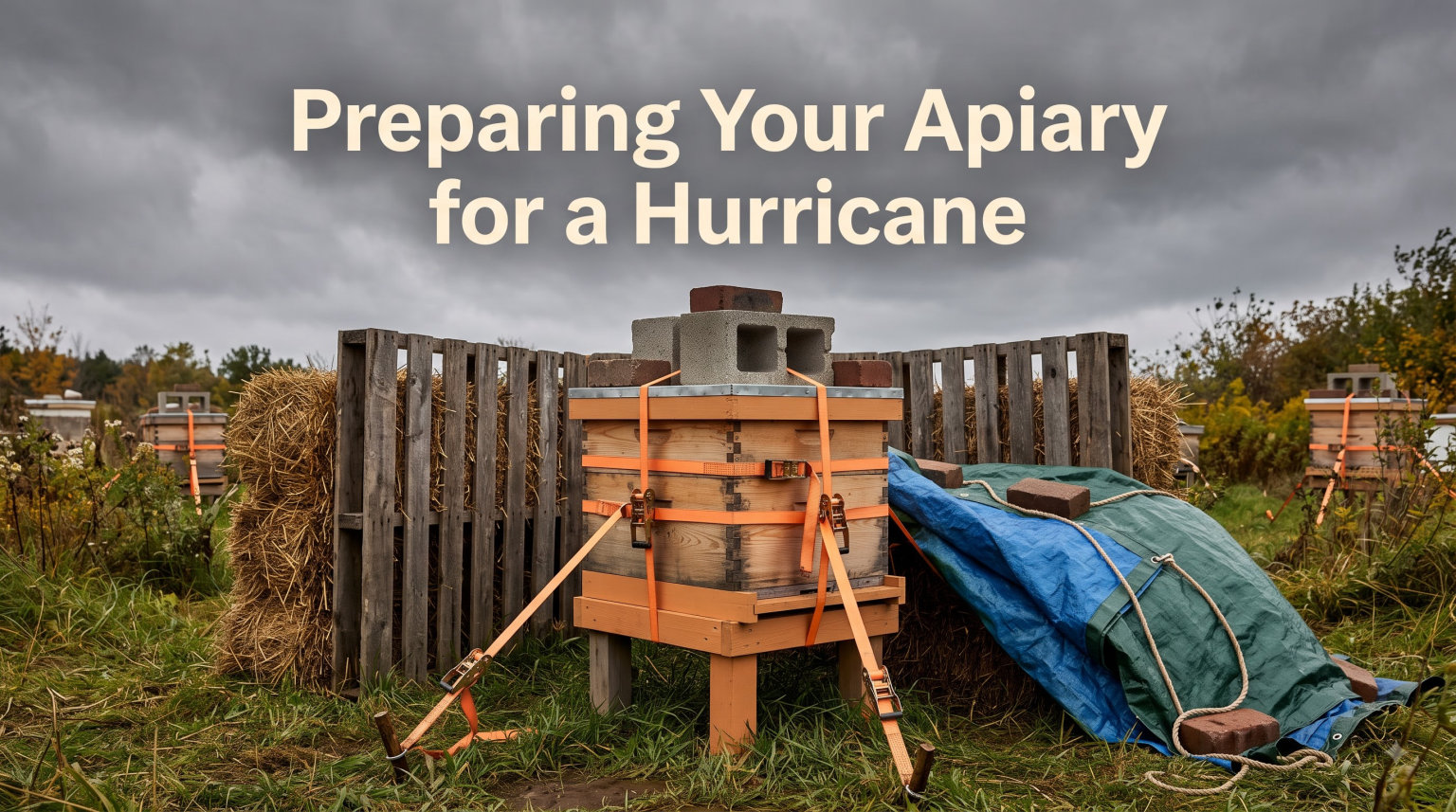
Step 1: Secure hive tops with ratchet straps or weights. The number one failure point during high winds is the hive lid. Place a ratchet strap over the entire stack (from bottom board to top cover) and cinch it tight. If you don’t have straps, weight the top with a cinder block or two heavy bricks.
Step 2: Place hives on sturdy stands and level ground. Cheap wooden stands twist and collapse in high winds. Use metal hive stands, concrete blocks, or stakes driven into the ground. I anchor every stand with two 18-inch rebar stakes pounded flush with the ground.
Step 3: Move hives from low-lying flood-prone areas. If your apiary sits in a flood plain or low spot, relocate the colonies at least 24 hours before the storm. Move them to higher ground, even if it’s just a few feet of elevation. Water follows gravity, and even an extra 12 inches of elevation can save a hive.
Step 4: Trim or avoid trees with hazardous branches. Falling limbs crush more hives than wind alone. Two days before the storm, prune back any dead branches hanging over the apiary. If a large dead tree stands nearby, consider relocating the hives entirely.
Step 5: Tilt hives slightly forward for water drainage. Tilt each hive forward about 5 degrees using a shim under the back legs. This lets rainwater run out the entrance instead of pooling on the bottom board and drowning the cluster.
Wind Protection Strategies for Beehives
Protecting beehives from wind starts with understanding how wind attacks a hive. The flat sides of hive bodies act like sails. Once a gust gets under an overhang, the lid lifts and the stack separates.
Here’s how to build a wind-resistant hive setup:
- Ratchet straps beat bungee cords every time. Use 1-inch ratchet straps, not bungees. Bungees stretch and break. A $15 ratchet strap set secures an entire hive for years. Loop the strap around the entire stack, including the bottom board.
- Eliminate gaps between boxes. If your hive bodies have gaps, bees fill them with propolis. Don’t pry apart hive bodies right before a storm. The propolis seal is your friend, not your enemy.
- Close or shrink the entrance. Use an entrance reducer or plug the entrance with a piece of hardware cloth. This prevents wind-driven rain from soaking the cluster and reduces the chance of the bottom board flooding.
- Build a windbreak if you have time. A 6-foot plywood barrier on the prevailing wind side reduces wind speed by 30-40%. Even a parked truck or shed can serve as a windbreak.
- Stack supers with the heaviest on bottom. Put full honey supers at the bottom and empty supers on top. This lowers the center of gravity and reduces tipping risk.
Flooding Prevention: Elevating and Relocating Hives
If your apiary is in a hurricane evacuation zone, the safest move is to relocate the hives entirely. Beekeepers in Florida, the Gulf Coast, and the Carolinas routinely evacuate colonies to inland yards when Category 3+ storms approach.
When full relocation isn’t possible, focus on elevation:
- Place hives on 18-inch hive stands. This puts the bottom board above typical storm surge levels. Treated 4×4 posts or concrete blocks work well.
- Move hives to the highest point on your property. A slight slope can mean the difference between dry hives and drowned ones. Even moving hives uphill 50 feet helps.
- Avoid placing hives in drainage paths. Don’t put hives at the bottom of a hill, in a swale, or anywhere water collects during heavy rain.
- Face hive entrances downhill. Combined with a slight forward tilt, this encourages water to drain out of the hive rather than pool inside.
Important: when moving hives, do it at least 24 hours before the storm so foragers can reorient to the new location. Moving them at the last minute leaves thousands of bees stranded at the old site.
Pre-Storm Final Checklist: 24-48 Hours Before Impact
When a hurricane is 1-2 days out, run through this final checklist. Each item takes less than 5 minutes per hive.
- Strap or weigh down every hive top
- Install entrance reducers or plug entrances with hardware cloth
- Confirm hive stands are anchored and level
- Tilt hives forward 5 degrees for drainage
- Remove any loose equipment (extra supers, lids, frames) from the yard
- Photograph each hive for insurance documentation
- Charge your phone and fill gas cans in case you need to evacuate
- Tell a fellow beekeeper your evacuation plans and apiary location
Two more critical reminders: do not open the hives during the 24 hours before the storm. Each opening disrupts the propolis seal and stresses the colony. Also, secure your smoker with fuel in a metal container. A loose smoker in 60 mph wind becomes a fire hazard.
Post-Storm Recovery: Assessing Your Colonies
The storm has passed. Now the real work begins. Wait until winds drop below 25 mph and flooding has receded before approaching the apiary. Bees are defensive after a major weather event.
Here’s how to assess your colonies systematically:
- Check for toppled hives first. If a hive has fallen, stand it upright gently. Don’t open it. The bees will reorganize inside once they’re calm. Check back in 24-48 hours.
- Look for flooding damage. If water reached the bottom board, the colony is at high risk. Inspect the entrance for drowned bees and consider feeding immediately.
- Inspect for queen survival. After major weather events, queens sometimes fail. Look for eggs and young larvae within 3-5 days post-storm. If you see only capped brood or nothing, the queen may be gone.
- Document everything for insurance. Photograph damage before cleaning up. Most agricultural insurance policies require dated damage photos.
- Feed if no nectar is available. Hurricanes strip flowers of nectar and pollen. Many beekeepers feed 1:1 sugar syrup for 2-3 weeks after a major storm to keep colonies alive until foraging recovers.
Warning: Post-Hurricane Insecticide Spray Risks
Here’s a danger most beekeepers miss: within 48 hours of a hurricane, mosquito control agencies often spray wide areas to control post-storm mosquito blooms. These sprays can devastate honeybee colonies.
To protect your bees:
- Register your apiary with DriftWatch, a free pesticide notification service
- Contact your county agricultural extension office before the storm to flag your apiary location
- Keep bees confined for 24 hours after a known spray event using wet towels over the entrance
- Report any suspected pesticide kills to your state Department of Agriculture immediately
NC State Extension documented multiple colony losses from post-hurricane spraying in 2018. This is a real, documented risk, and one of the easiest to mitigate with a quick phone call before the storm hits.
Regional Considerations: Coastal vs Inland Beekeepers
Where you keep bees changes your hurricane risk profile. Gulf Coast beekeepers face storm surge and high winds. Atlantic coast beekeepers often deal with flooding from rainfall rather than surge. Caribbean and tropical beekeepers may see more frequent, smaller storms.
If you’re inland, your main concerns are wind and rain. If you’re coastal, plan for evacuation scenarios. Commercial beekeepers in Florida routinely truck hives to Georgia or Alabama when major storms approach. Backyard beekeepers can often shelter hives in a garage or barn for Category 1-2 storms.
Frequently Asked Questions
What is the 3 3 3 rule for bees?
The 3 3 3 rule is a simple hive inspection guideline: wait at least 3 days after a hive is moved or disturbed, check for eggs or larvae within 3 days of queen release, and confirm a laying queen within 3 weeks. It helps beekeepers avoid panicking when a colony looks sluggish right after a disturbance.
Do bees know when a storm is coming?
Yes, bees can detect drops in barometric pressure and will often return to the hive early when a storm approaches. They also cluster tightly and reduce foraging activity 12-24 hours before a hurricane. This instinctive behavior helps them survive bad weather but does not eliminate the need for human preparation.
How do I protect beehives from wind?
Secure hive tops with ratchet straps, place hives on sturdy metal stands anchored with rebar stakes, build a windbreak on the prevailing wind side, and remove any tall dead branches that could fall on the hives. A properly strapped hive can withstand 100+ mph winds.
Should I feed bees after a hurricane?
Yes, feeding bees after a hurricane is often necessary because the storm strips flowers of nectar and pollen. Provide 1:1 sugar syrup in a top feeder or entrance feeder for 2-3 weeks until natural forage recovers. Pollen patties also help if brood-rearing is happening.
What if my hive gets knocked over or flooded?
If a hive is toppled, stand it upright gently without opening it. Let the bees calm and reorganize for 24-48 hours before full inspection. If the hive flooded, check the bottom board for drowned bees, then start feeding immediately. Queens often survive a fall, but monitor for eggs within 5-7 days to confirm.
Final Thoughts on Preparing Your Apiary for a Hurricane
Preparing your apiary for a hurricane boils down to five core actions: strap the lids, anchor the stands, elevate against floodwater, prune the hazards, and plan for post-storm feeding.
I’ve walked you through the exact protocol I use for every named storm in 2026. I’ve also shared the unique risks most guides skip, like post-storm insecticide spraying and queen survival monitoring.
Now do the prep work before the next storm forms. Buy the ratchet straps, register your apiary with DriftWatch, and identify your higher-ground relocation site today. When the forecast turns red, you will not have time to scramble.
Your bees are counting on you. A few hours of preparation is the difference between a season’s harvest and an empty box. Stay safe, and may your colonies weather every storm.