
Every beekeeper eventually faces the same gut-punch moment: a hive that looked promising in spring dwindles to a handful of frames by late summer. Combining weak colonies with the newspaper method is the safest, most reliable way to merge those struggling hives into a single stronger unit before winter arrives.
In this guide, I’ll walk you through what the newspaper method is, why it works, the exact steps to do it correctly, and how to handle queens, timing, and the occasional failed combine. Whether you keep two hives or twenty, this technique belongs in your beekeeping playbook.
Table of Contents
What Is the Newspaper Method for Combining Bee Colonies?
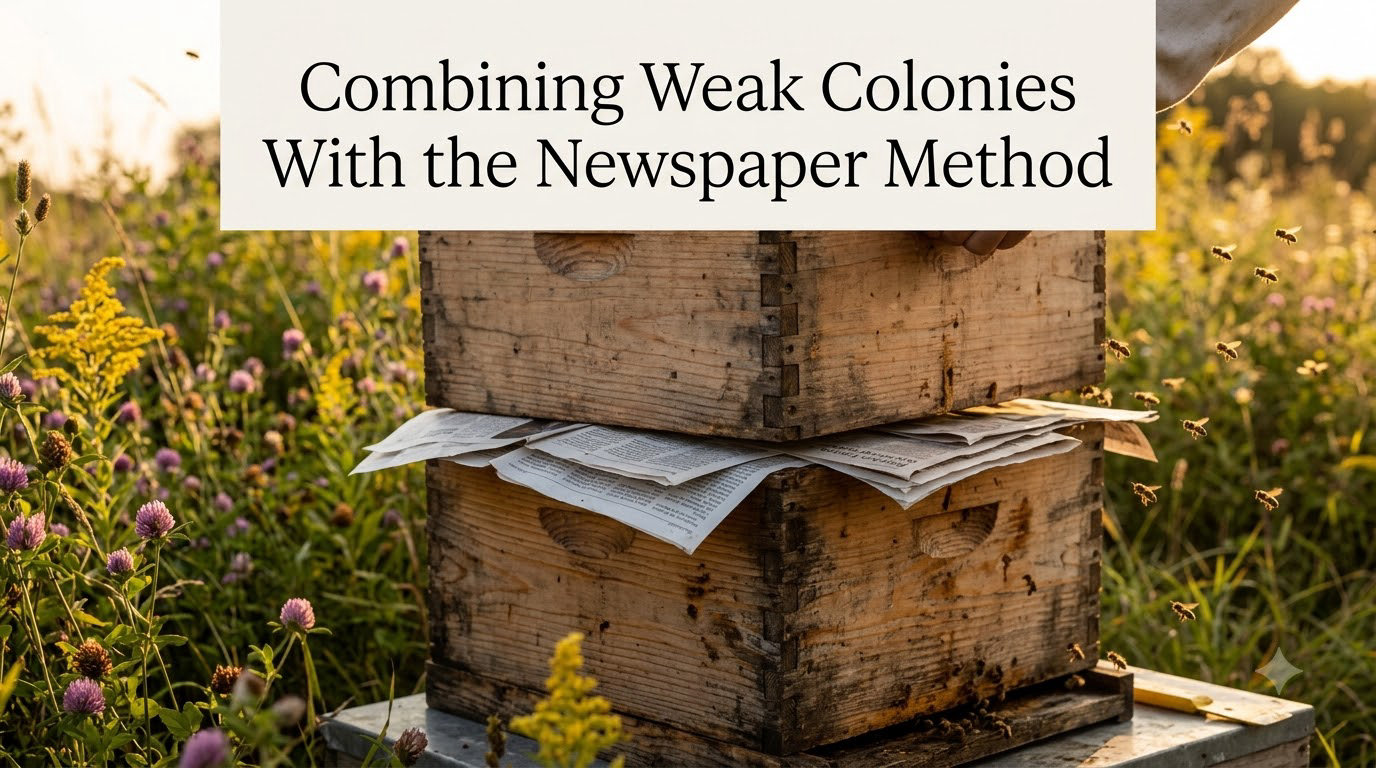
The newspaper method is a beekeeping technique for uniting two colonies by placing a sheet (or two) of newspaper between the hive bodies. Bees from the upper colony slowly chew through the paper over 1 to 3 days while pheromones mix through the slits, allowing both groups to accept each other without fighting.
It’s been a standard practice in commercial and hobbyist apiaries for decades. Commercial beekeepers reach for it when a hive goes queenless mid-season. Hobbyists use it when a swarm, a nuc, or a weak hive can’t survive on its own. If one of your hives is too small to overwinter, the newspaper method lets you consolidate resources, brood, and bees into a single colony with critical mass.
The method works in almost any situation where two colonies need to merge: a queenless hive meeting a queenright hive, two weak hives both underperforming, or a captured swarm joining an established colony. It is the go-to solution when you need to combine weak colonies without losing bees to fighting.
Why the Newspaper Method Works: The Science of Scent Mixing
Each honey bee colony has its own unique scent signature, built from the queen’s pheromones, the brood’s emissions, and the bees’ food stores. Guard bees use that signature to identify and reject outsiders. When you try to dump two colonies together, those guards fight, and you can lose thousands of bees in hours.
The newspaper barrier solves this problem elegantly. As bees from the upper colony chew downward, their pheromones seep through the slits and mingle with the colony below. Over 24 to 72 hours, both groups gradually learn to recognize the new shared scent. By the time the paper is gone, the guards no longer treat each other as enemies.
This gradual pheromone exposure is the whole reason the method works. Direct combining works sometimes, especially with weak, broodless, or queenless colonies. But the newspaper method is more forgiving, more consistent, and dramatically less stressful on the bees. According to experienced beekeepers on Reddit and across beekeeping forums, the technique reliably prevents the mass fighting that ruins rushed combines.
How to Combine Two Hives With Newspaper: Step-by-Step
The classic newspaper method takes about 30 minutes of active work, plus 1 to 3 days of waiting while bees chew through. Below is the exact process I use and recommend.
Step 1: Move the Weaker Colony Next to the Stronger One
If your two hives sit more than a few feet apart, move the weaker one closer in stages, a foot or two per day, until they are side by side. Foraging bees orient to their hive entrance, so a sudden move sends thousands of bees back to the original spot. Slow movement prevents drifting losses.
Step 2: Resolve the Queen Situation
Decide which queen will head the combined colony, then remove the other one. If the upper colony is queenless, you can skip this step. If both colonies have laying queens, you must find and remove one. Place the unwanted queen in a jar or cage for backup, but do not leave two queens in one hive after the combine.
Step 3: Lay the Newspaper on the Strong Colony
Open the stronger (bottom) hive and lay one or two single sheets of regular newspaper flat across the top bars of the uppermost box. Standard newsprint works best. Avoid glossy inserts, which bees won’t chew easily.
Step 4: Cut Slits in the Newspaper
Make half a dozen slits, each about 3 inches long, using your hive tool. These slits give bees a starting point and let pheromones escape upward before the paper is fully chewed. Some beekeepers skip the slits, but slits speed up the process and reduce stress.
Step 5: Stack the Weaker Colony on Top
Place the brood boxes and supers from the weaker colony directly on top of the newspaper. Align the frames so they run the same direction as the bottom colony. A queen excluder between the two colonies is optional, but it can protect both queens during the transition if you are unsure which one survived.
Step 6: Add a Top Entrance and Feed Lightly
Drill or prop open a small upper entrance so the top colony’s bees can orient and forage without being blocked. Lightly mist both colonies with 1:1 sugar syrup, or place a feeder above the inner cover. Scented sugar water accelerates scent mingling and acceptance.
Step 7: Wait and Monitor
Leave the hive alone for 5 to 7 days. After that, open it up and check that the newspaper is gone, no fighting occurred, and the surviving queen is laying. If everything looks calm, remove the queen excluder if you used one, and let the colony settle into its new configuration.
Queen Considerations: Queenless vs Queenright Hives
Queenless colonies are the easiest to combine, because there is no rival queen for the bees to defend. A queenless hive will almost always accept a queenright colony through the newspaper method with minimal fuss.
When combining two queenright colonies, you must remove one queen before uniting. Some beekeepers run both queens briefly with a queen excluder between them, letting them lay eggs in their own boxes, then remove one after 5 to 7 days. This dual-queen setup is sometimes called a 2-queen system, but it adds complexity and is not recommended for beginners.
If you are unsure whether your colony has a queen, look for eggs before combining. The presence of fresh eggs confirms a laying queen within the last 3 days. If you find no eggs and no queen, treat the colony as queenless and proceed without removing anything.
What Is the 3-3-3 Rule for Bees?
The 3-3-3 rule is a simple rule of thumb: a colony needs at least 3 frames of bees, 3 frames of brood, and 3 frames of stores to be considered strong enough to survive on its own. If a hive falls below those minimums, combining it with another colony is often the best path forward.
Think of 3-3-3 as your decision threshold. Below those numbers, a weak colony will rarely build up enough before winter, no matter how much you feed it. Above those numbers, a colony has enough population and resources to overwinter, even if it isn’t thriving. Use the rule to decide which hives to combine and which to leave alone.
Tips for a Successful Combine
Combine late in the day, ideally in the early evening. Bees are calmer after foraging winds down, and a night of darkness gives the colony time to settle before morning activity.
Use 1:1 sugar syrup, lightly misted, just before stacking. Scented, wet bees mingle more readily than dry ones. This trick alone can dramatically improve acceptance.
Always stack the weaker colony on top of the stronger one. The stronger hive’s guards will defend the lower entrance, and field bees returning to the top entrance can reorient without triggering fights.
Combine in late summer or early fall, after the main honey flow but before cold weather. Mid-summer combines can trigger robbing. Late-fall combines leave no time for the colony to settle.
What to Do If the Newspaper Combine Fails
Sometimes combines fail, and bees fight despite the newspaper barrier. Common causes include: both queens still present, robbing pressure from other hives, or paper so glossy the bees couldn’t chew through it.
If you open the hive after 3 days and see dead bees piled below the entrance or shredded paper everywhere, the combine likely failed. Separate the colonies again, remove one queen if needed, and retry with fresh newspaper and slits. If fighting is heavy, a spritz of sugar water or a temporary entrance reducer can help bees reset.
Robbing is the biggest risk during combines. Weak colonies attract robbers, especially in a dearth. Keep entrances small, work quickly, and avoid spilling syrup or leaving comb exposed. If robbing starts, close the hive down to a single small entrance until the combine is complete.
Frequently Asked Questions
How do you combine two hives with newspaper?
Lay one or two sheets of newspaper across the top bars of the stronger (bottom) hive. Make half a dozen 3-inch slits in the paper with your hive tool. Place the weaker colony’s brood box on top, add a small upper entrance, and feed lightly. The bees chew through over 1 to 3 days while scents mix, allowing peaceful integration.
What is the 3 3 3 rule for bees?
The 3-3-3 rule means a colony needs at least 3 frames of bees, 3 frames of brood, and 3 frames of honey or stores to be considered strong enough to survive on its own. If a hive falls below those numbers, combining it with another colony is usually the safest path forward.
Can you combine two queenless hives?
Yes. Two queenless hives can be combined safely with the newspaper method. Since there is no queen to defend, acceptance is fast and aggression is low. Just be aware that the resulting colony will remain queenless, so introduce a new mated queen or allow them to raise one from existing eggs within 24 hours of the combine.
How long does it take bees to chew through newspaper?
Most colonies chew through one to two sheets of newspaper in 24 to 72 hours. Thickness matters: one sheet is faster, two sheets are slower but give more scent-mixing time. If slits are present, chewing usually starts within a few hours.
How do I strengthen a weak bee colony without combining it?
Feed 1:1 sugar syrup, provide a protein patty if natural pollen is scarce, reduce the entrance to help defenders, and consider adding a frame of capped brood from a stronger hive. Combining is still the best option if the colony is below the 3-3-3 rule, especially heading into fall.
Final Thoughts on Combining Weak Colonies
Combining weak colonies with the newspaper method is one of those beekeeping skills that separates struggling beekeepers from confident ones. A single weak hive is a liability going into winter. Two weak hives, joined at the right moment with a sheet of newspaper and a 3-inch slit, become one strong colony ready to build up next spring.
Do the work in the evening, mist both colonies lightly, and walk away for a week. When you come back, you’ll usually find calm bees, a laying queen, and one fewer hive to worry about. That is the promise of the newspaper method, and it has worked for generations of beekeepers.