
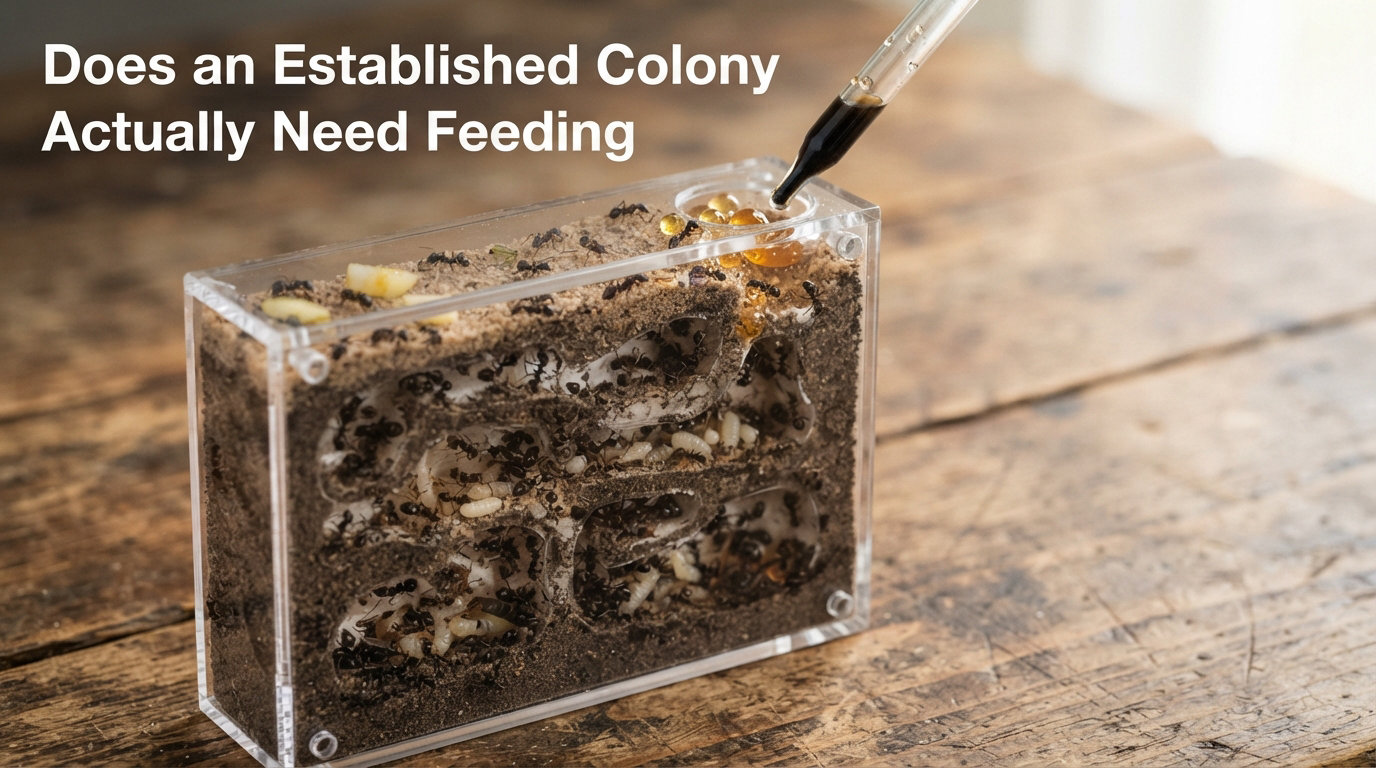
An established bee colony does not always need feeding. Once a colony has drawn comb, a laying queen, capped brood, and stored honey from a natural nectar flow, it can usually fend for itself. Feeding becomes necessary only when those stores run short, when a nectar dearth hits, when you have harvested too much honey, or when you are prepping the hive for winter.
I run a small backyard apiary and have tested both approaches over several seasons. Some of my strongest colonies never saw a feeder after their first year. Others needed emergency sugar in late August after a dry spell wiped out the local bloom. The answer depends on what is actually inside the hive, not on a calendar.
This guide breaks down exactly when feeding matters, what to feed, when to stop, and the mistakes that turn a helpful sugar patty into a colony-killing disaster. By the end you should be able to walk up to any established hive in your bee yard, read the conditions, and make a confident decision in under five minutes.
Table of Contents
What Actually Counts as an Established Colony
Before deciding whether feeding is necessary, you need to know whether your colony qualifies as established. A brand new package or swarm on bare foundation is not established, no matter how long it has been in the box. A second-year colony that has drawn out every frame and survived a full winter cycle is established.
An established colony has four working markers I look for on every inspection:
Drawn comb across at least 8 to 10 frames in the brood box, with cells deep enough for worker brood
A laying queen producing solid patterns of eggs and larvae across multiple frames
Capped brood at multiple stages, showing steady population growth rather than shrinking
Honey and pollen stores in surrounding frames or in a second deep box above the brood
Once those four boxes are ticked, the colony is functionally self-sustaining during a normal nectar flow. That is the point at which supplemental feeding stops being routine and becomes situational. Most colonies in their second season meet this bar by late spring. Overwintered colonies almost always do.
If your colony is missing one of these markers, treat it like a new colony for feeding purposes and bias toward providing syrup until the gap closes.
When an Established Colony Does Not Need Feeding
If you are in an active nectar flow and your bees have visible capped honey on the outer frames, leave the feeder in the shed. Adding sugar syrup on top of a real flow does more harm than good for both the bees and your honey crop.
Bees treat light syrup (1:1) as a nectar substitute. When natural nectar is already coming in, sugar water either gets stored alongside real honey or sits unused and ferments. Fermented syrup stresses bees, causes dysentery inside the hive, and can shorten the life of winter clusters that have to hold contaminated stores for months.
You also do not need to feed when honey supers are on for harvest. Sugar stored in those supers dilutes your harvest and complicates extraction. Many commercial honey buyers reject lots that show sucrose contamination from late-season feeding. Most beekeepers pull the feeder the moment supers go on and only resume feeding after the supers come off in fall.
Finally, healthy established colonies in mild climates with reliable forage rarely need feeding outside of true dearth periods. If your area has consistent spring and fall flows, your job is mostly hands-off between them. Routine, calendar-based feeding is one of the most common mistakes new beekeepers make on their second-year colonies.
When an Established Colony Does Need Feeding
There are four clear scenarios where feeding an established colony is the right call. Each one has a specific trigger and a specific fix.
1. A nectar dearth in summer. Extended rain, drought, or a gap between blooms can shut down forage for weeks. If your bees have no incoming nectar and stores are under 30 pounds, they will starve without help. I learned this the hard way in August 2026 when a six-week dry spell ended my clover flow early. Two of my colonies needed 1:1 syrup by mid-month.
2. After a heavy honey harvest. If you pulled most of the surplus honey in late summer, you may have left the colony short. Topping off with 2:1 syrup lets them rebuild winter stores without depending on an unreliable fall flow. A common rule of thumb is to leave each established colony with at least 50 pounds of honey before you start pulling surplus.
3. Winter preparation in late fall. A colony heading into winter needs roughly 40 to 60 pounds of stores in colder climates. If frames feel light when you heft the hive in October, feed 2:1 syrup until they stop taking it or until stores are adequate. In regions where temperatures drop below freezing for long stretches, switch to candy boards or dry sugar in mid-fall.
4. Spring buildup when stores are low. Late winter and early spring is a high-risk window. Bees are raising brood but cannot forage yet because it is too cold or the first flowers have not opened. A 1:1 syrup at this point stimulates brood production and prevents starvation before the first flow. Pollen patties can be added at the same time for protein support.
Signs Your Established Colony Is Running Low on Food
Hefting the hive (tilting the back of the box with one hand) is the fastest field check. A light hive is a hungry hive. Beyond that, here are the visual cues I look for during inspections.
Frames in the brood box feel noticeably lighter than during peak summer
No visible nectar or uncapped honey in the outer frames
Bees clustered high near the top of the frames instead of spread across them
Pollen stores depleted, with little to no colored pollen packed in cells
Reduced foraging activity at the entrance during daylight hours
A small, dwindling population with no fresh eggs
Robbing behavior at the entrance, with bees fighting at the opening
If you see two or more of these at once, your colony is on a starvation track and needs feed within days, not weeks. Wait too long and the cluster can collapse in a cold snap. In my experience, the difference between a saved colony and a lost one is usually two weeks of delay during a dearth.
Sugar Syrup Ratios and What to Feed
The ratio you feed depends on what you are trying to achieve. Most beekeepers use two standard mixes and a few specialty feeds.
1:1 sugar to water (by volume) – one part white granulated sugar dissolved in one part hot water. This thin syrup mimics a natural nectar flow. Use it in spring and summer to stimulate brood rearing and comb drawing. It is also the right mix for emergency summer feeding during a dearth. Bees will consume it almost immediately or store it briefly while raising brood.
2:1 sugar to water (by volume) – two parts sugar to one part water, heated until dissolved. This thicker syrup mimics ripened honey and is stored rather than consumed immediately. Use it in fall to build winter stores without stimulating excessive brood rearing late in the season. Most colonies will cap 2:1 syrup in the comb within days.
White granulated cane sugar is the standard. Brown sugar, molasses, and corn syrup all contain compounds bees cannot digest well and can cause dysentery or colony death. Honey from unknown sources should never be used as feed because it can carry American foulbrood spores, even in small amounts.
Pollen patties are a separate supplement used in late winter to boost protein when natural pollen is scarce. They are useful but not a substitute for syrup when carbohydrates are short. Use them together when both protein and energy are lacking.
Dry sugar poured onto newspaper above the cluster is a winter emergency option when liquid syrup will freeze before bees can use it. Candy boards made from heated sugar and water set into solid slabs are another winter alternative that does not trigger brood rearing.
Feeding Methods for Established Colonies
How you deliver the syrup matters as much as what is in it. Each method has tradeoffs around capacity, disturbance, and robbing risk.
Frame feeders replace a frame inside the brood box. They hold a lot of syrup (often a gallon or more), sit close to the cluster, and minimize robbing because the entrance stays small. The downside is they require opening the hive to refill, which disturbs the brood nest and can chill brood in cool weather.
Top feeders sit above the inner cover in a separate box. They hold several gallons at a time and refill without disturbing the brood nest. They are my preferred method for fall feeding of established colonies. The main risk is drowning if the bees cannot easily climb out, so use screened or floated versions.
Entrance feeders are small jar or bag units that sit at the hive entrance. They are convenient and let you monitor consumption at a glance. However, they trigger robbing in a dearth because the syrup is exposed and easy for other bees to steal. I only use entrance feeders during strong flows, never during a shortage.
Open feeding means setting out a communal tray of syrup away from the apiary. It is the riskiest option. Open feeding attracts every bee in a wide radius, spreads disease between colonies, and can kick off a robbing frenzy at nearby hives. The only safe time to open feed is during a strong flow when bees are not stressed and other colonies are not nearby.
Whatever method you choose, never feed when honey supers for human consumption are on the hive. Also clean any spilled syrup immediately. Even small drops attract robbers and start problems that can take a day to settle.
When to Stop Feeding an Established Colony
Stop feeding when one of three things happens.
First, the bees stop taking the syrup. A colony with adequate stores will leave syrup untouched. If jars stay full for a week, they do not need more. This is the most reliable signal and the one I trust most in my own apiary.
Second, a real nectar flow starts. Once bees are bringing in fresh nectar, pull the feeder. Sugar stored during a flow dilutes honey quality and is hard to separate at extraction. Many commercial beekeepers use a rule that no feeder goes on within three weeks of a major flow.
Third, you are within two to three weeks of your first frost date in fall. Late-season feeding that stimulates brood too close to winter produces bees that cannot survive the cold cluster period. Those late-season bees wear out their energy reserves before spring and the cluster dwindles.
For winter itself, many beekeepers switch from syrup to solid feeds like sugar candy boards or dry sugar on newspaper above the cluster. These do not trigger brood rearing and are safer for long-term consumption because they will not freeze or ferment.
Risks and Mistakes to Avoid When Feeding
Feeding sounds simple, but a few common mistakes can hurt an established colony in ways that are not obvious until it is too late.
Triggering robbing. Spilled syrup, weak feeders, and open feeding all attract robber bees from nearby hives. A robbing event can wipe out a colony in hours, especially a smaller established colony that is already light on stores. Feed inside the hive, clean spills immediately, and never feed during a dearth with a hive entrance wide open. Use entrance reducers in late summer.
Contaminating honey crops. Sugar stored in supers meant for harvest is a real problem for honey producers. Remove feeders before adding supers and confirm bees are foraging on real nectar before you collect honey. Some honey regulatory agencies test for sucrose and reject lots that fail.
Spreading disease through honey. Honey can carry American foulbrood spores. Bees eating contaminated honey can infect their own brood and start a slow colony decline. Stick to white sugar for supplemental feeding unless you know the exact source of any honey you feed back. Even your own apiary honey can carry spores if one hive is infected.
Fermented syrup. Old syrup left in feeders for weeks will ferment, especially in summer heat. Fermented syrup causes dysentery and weakens colonies over time. Mix only what you can use in a few days and refill frequently. If you see bubbles or a sour smell, dump the syrup and start fresh.
Feeding when stores are already adequate. Overfeeding stresses a healthy colony and produces a crowded brood nest that swarms more readily. If frames are heavy with capped honey and the colony is building normally, the colony is fine without you. Step back.
FAQs
Does an established colony actually need feeding?
An established colony only needs feeding during specific stress points: a summer nectar dearth, after a heavy honey harvest, during late fall winter preparation, or in early spring when stores are low. During an active nectar flow with adequate honey on the frames, feeding is unnecessary and can contaminate honey stores.
What is the 3 3 3 rule for beekeeping?
The 3-3-3 rule is a beginner guideline suggesting you should check on a new colony about 3 days after installation, then 3 weeks later to confirm the queen is laying, and 3 months in to evaluate overall progress. It applies mostly to new colonies and packages, not established hives.
Should you feed a new bee colony?
Yes. New packages and swarms on bare foundation need heavy supplemental feeding with 1:1 syrup to draw comb, raise brood, and build initial stores. Established colonies with drawn comb and capped honey do not need the same level of routine feeding.
Why should you not feed honey to bees?
Honey from unknown sources can carry American foulbrood (AFB) spores, which infect bee larvae and can wipe out a colony. Even honey from your own apiary can spread disease between hives if one is infected. White granulated sugar is the safe standard for supplemental feeding.
Why can’t beekeepers eat bananas?
Beekeepers avoid eating bananas before inspecting hives because banana scent is chemically similar to the alarm pheromone bees release when threatened. The smell can trigger defensive behavior and stinging, especially in guard bees at the entrance.
When should I stop feeding my established colony sugar water?
Stop feeding when bees stop taking the syrup, when a natural nectar flow begins, or about two to three weeks before your first fall frost. In winter, switch from liquid syrup to solid sugar (candy boards or dry sugar) to avoid triggering late brood rearing.
Final Verdict on Feeding Established Colonies
So does an established colony actually need feeding? Only when the conditions inside the hive and the season outside the hive demand it. A healthy established colony with a laying queen, capped brood, drawn comb, and adequate honey stores is fully self-sufficient during a normal nectar flow.
Use this quick decision tree on your next inspection:
Active nectar flow and visible capped honey: do not feed
Honey supers on for harvest: do not feed
Dearth, light frames, or low population: feed 1:1 syrup
Late fall and stores under 40 pounds: feed 2:1 syrup
Late winter and brood rearing has started: feed 1:1 syrup
Established colonies are built to forage, store, and survive on their own. Your job is to read the hive, not to feed on autopilot. When in doubt, heft the hive, check the frames, and let the bees tell you what they need. After a few seasons of practice you will recognize the difference between a hive that wants food and one that is full within seconds of pulling a frame.