
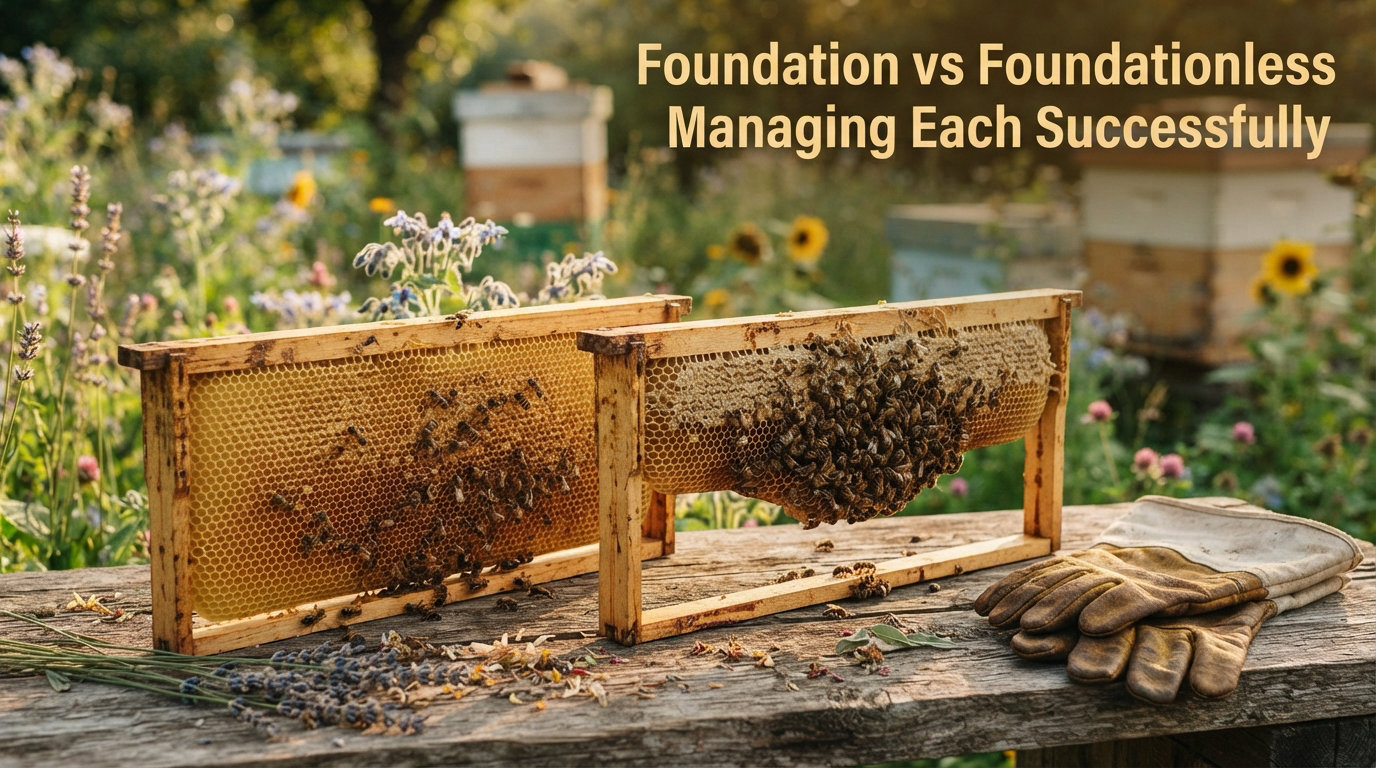
If you are setting up your first Langstroth hive, one of the biggest decisions you will face is whether to use wax or plastic foundation in your frames, or let your bees build comb naturally. The foundation vs foundationless beekeeping debate has strong advocates on both sides, and for good reason. Each method comes with distinct advantages and management challenges that can make or break your first season.
Foundation gives your bees a pre-formed starting surface, which can speed up comb building and simplify hive inspections. Foundationless beekeeping lets bees construct natural comb on their own terms, which many beekeepers believe promotes healthier, more resilient colonies.
Our team has studied discussions across beekeeping forums including r/Beekeeping, the Honey Flow forum, and Beesource to understand what actually works in practice. The consensus is clear: both approaches can succeed, but they demand very different management strategies and skill levels.
In this guide, we will break down what each method involves, compare the pros and cons side by side, share step-by-step setup instructions for foundationless frames, cover cross comb prevention, explore hybrid strategies, and help you decide which approach fits your beekeeping goals for 2026 and beyond.
Table of Contents
What Is Foundation Beekeeping?
Foundation beekeeping uses pre-formed sheets of wax or plastic fitted into each frame to guide bees as they build comb. These foundation sheets come embossed with a hexagonal cell pattern, typically in worker cell size measuring about 5.2 to 5.4 millimeters across.
Bees draw out wax from the embossed foundation pattern, extending the cell walls to full depth on both sides of the sheet. This process gives beekeepers predictable, straight comb that stays neatly aligned within the frame.
Most commercial and many hobby beekeepers use foundation because it accelerates comb construction and produces uniform frames that are far easier to extract using a centrifugal honey extractor. Plastic foundation has become increasingly common due to its durability and resistance to damage during inspections. Wax foundation remains the choice for beekeepers who prefer a more natural starting surface that bees accept readily.
Both types come in standard sizes designed for deep, medium, and shallow Langstroth frames. You can also find small cell foundation (around 4.9 millimeters) marketed toward beekeepers pursuing natural cell size regression techniques.
What Is Foundationless Beekeeping?
Foundationless beekeeping is the practice of allowing honey bees to construct their own natural comb within empty frames, without a pre-formed wax or plastic foundation for guidance. Bees build downward from a starter strip, a thin guide, or simply the top bar of the frame itself.
This approach lets bees decide cell sizes based on their colony’s immediate needs. Worker cells, drone cells, and honey storage cells all get built at natural dimensions rather than the uniform size imposed by commercial foundation.
Many beekeepers believe natural cell sizes support better colony health by allowing bees to express their full range of building instincts. Some research and anecdotal evidence suggests smaller natural worker cells may help with varroa mite management, though this remains debated.
Foundationless frames work in standard Langstroth hives, top bar hives, and Warre hives. The critical difference from foundation-based beekeeping is management intensity: without foundation guiding the bees, you must monitor comb construction closely during the early establishment phase. Starter strips made of wax-coated wood, craft sticks, or even a thin strip of old foundation can serve as a reliable starting point.
Pros of Foundation Beekeeping
Foundation beekeeping offers several practical advantages that make it the default choice for most beekeepers, especially beginners:
Faster comb building: Bees start with a pre-formed pattern, so they spend less time and energy deciding where and how to build. A strong nectar flow can result in fully drawn comb in days rather than weeks.
Straight, predictable comb: The embossed cell pattern keeps comb aligned within each frame, making inspections cleaner and reducing the risk of cross comb.
Easier honey extraction: Uniform comb built on foundation withstands the spinning force of a centrifugal extractor without breaking apart.
Controlled cell size: Foundation lets you limit drone production by using worker-sized cells, which some beekeepers prefer for population management.
Beginner-friendly inspections: Straight comb on foundation is easier to lift, inspect, and manipulate without damaging the structure.
Reusable frames: Plastic foundation can be reused for many seasons after cleaning, reducing long-term replacement work.
Cons of Foundation Beekeeping
Despite its convenience, foundation comes with several drawbacks that push many beekeepers toward natural comb:
Ongoing cost: Wax and plastic foundation must be purchased for every new frame. Over multiple hives and seasons, this adds up to a significant expense.
Pesticide contamination risk: Commercial beeswax used to manufacture foundation often contains trace amounts of miticides and agricultural chemicals. These contaminants can accumulate in your hive’s wax over time.
Unnatural cell sizes: Standard foundation forces bees to build cells larger than they would naturally choose, which may affect brood development timing and colony dynamics.
Plastic disposal concerns: Plastic foundation does not break down naturally and creates waste when eventually discarded.
Wax moth vulnerability: Stored wax foundation is attractive to wax moths and can be destroyed if not properly protected between seasons.
Beeswax you harvest may not be clean: If your foundation introduced contaminants, your harvested wax carries those same chemicals, limiting its value for cosmetics or food use.
Pros of Foundationless Beekeeping
Foundationless beekeeping appeals to beekeepers who want a more natural, hands-off approach with several compelling benefits:
Lower cost: You eliminate the need to purchase foundation for every frame. A starter strip of wax-coated wood costs pennies compared to commercial foundation sheets.
Natural cell sizes: Bees build cells sized to their own specifications, which supports natural brood cycles and lets the colony manage its own drone-to-worker ratio.
Reduced chemical exposure: Without commercial wax foundation introducing contaminants, your hive starts with a clean chemical baseline.
Pure, clean beeswax: Comb built foundationless is free from industrial wax contamination, making your harvested wax highly valuable for candles, cosmetics, and food wraps.
Better adaptation: Bees allowed to build naturally may adapt their comb to local conditions, seasonal flows, and colony needs more effectively.
Lighter, easier lifting: Natural comb without a plastic or heavy wax foundation sheet weighs less, making full honey supers easier to handle during inspections.
Cons of Foundationless Beekeeping
The tradeoffs of going foundationless are real, and they represent the most common reasons beginners struggle with this approach:
Cross comb risk: Without foundation guiding the bees, they may build comb across multiple frames or at angles, creating a messy, difficult-to-inspect hive. This is the number one frustration reported by beginners on beekeeping forums.
More frequent inspections: During comb building, you need to check the hive every 5 to 7 days to catch and correct problems early. This is significantly more hands-on than foundation-based beekeeping.
Slower comb building: Bees building from scratch take longer to draw out full frames, which can delay honey production and leave less time before winter.
Drone population management: Bees naturally prefer to build larger drone cells first. Without foundation controlling cell size, you may see a drone explosion that some beekeepers find undesirable.
Fragile comb: Newly built foundationless comb is delicate and can collapse during inspections if not handled carefully, especially in hot weather.
Steeper learning curve: Foundationless beekeeping rewards experience. Beginners without a mentor often lose entire frames of bees to cross comb or collapsed comb in their first season.
How to Set Up Foundationless Frames in a Langstroth Hive
Setting up foundationless frames requires a guide strip and proper hive placement to give bees a clear starting point. Follow these steps to give your colony the best chance of building straight, manageable comb:
Step 1: Prepare your frames. Remove any foundation from your wooden or plastic frames. You want completely empty frames with the top bar intact.
Step 2: Install a starter strip. Cut a thin strip of wood (a paint stir stick or craft stick works well) to fit snugly in the groove of the top bar. Secure it with a small dab of waterproof wood glue. Alternatively, some beekeepers use a narrow strip of old wax-coated foundation tucked into the top bar groove.
Step 3: Coat the starter strip with wax. Brush a thin layer of melted beeswax along the bottom edge of your starter strip. This gives bees a scent trail and a physical starting point, dramatically improving the odds of straight comb construction.
Step 4: Position your hive perfectly level. Use a spirit level to check that your hive sits level side to side and front to back. Bees build comb aligned with gravity, so an unlevel hive guarantees crooked or crossed comb.
Step 5: Place a drawn frame as a guide. If you have a frame of straight, fully drawn comb, position it next to your foundationless frames. Bees tend to match the pattern of adjacent comb, which keeps new construction aligned.
Step 6: Feed the colony. Comb building requires significant wax production, which demands energy. Provide sugar syrup (1:1 ratio in spring) to simulate a nectar flow and encourage active comb building.
Step 7: Inspect every 5 to 7 days. Check your foundationless frames regularly during the comb building phase. If you see comb going crooked, fix it immediately before it hardens.
How to Prevent Cross Comb in Foundationless Beekeeping
Cross comb is the single most common failure point for foundationless beginners, but it is preventable with disciplined management. Here are the strategies experienced beekeepers rely on:
Keep the hive perfectly level. This is non-negotiable. Bees align their comb with gravity, so even a slight tilt causes comb to veer off the frame. Check level after every inspection and after any storms.
Inspect frequently during the establishment phase. Visit your hive every 5 to 7 days while bees are actively drawing comb. Early detection of crooked comb takes minutes to fix. Waiting weeks turns a small problem into a frame-destroying mess.
Use guide frames. Place fully drawn, straight comb frames between foundationless frames. The bees follow the established pattern and build parallel to the existing comb.
Correct problems immediately. If you find comb crossing frame boundaries, gently cut it free with a hive tool while it is still soft and warm. Press it back into alignment within the correct frame before closing the hive.
Avoid opening the hive during cold snaps. Cold comb becomes brittle and breaks easily. Schedule inspections during the warmest part of the day when comb is pliable.
The Hybrid Approach: Mixing Foundation and Foundationless Frames
Many experienced beekeepers do not choose one method exclusively. Instead, they mix foundation and foundationless frames strategically to get the benefits of both approaches. The hybrid method is increasingly recommended on forums as the best option for transitioning beekeepers.
Foundation in the brood nest, foundationless in honey supers. Use foundation frames in your lower brood boxes to give bees a fast, predictable start and keep the brood nest organized. Then use foundationless frames in your honey supers to produce clean, chemical-free beeswax for harvest.
Alternating frames strategy. Some beekeepers alternate foundation and foundationless frames within the same box. The foundation frames act as guides, keeping the foundationless comb straight and aligned. This works well during the transition from foundation to foundationless management.
Transitioning gradually. If you want to move fully to foundationless, do not switch all frames at once. Replace one or two foundation frames per box with foundationless frames at a time. Let the bees draw out the new frames before removing more foundation. This gradual approach, recommended by experienced beekeepers on Beesource, reduces the risk of cross comb and gives you time to learn the management skills needed.
Choosing Your Approach: A Guide for New Beekeepers
Deciding between foundation and foundationless beekeeping comes down to your experience level, your goals, and how much time you can commit to hive management. Here is how to think through the decision:
For Complete Beginners
If this is your first hive, start with foundation. You will have enough to learn about bee behavior, pest management, and seasonal care without also fighting cross comb and collapsed frames. Foundation gives you straight, manageable comb that makes inspections educational rather than stressful. After one or two successful seasons, consider transitioning to foundationless frames in your honey supers.
For Beekeepers Who Want Maximum Honey Yield
Foundation is the better choice for honey production. Bees draw comb faster on foundation, and the resulting frames are sturdy enough for mechanical extraction. You get more honey extracted more efficiently with less risk of comb collapse in the extractor.
For Beekeepers Focused on Natural Methods
If your priority is natural cell sizes, reduced chemical exposure, and clean beeswax, foundationless is the path forward. Accept that you will spend more time on inspections during the comb building phase. Plan for weekly visits during spring and early summer.
Climate Considerations
In shorter northern seasons, foundation gives bees a head start that can make the difference between a colony ready for winter and one that runs out of time. In warmer southern climates with longer flows, foundationless bees have ample time to build comb before cold weather arrives. If you live in a region with a short building season, lean toward foundation for at least your brood boxes.
Cost Comparison Over Time
Foundation sheets represent a recurring expense that grows with every new frame and every additional hive. Foundationless starter strips cost almost nothing by comparison since you can make them from scrap materials. However, the time you invest in extra inspections has real value too. Calculate your total cost considering both materials and your own labor before committing to either approach.
Eight-Frame vs Ten-Frame Hive Considerations
Foundationless beekeeping tends to work slightly better in 8-frame hives because the narrower box means less distance between walls, giving bees less room to wander off track. Ten-frame hives are perfectly manageable with foundationless, but the wider span increases the margin for cross comb errors. No competitor currently addresses this distinction, but it matters in practice.
The Mentor Factor
Forum discussions consistently highlight mentorship as essential for foundationless success. If you have an experienced local beekeeper or an active beekeeping club to consult, foundationless becomes far more manageable. Without that support network, foundation reduces your risk significantly.
Common Mistakes to Avoid
Whether you choose foundation or foundationless, certain mistakes trip up new beekeepers repeatedly. Learn from the experiences shared across beekeeping forums:
Neglecting inspections during comb building: The most common foundationless failure is simply not checking often enough. Weekly visits during active comb construction are not optional.
Allowing an unlevel hive: Even a few degrees of tilt causes comb to veer. Check level every single time you close the hive.
Switching all frames at once: Going fully foundationless overnight overwhelms both you and the bees. Transition gradually.
Ignoring drone comb: In foundationless setups, bees build drone cells by choice. Cutting out all drone comb stresses the colony. Let them maintain a healthy drone population.
Opening the hive in cold weather: Brittle cold comb breaks easily. Wait for warm afternoon temperatures before inspecting.
FAQs
What is foundationless beekeeping?
Foundationless beekeeping is the practice of allowing honey bees to construct their own natural comb within empty frames, without a pre-formed wax or plastic foundation for guidance. Bees build comb downward from a starter strip or the top bar of the frame itself.
What are the pros and cons of foundationless beekeeping?
Pros include lower cost, natural cell sizes, reduced chemical exposure, and pure beeswax harvest. Cons include cross comb risk, more frequent inspections needed, slower comb building, drone population surges, and a steeper learning curve for beginners.
How do you set up foundationless frames in a Langstroth hive?
Remove the foundation, install a starter strip in the top bar groove, coat it with melted beeswax, ensure the hive is perfectly level, place a drawn guide frame nearby, feed the colony syrup, and inspect every 5 to 7 days during comb building.
Should new beekeepers start with foundation or foundationless?
New beekeepers should generally start with foundation. It produces straight, manageable comb that makes learning inspections easier. After one or two successful seasons, beekeepers can transition to foundationless frames, starting with honey supers.
How to prevent cross comb in foundationless beekeeping?
Keep the hive perfectly level, inspect every 5 to 7 days during comb building, use drawn guide frames next to foundationless frames, correct crooked comb immediately while it is still soft, and avoid inspections during cold weather when comb is brittle.
Can you mix foundation and foundationless frames?
Yes, many beekeepers use foundation in the brood nest and foundationless frames in honey supers. Others alternate foundation and foundationless frames within the same box so the foundation acts as a guide for straight comb building.
Conclusion
The foundation vs foundationless beekeeping choice does not have to be permanent or absolute. Many successful beekeepers use both methods in the same hive, adapting their approach as their skills grow and their goals evolve.
Start where you feel confident. If that means foundation for your first season, embrace it and learn the fundamentals of colony management without the added challenge of cross comb. When you are ready, transition gradually and enjoy the satisfaction of watching bees build comb the way nature intended.
The best approach is the one you can manage consistently. Whichever path you choose, disciplined inspections, proper hive leveling, and patience will serve you well. Join a local beekeeping club, find a mentor, and keep learning from the experiences of others in the beekeeping community.