
Every new beekeeper hits the same wall: someone says feed 1:1 syrup in spring, another says use 2:1 in fall, and half the beekeeping forums argue about whether you should measure by weight or volume. I remember standing in my apiary with a bag of sugar and no clear answer, wondering which ratio actually matters and when.
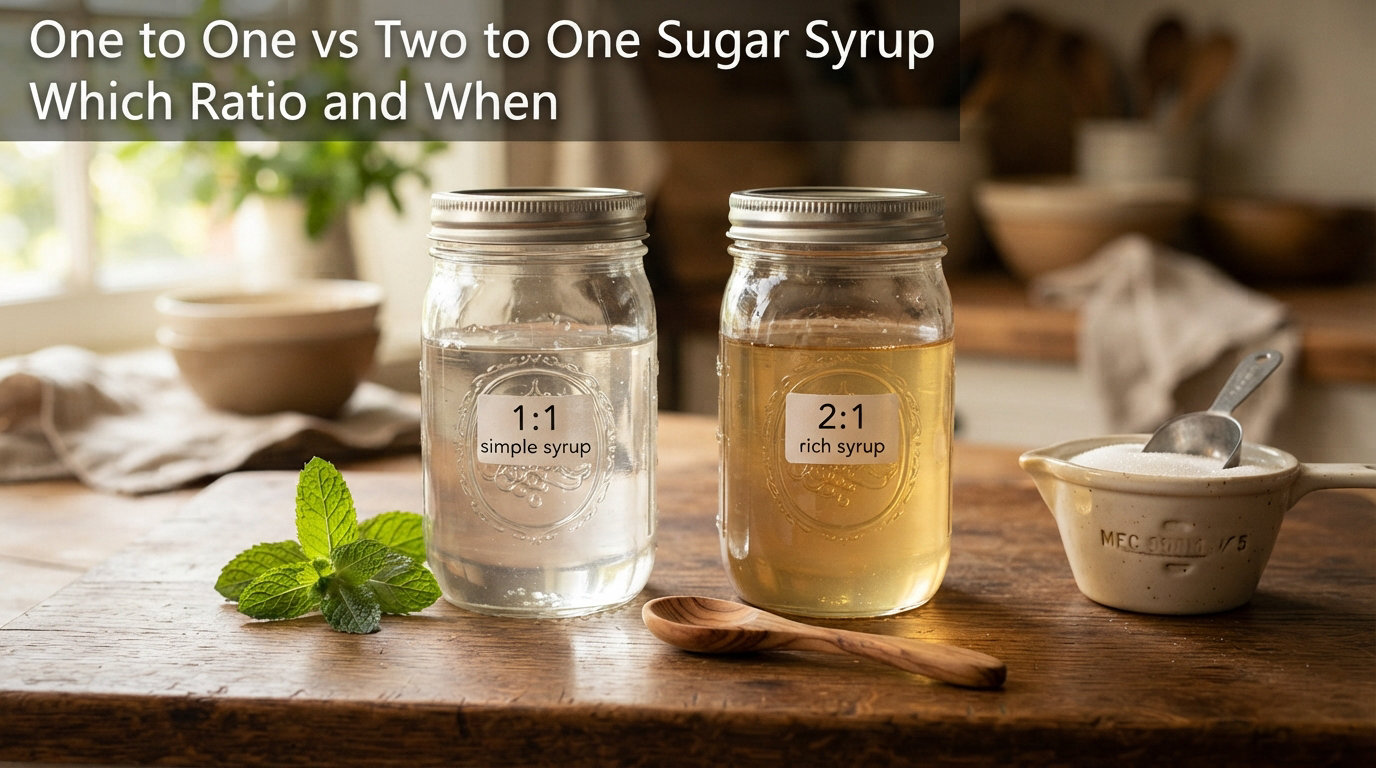
Here is the short version. Feed 1:1 sugar syrup (equal parts sugar and water by weight) in spring to mimic a nectar flow, stimulate comb building, and encourage brood rearing. Feed 2:1 sugar syrup (two parts sugar to one part water by weight) in late summer and fall so bees can quickly cap and store food for winter.
In this guide, I walk through the one to one vs two to one sugar syrup debate from every angle. You will learn what each ratio does for your colony, how to mix them correctly, what happens when you use the wrong one, and when to switch from liquid syrup to solid winter feed like fondant or candy boards.
Our team has spent years in the bee yard testing these ratios across spring buildups, summer dearths, and fall preparations. The advice below blends what actually works with the research behind why it works, updated for 2026 with the latest community insights.
Table of Contents
What Is Sugar Syrup and Why Do Beekeepers Feed It?
Sugar syrup is a sucrose solution made from white table sugar and water, designed to mimic natural nectar when bees cannot forage enough on their own. Beekeepers use it as a supplement when colonies need a boost, whether that means drawing comb, raising brood, or filling stores for winter.
Bees process sugar syrup the same way they process nectar. They carry it to the comb, add enzymes to break down sucrose into glucose and fructose, then dehydrate it until the moisture content drops low enough to cap and store. The ratio of sugar to water determines how much dehydration work the bees must do before that syrup becomes stable.
In nature, nectar varies wildly in sugar concentration depending on the plant species, time of day, and weather. Some flowers produce nectar as thin as 15% sugar, while others reach 60% or higher. Sugar syrup lets you choose a concentration that matches what your colony needs at a specific point in the season.
Feeding sugar syrup is not something every colony needs every year. Strong hives in areas with reliable nectar flows may never need supplemental feed. But for new packages, splits, nucs drawing comb, or colonies entering winter light on stores, syrup is one of the most effective tools a beekeeper has.
One to One vs Two to One Sugar Syrup: Which Ratio and When
The core question every beekeeper faces is simple: which ratio should I feed, and when? The answer depends on what your bees need to accomplish. Spring colonies need stimulation and wax production, while fall colonies need efficient food storage. Here is how each ratio serves those goals.
1:1 Sugar Syrup: The Spring Stimulant
A 1:1 ratio means one part sugar to one part water by weight. This produces a thin syrup with roughly 50% sugar content, which closely mimics the consistency of natural spring nectar.
When bees receive 1:1 syrup, they interpret it as a nectar flow. This triggers several colony behaviors that beekeepers want in spring. The queen ramps up egg laying, worker bees secrete wax and draw out new comb, and the colony expands its brood nest in preparation for the main honey flow.
I feed 1:1 syrup in spring when I install a new package of bees, when I want a nuc to build out its frames quickly, or when a colony needs encouragement to expand before the local nectar flow begins. The thin consistency requires bees to process and dehydrate it, which keeps them active and productive.
One important point: because 1:1 syrup is thin, it spoils faster than thick syrup. In warm spring weather, you should swap out syrup every three to five days to prevent fermentation and mold growth inside the feeder.
You can also use 1:1 during a summer dearth, when natural nectar dries up between bloom periods. A thin syrup keeps the colony from starving and maintains brood production without triggering the heavy storage behavior that thicker syrup would.
2:1 Sugar Syrup: The Fall Storage Builder
A 2:1 ratio means two parts sugar to one part water by weight. This creates a thick syrup with about 66% sugar content, closer to the concentration of ripened honey.
Thick syrup serves one primary purpose: helping bees fill and cap their winter stores quickly. Because 2:1 syrup already has a high sugar concentration, bees do less dehydrating work before they can cap it. This matters enormously in fall, when colonies have a limited window to process and store food before cold weather shuts down their ability to evaporate moisture.
I switch to 2:1 syrup in late summer, typically when the main nectar flow ends and nighttime temperatures start dropping. The goal is to give the colony enough capped stores to survive winter without the bees expending excessive energy on dehydration.
Many experienced beekeepers recommend feeding 2:1 in August and September, stopping four to six weeks before your first expected freeze. This gives bees time to process, cap, and cluster before winter.
How much should you feed? A general guideline is that a colony needs 60 to 90 pounds of stored food to survive a typical winter in temperate climates. You can estimate your colony’s current stores by hefting the back of the hive, which should feel heavy and difficult to lift if stores are adequate.
Season-by-Season Sugar Syrup Guide
Here is a quick reference table showing which ratio to use throughout the beekeeping season.
| Season | Ratio | Primary Purpose | Key Benefit |
|---|---|---|---|
| Early Spring | 1:1 | Stimulate brood rearing | Colony buildup before nectar flow |
| Spring (new hives) | 1:1 | Draw new comb | Wax production and frame building |
| Summer Dearth | 1:1 | Keep colony alive during nectar gap | Prevent starvation, maintain brood |
| Late Summer | 2:1 | Build winter stores | Quick capping and storage |
| Early Fall | 2:1 | Top off winter reserves | Efficient food storage before freeze |
| Late Fall and Winter | Solid feed (fondant or candy board) | Emergency feeding | Accessible food during cluster |
Notice that the table includes solid feed for late fall and winter. Once temperatures drop consistently below 50 degrees Fahrenheit, bees cannot take up liquid syrup effectively because they cluster tightly and cannot break formation to access a liquid feeder.
What Happens If You Feed the Wrong Ratio?
Using the wrong ratio in the wrong season will not destroy your colony overnight, but it creates problems that compound over time. Here is what our team has seen happen in real apiaries.
If you feed thin 1:1 syrup in fall, the bees must work harder to dehydrate it before capping. As temperatures drop, their ability to evaporate moisture decreases. The result is syrup that may ferment in the comb or remain uncapped, which means it can spoil over winter instead of serving as stable food.
You also risk introducing excess moisture into the hive right when you want it dry. Dampness in fall and winter is one of the biggest threats to colony survival, and thin syrup only makes that problem worse.
If you feed thick 2:1 syrup in spring when you want comb building, the bees store it rather than draw wax. Thick syrup signals to the colony that stores are sufficient, which can actually slow down comb production and brood expansion. You end up with stored syrup where you wanted drawn comb.
The practical takeaway: match the ratio to the goal. Thin for stimulation and building, thick for storage. When in doubt, ask yourself what the colony needs to accomplish in the next four weeks.
By Weight or By Volume: The Measurement Question
This is one of the most debated topics in beekeeping forums, and the confusion is understandable. The short answer is that beekeepers should mix sugar syrup by weight, not by volume. Here is why.
Sugar and water have different densities. One cup of granulated sugar weighs about 200 grams, while one cup of water weighs about 237 grams. If you measure 1:1 by volume (one cup sugar to one cup water), your actual ratio is roughly 0.85:1 by weight, which is thinner than you intend.
When beekeepers on forums like Reddit’s r/Beekeeping talk about 1:1 and 2:1 ratios, they are almost always referring to weight. A true 1:1 syrup is one pound of sugar dissolved in one pound of water. A true 2:1 syrup is two pounds of sugar dissolved in one pound of water.
For practical mixing without a kitchen scale, you can approximate. Since one pint of water weighs about one pound, and granulated sugar is roughly two cups per pound, a workable 1:1 recipe is one pint of water to two cups of sugar. For 2:1, use one pint of water to four cups of sugar.
These are approximations, but they get you close enough for beekeeping purposes. The bees will process whatever concentration you provide.
Randy Oliver of ScientificBeekeeping.com has pointed out that the exact ratio matters less than beekeepers often fear. His research found that bees build roughly the same amount of comb per pound of sugar consumed regardless of syrup concentration. The ratios are guidelines, not precision formulas.
Some beekeepers on forums use what they call the guesstimation method: pour sugar into warm water and keep stirring until no more dissolves. While this is not precise, the community consensus is that close enough is good enough.
How to Mix Sugar Syrup Step by Step
Mixing sugar syrup is straightforward, but a few technique details make a big difference. Here is how I prepare both ratios.
Mixing 1:1 Sugar Syrup
Step 1: Weigh or measure your ingredients. For a standard batch, use 5 pounds of white sugar and 5 pounds of water (about 5 pints).
Step 2: Heat the water to warm, not boiling. Hot tap water or water warmed on the stove to about 120 degrees Fahrenheit works perfectly. You want it warm enough to dissolve the sugar quickly but not so hot that it caramelizes or degrades the sucrose.
Step 3: Pour the sugar into the warm water gradually, stirring constantly. Keep stirring until every crystal dissolves and the liquid is clear.
Step 4: Let the syrup cool to room temperature before placing it in your feeder. Warm syrup in a hive can attract robbers and disrupt the cluster temperature.
Step 5: Clean your feeder thoroughly between refills. 1:1 syrup ferments quickly in warm weather, and leftover residue accelerates spoilage.
Mixing 2:1 Sugar Syrup
Step 1: Weigh your ingredients. For a standard batch, use 10 pounds of white sugar and 5 pounds of water.
Step 2: Heat the water hotter than you would for 1:1, around 180 degrees Fahrenheit, because the higher sugar concentration is harder to dissolve. The water should be approaching a simmer but not bubbling.
Step 3: Add the sugar slowly, stirring continuously. Because there is twice as much sugar as water, this takes patience. Keep stirring until the solution is fully clear with no graininess.
Step 4: If the sugar will not fully dissolve, add a small splash of hot water. You want the syrup thick but fully dissolved, because undissolved crystals at the bottom of your feeder can encourage mold.
Step 5: Cool completely before feeding. Thick syrup holds heat longer than thin syrup, so give it extra time.
One tip from the beekeeping community: you do not need to boil the water. Boiling does not improve dissolution and can actually cause the sugar to caramelize slightly, which reduces its nutritional value for bees. Warm to hot water is sufficient.
Another consideration is temperature at the hive. In cold fall weather, 2:1 syrup can crystallize inside the feeder before bees consume it. If you live in a region where fall nights drop below freezing, feed earlier in the day so bees can take the syrup down before it thickens overnight.
Common Sugar Syrup Mistakes to Avoid
Over the years, I have made most of these mistakes myself. Here are the ones that cost me colonies or honey production.
Boiling the sugar is the most common error. Boiling can caramelize the sucrose, creating compounds that are difficult or harmful for bees to digest. Use hot water, add the sugar off the heat, and stir until dissolved.
Using brown sugar, raw sugar, or molasses is another mistake. These contain non-sucrose compounds that bees cannot digest properly and that can cause dysentery over winter. Always use plain white granulated cane or beet sugar.
Leaving syrup on the hive during a honey flow is a sure way to contaminate your honey harvest. Bees do not distinguish between syrup and nectar once it is in the comb. Remove feeders at least two weeks before you plan to extract honey.
Overfeeding is subtler but equally damaging. Dumping large quantities of syrup into a small colony can backfill the brood nest with syrup, leaving the queen no room to lay eggs. Feed in moderation and monitor how fast the colony takes it down.
Finally, ignoring spoilage signs is a problem in warm weather. If your syrup smells sour, looks cloudy, or has visible mold, dump it and clean the feeder immediately. Fermented syrup can make bees sick and attract pests like small hive beetles.
When Liquid Syrup Is Not Enough: Winter Feeding Alternatives
Liquid syrup has a season. Once bees form their winter cluster and daytime temperatures stay below 50 degrees Fahrenheit, they cannot break cluster to access liquid feed. At that point, you need solid alternatives.
Fondant is the most popular winter feeding option. It is essentially a thick sugar paste that you place directly on top of the frames, right above the winter cluster. Bees can access it without breaking formation because heat rises through the cluster and keeps the fondant pliable.
You can buy commercial bee fondant or make your own using a candy board recipe. The advantage of fondant over syrup is that it does not introduce excess moisture into the hive during winter, when dampness is already a major threat to colony survival.
Candy boards are another option. These are hardened sugar disks or bricks that sit on top of the hive under the inner cover. They serve double duty as both emergency feed and a moisture absorber, since the dry sugar pulls humidity out of the air.
The transition point from syrup to solid feed usually comes in October or November, depending on your climate. If bees are still flying on warm afternoons, they can take liquid. Once flights stop, switch to fondant or candy boards and check periodically through winter by hefting the hive.
If you are not sure whether your colony has enough winter stores, err on the side of adding a fondant pack in late December or January. A small investment in fondant can save a colony that would otherwise starve in the final weeks before spring.
Frequently Asked Questions
Should I make 1:1 or 2:1 sugar syrup?
Feed 1:1 syrup (equal parts sugar and water by weight) in spring to stimulate comb building and brood rearing. Feed 2:1 syrup (two parts sugar to one part water by weight) in late summer and fall to help bees store food for winter quickly and efficiently.
When to feed 2:1 sugar syrup?
Start feeding 2:1 sugar syrup in late summer after the main nectar flow ends, typically August through early October depending on your climate. Stop four to six weeks before your first expected hard freeze so bees have time to process and cap the syrup before winter clustering begins.
What is the best ratio for sugar syrup?
There is no single best ratio. 1:1 is best for spring stimulation, comb building, and brood rearing because it mimics natural nectar. 2:1 is best for fall storage because its higher sugar concentration lets bees cap and store food with less dehydration work before winter.
What is the ratio of sugar syrup to 2:1?
A 2:1 sugar syrup ratio means two parts sugar to one part water by weight. For example, mix 2 pounds of white granulated sugar with 1 pound of water (about 1 pint). This produces a thick syrup with approximately 66% sugar content, similar to ripened honey.
Can I use 2:1 sugar syrup in spring?
You can, but it is not ideal. Thick 2:1 syrup signals to bees that stores are adequate, which can slow down comb drawing and brood expansion. If your goal in spring is colony buildup and wax production, use 1:1 syrup instead. Reserve 2:1 for fall storage.
How exact does the sugar syrup ratio need to be?
Not very exact. Research by Randy Oliver found that bees build roughly the same amount of comb per pound of sugar consumed regardless of concentration. Ratios are guidelines, not precision formulas. Being close to 1:1 or 2:1 is fine for beekeeping purposes.
The one to one vs two to one sugar syrup question comes down to timing and purpose. Feed thin 1:1 syrup in spring to mimic nectar, build comb, and grow your colony. Switch to thick 2:1 syrup in late summer and fall so bees can cap and store food before winter.
Measure by weight when possible, use warm (not boiling) water, and transition to solid fondant or candy boards once temperatures drop below the clustering threshold. The ratios are guidelines, not laws, but matching them to the season gives your bees exactly what they need at exactly the right time.