
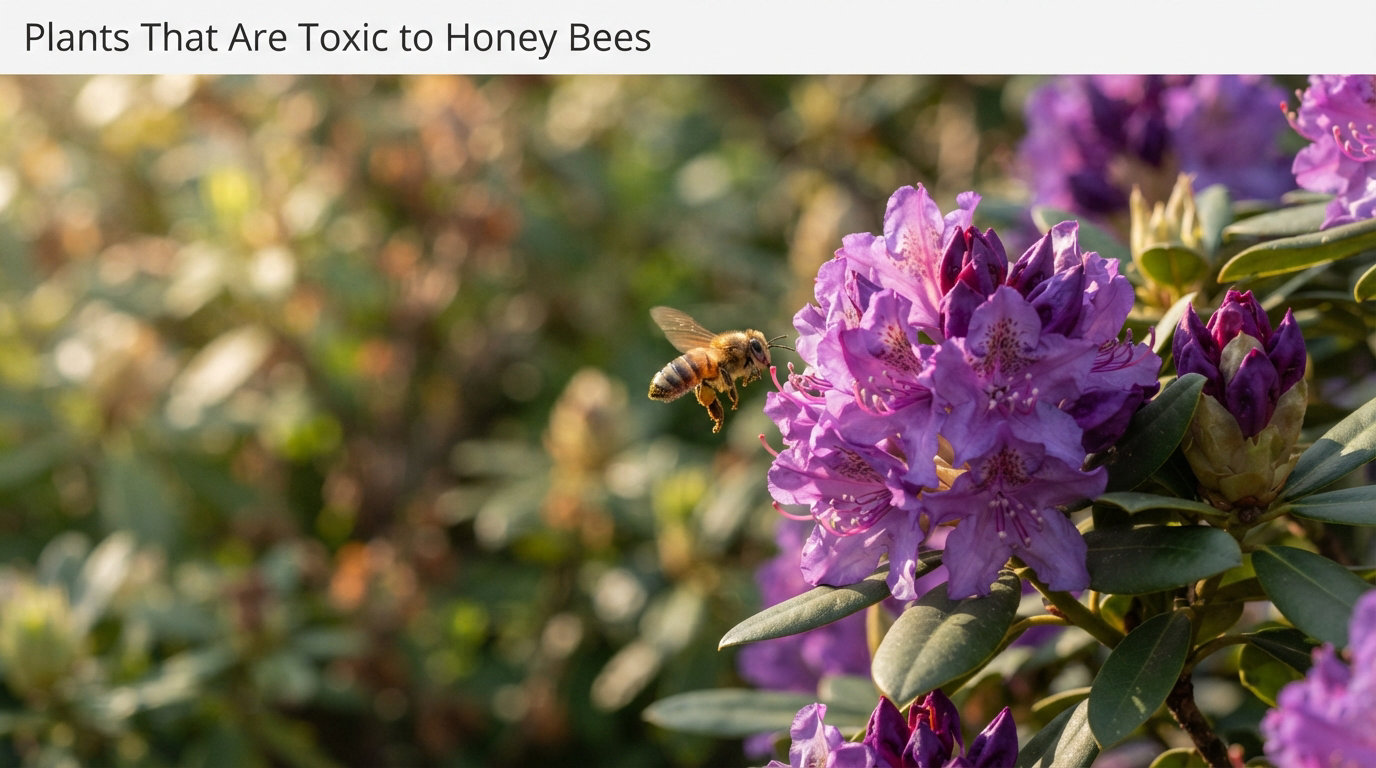
Most beekeepers focus on pesticides, varroa mites, and habitat loss when thinking about threats to their colonies. But some of the biggest dangers may be growing right in your bees’ foraging range. Plants that are toxic to honey bees produce natural compounds in their nectar and pollen that can paralyze foragers, contaminate honey, and wipe out entire colonies.
If you keep bees or are planning a pollinator garden, knowing which plants are dangerous is just as important as knowing which ones are beneficial. The tricky part is that many toxic plants are also beautiful, common, and widely sold at garden centers. Rhododendrons, mountain laurel, and yellow jessamine all look harmless but carry hidden risks for honey bees.
In this guide, I walk you through the most dangerous plants, the science behind why they harm bees, how to spot poisoning in your colonies, and what you can do to protect your hives. Whether you manage one hive or fifty, this information could save your bees from preventable losses.
Table of Contents
What Makes Plants Toxic to Honey Bees?
Plants that are toxic to honey bees contain compounds called allelochemicals — natural chemicals that evolved as a defense mechanism against herbivores and insects. These compounds serve the plant well but can be devastating to bees that collect contaminated nectar or pollen.
The most well-known of these toxins is andromedotoxin, also called grayanotoxin. It is found primarily in the Ericaceae family, which includes rhododendrons, azaleas, and mountain laurel. When bees consume nectar containing this compound, it attacks their nervous system and can cause paralysis, disorientation, and death.
Not all toxic compounds affect bees the same way. Some plants produce toxins that kill foragers outright. Others create compounds that contaminate honey without harming the bees themselves but are dangerous to humans who eat the honey. This is exactly what happens with mad honey from rhododendron nectar, a phenomenon I cover later in this guide.
It is also worth noting that toxicity often depends on concentration and availability. Many toxic plants only become a problem when they are the dominant forage source in an area. When bees have plenty of safe alternatives, they tend to avoid the dangerous ones. But during a nectar dearth, bees may resort to toxic plants out of desperation.
Plants That Are Toxic to Honey Bees
Researchers and experienced beekeepers have documented a range of plants known to cause harm to honey bee colonies. Below are the most significant ones, organized by how commonly they cause problems and which regions they affect.
Rhododendron and Azaleas
Rhododendron species, including the closely related azaleas, are the most widely recognized toxic plants for honey bees. They produce grayanotoxins in their nectar that can cause serious poisoning in both bees and humans. The honey made from rhododendron nectar is known as “mad honey” and has been documented for centuries.
Bees generally avoid rhododendrons when other forage is available, but during periods of scarcity they will collect from them. Beekeepers in the Pacific Northwest, Appalachia, and parts of the Northeast should be especially aware of rhododendron concentrations near their apiaries.
The toxicity level varies by species. Rhododendron ponticum, an invasive species in parts of the UK and Ireland, is particularly dangerous. Even small amounts of its nectar can produce harmful honey.
Mountain Laurel
Mountain laurel (Kalmia latifolia) is a beautiful evergreen shrub common in the eastern United States from Maine to Florida. It contains the same andromedotoxin found in rhododendrons and can contaminate honey with dangerous levels of the compound.
One of the challenges with mountain laurel is that it blooms in late spring when other nectar sources may be limited. Beekeepers in the Appalachian region report that mountain laurel honey can cause symptoms in humans ranging from mild nausea to serious illness.
Forum discussions among experienced beekeepers suggest that honey bees do not always die from visiting mountain laurel, but the honey they produce from it can be harmful to people. This makes it a unique threat — one that endangers the consumer rather than the colony.
California Buckeye
The California buckeye (Aesculus californica) is a major concern for beekeepers in California and parts of Oregon. This native tree produces showy flower spikes that bees find attractive, but its nectar and pollen contain toxic compounds that affect both adult bees and developing larvae.
California beekeepers report that buckeye poisoning is especially severe during drought years when fewer alternative forage sources are available. The toxins can cause deformed wings in newly emerged bees and may lead to colony-level losses if not managed.
One beekeeper on a popular beekeeping forum described losing multiple colonies during a dry year when buckeye was the only significant bloom available. The key to prevention is knowing when buckeye flowers in your area and ensuring alternative forage or supplemental feeding during that window.
Yellow Jessamine (Carolina Jessamine)
Yellow jessamine (Gelsemium sempervirens) is the state flower of South Carolina and grows throughout the southeastern United States. Its bright yellow, trumpet-shaped flowers are among the first to bloom in late winter and early spring, making them an early forage source that bees eagerly visit.
The plant contains gelsemine and related alkaloids that are toxic to bees. Beekeepers in the Southeast frequently report seeing bees that appear intoxicated or paralyzed after foraging on yellow jessamine. Dead bees can sometimes be found scattered around the base of the plant.
The risk is highest during the early spring bloom when few other flowers are available. After the jessamine bloom ends, colonies typically recover if they were strong going into it. Weak colonies, however, may struggle to bounce back from the losses.
Summer Titi
Summer titi (Cyrilla racemiflora), also called leatherwood, is a shrub or small tree found in swamps and wet areas across the southeastern United States. Its nectar has been linked to a condition called “purple brood,” where bee larvae take on a purplish color and die before emerging.
Summer titi blooms in early to mid-summer and is particularly problematic in states like Florida, Georgia, Alabama, and Mississippi. Beekeepers in these regions learn to watch for purple brood during the titi bloom and may need to supplement feed their colonies to reduce foraging on the plant.
Other Notable Toxic Plants
Several other plants have been documented or suspected of causing problems for honey bees. Buttercup species (Ranunculus) contain protoanemonin, which can irritate bees and reduce colony health over time. Tansy ragwort (Senecio jacobaea) contains pyrrolizidine alkaloids that can accumulate in honey and pose risks to both bees and humans.
Milkweed species present a different problem — not from chemical toxicity but from physical entanglement. Bees can get their legs trapped in the pollinia structures of milkweed flowers, leading to death. While milkweed is valuable for monarch butterflies, beekeepers should be aware of large patches near apiaries.
Locoweed (Oxytropis and Astragalus species) in western rangelands has also been associated with bee losses. The toxic alkaloids in these plants can affect bees that collect from large monoculture stands.
Signs of Plant Poisoning in Honey Bee Colonies
Identifying plant poisoning can be difficult because the symptoms often mimic other problems like pesticide exposure or disease. However, several telltale signs can point to toxic plant foraging.
Dead or dying bees at the hive entrance are often the first sign. You may see large numbers of bees crawling on the ground in front of the hive, unable to fly. These bees often appear disoriented or paralyzed, leading beekeepers to describe them as looking “drunk.”
Unusual bee behavior around specific plants is another indicator. If you observe bees falling from flowers or lying motionless beneath a particular plant species, that plant may be the source of toxicity. This is commonly reported under yellow jessamine and California buckeye trees.
Purple brood is a distinctive symptom linked to summer titi poisoning. If you open your hive and see larvae that have turned a deep purple color, toxic nectar is likely the cause. This condition is different from other brood diseases and is specific to certain plant toxins.
Sudden population drops during a specific bloom period can also signal plant poisoning. If your colony was thriving and then declines sharply while a particular plant is flowering, investigate whether that plant is on the toxic list.
Regional Guide to Toxic Plants in the US
The plants that threaten your bees depend heavily on where you live. Here is a regional breakdown of the most significant toxic plants across the United States.
Pacific Northwest: Rhododendron species are widespread in Washington and Oregon, particularly in forested and coastal areas. The wet climate supports dense rhododendron growth, making this the primary toxic plant concern for beekeepers in the region.
California: California buckeye is the dominant threat, especially in the Coast Ranges and Sierra foothills. Drought years intensify the risk because bees have fewer alternatives. Manzanita can also cause issues in some areas.
Southeast: Yellow jessamine is the primary early-season threat across the Carolinas, Georgia, Florida, and Alabama. Summer titi follows later in the season and is a concern in wetland areas throughout the same states.
Appalachia and Eastern US: Mountain laurel grows extensively throughout the Appalachian Mountains from Maine to Georgia. Rhododendron species are also common in these regions, particularly at mid elevations.
Southwest and Texas: Locoweed species in rangeland areas and some milkweed varieties are the main concerns. Texas beekeepers should also watch for mountain laurel (Sophora secundiflora), which is different from the eastern mountain laurel but also contains toxic compounds.
How to Protect Your Hives from Toxic Plants
Protecting your bees from toxic plants requires a combination of awareness, planning, and active management. Here are the most effective strategies I have gathered from research and experienced beekeepers.
Survey your forage area. Walk or drive within a two-mile radius of your apiary and identify what is growing. Pay special attention to the toxic plants listed above. Knowing what is out there is the first step toward managing the risk.
Time your management around toxic blooms. If you know rhododendron or yellow jessamine blooms at a certain time, plan to provide supplemental feeding during that period. Sugar syrup can reduce the bees’ dependence on toxic nectar when alternatives are scarce.
Choose hive locations carefully. When setting up a new apiary, avoid areas where toxic plants dominate the landscape. A few rhododendrons in a garden are unlikely to cause problems, but a hillside covered in them poses a real threat during their bloom period.
Monitor for signs of poisoning. Check your hive entrances regularly for dead or crawling bees. If you see unusual behavior, try to identify what is blooming nearby. Quick identification can help you take action before significant losses occur.
Build forage diversity. The more plant variety in your bees’ range, the less likely they are to rely on toxic species. Planting bee-safe flowers and encouraging neighbors to do the same dilutes the impact of any single toxic plant. A diverse forage base is your best insurance against toxic plant losses.
Bee-Safe Alternatives for Your Garden
If you are planning a pollinator garden or advising others on bee-friendly plants, choosing safe alternatives is easy. Many of the most attractive flowers for bees carry zero toxicity risk.
Excellent bee-safe options include lavender, sunflowers, clover, borage, bee balm, echinacea, and wild indigo. Native plants are generally a safe bet because they evolved alongside local bee populations. Focus on planting a mix that provides continuous bloom from early spring through late fall.
Avoid double-flowered varieties of any plant. These cultivars produce extra petals instead of nectar and pollen, offering nothing to bees while taking up space that could go to productive flowers. Single-flowered varieties are always the better choice for pollinators.
The Mad Honey Phenomenon
The concept of toxic honey is not new. “Mad honey” has been documented for over 2,000 years and was reportedly used as a biological weapon in 67 BC when King Mithridates’ forces left toxic rhododendron honey along the coast of Turkey. Roman soldiers under Pompey ate the honey and were overcome by delirium and vomiting.
Mad honey is still produced today in parts of Turkey and Nepal, where rhododendron species are abundant. It is sold deliberately in small quantities for its supposed medicinal properties, but consuming too much causes grayanotoxin poisoning with symptoms including dizziness, weakness, and fainting.
This historical example highlights why understanding toxic plants matters for beekeepers everywhere. Even if your bees survive collecting from rhododendrons, the honey they produce could harm the people who eat it.
FAQs
What is the 3 3 3 rule for bees?
The 3-3-3 rule refers to beehive relocation: when moving a hive, you should either move it less than 3 feet or more than 3 miles. Moving a hive between 3 feet and 3 miles confuses the bees, which will return to the original location instead of finding the new one. This is because bees navigate by landmarks and memorize the exact position of their hive.
What plants do honey bees not like?
Honey bees tend to avoid plants with toxic nectar or pollen, including rhododendron, mountain laurel, yellow jessamine, and California buckeye. They also show little interest in red flowers, double-flowered varieties that lack accessible nectar, and plants with very deep flower tubes they cannot reach. Bees prefer flowers in blue, purple, yellow, and white with landing platforms and exposed nectar.
What are the worst flowers for honey?
The worst flowers for honey production include rhododendron (which produces toxic mad honey), mountain laurel (which contaminates honey with andromedotoxin), yellow jessamine (which adds toxic alkaloids), and California buckeye (which taints honey and harms larvae). Honey made from these plants can cause illness in humans and should be avoided by beekeepers managing colonies near these blooms.
What do honey bees hate the most?
Honey bees are repelled by strong odors such as peppermint, eucalyptus, citronella, and cinnamon. They also avoid areas with heavy pesticide use and tend to steer clear of plants with toxic compounds when safer forage is available. Beekeepers sometimes use these scent repellents to direct bees away from certain areas during hive inspections or honey harvesting.
Can bees distinguish between toxic and safe plants?
Honey bees have some ability to detect and avoid toxic nectar, but they are not foolproof. When safe forage is abundant, bees typically avoid toxic plants like rhododendron and yellow jessamine. However, during nectar dearths when few options are available, bees will forage on toxic plants out of necessity. This is why providing supplemental feeding during scarce periods helps protect colonies from toxic plant exposure.
Conclusion
Understanding plants that are toxic to honey bees is essential knowledge for any beekeeper or gardener who cares about pollinator health. From rhododendron and mountain laurel in the East to California buckeye in the West and yellow jessamine in the Southeast, toxic plants are more common than most people realize.
The good news is that poisonings are largely preventable. By surveying your forage area, timing your management around toxic blooms, providing supplemental feeding during dearths, and building forage diversity, you can dramatically reduce the risk to your colonies.
Take time this season to identify what is growing within your bees’ flight range. A few hours of observation could make the difference between a thriving apiary and preventable colony losses. Your bees work hard for you — make sure their workplace is safe.