
Every spring, beekeepers across the country face the same question. Should I feed pollen substitute to my bees, or will it do more harm than good? It is one of the most debated topics in beekeeping forums, apiary clubs, and backyard hobby groups alike.
The truth is that pollen substitute can be incredibly helpful when your colony is starving for protein. It can also be a waste of money, a magnet for pests, and a source of stress for your bees when used at the wrong time. The key is knowing the difference.
I have spent years working with colonies through brutal winters, late springs, and unpredictable droughts. Along the way, I have learned that feeding pollen patties is not a simple yes-or-no decision. It depends on your climate, your colony strength, the natural pollen flow, and the time of year.
In this guide, I will walk you through exactly when pollen substitute helps your bees thrive and when it can actually set them back. You will learn how to read the signs your colony gives you, how to time your feeding for maximum benefit, and how to avoid the most common mistakes that trip up new and experienced beekeepers alike.
Table of Contents
What Is Pollen Substitute and Why Do Bees Need It
Pollen substitute is a protein-rich supplement designed to mimic the nutritional role that natural pollen plays in a honey bee colony. It is typically made from ingredients like soy flour, brewer’s yeast, and sometimes additional amino acids, lipids, and vitamins that bees need for healthy development.
Natural pollen is the primary protein source for honey bees. Nurse bees consume pollen and convert its nutrients into royal jelly and worker jelly, which they feed to developing larvae. Without adequate protein, a colony cannot rear healthy brood, and the entire population cycle slows down or stalls.
The problem is that natural pollen is not always available. Late winter freezes can wipe out early blooming plants. Droughts can suppress summer flowers. Urban environments may simply lack enough diverse forage. This is where a pollen supplement can step in to bridge the gap.
It is important to understand that substitute is not the same as real pollen. Natural bee-collected pollen contains hundreds of compounds, sterols, and micronutrients that manufactured products cannot fully replicate. Bee bread, which is fermented pollen stored in the comb, is particularly difficult to imitate. Substitute is exactly that, a stand-in for when the real thing is not available.
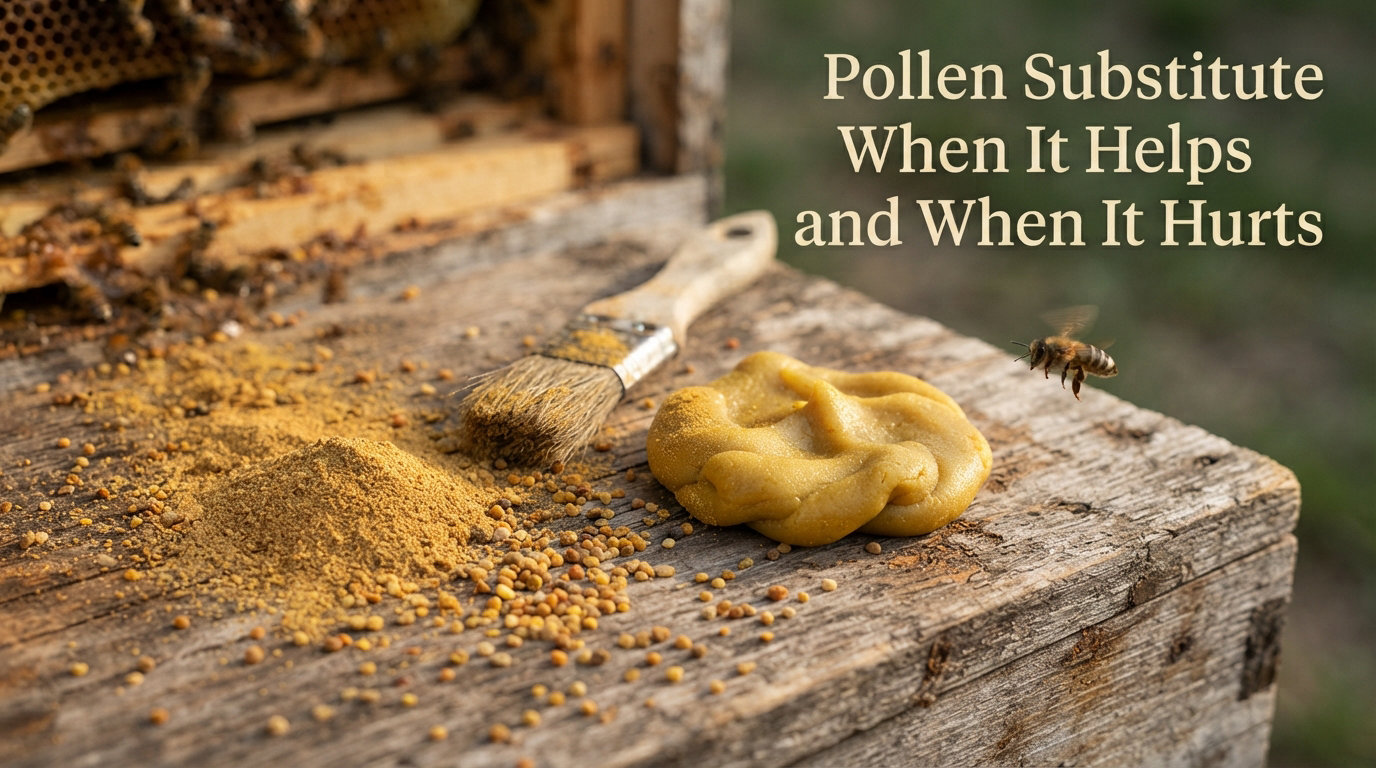
Most beekeepers use pollen substitute in patty form, pressed between wax paper and placed directly on top of the brood frames. You can also find it as a dry powder to mix yourself or as a ready-to-use dough. Each format has its place depending on your situation and the size of your operation.
Understanding what pollen substitute is, and what it is not, is the foundation for deciding whether your bees actually need it. Let us look at both sides of the equation.
Pollen Substitute When It Helps and When It Hurts
The decision to feed pollen substitute comes down to timing, colony condition, and available natural forage. Here is the honest breakdown of when this supplement is a lifesaver and when it can work against you.
When Pollen Substitute Helps
Pollen substitute shines in situations where natural pollen is scarce or absent but your colony needs to build brood. These are the scenarios where feeding makes a real, measurable difference.
Early spring buildup. This is the number one reason beekeepers reach for pollen patties. About two to four weeks before your local first pollen flow, feeding substitute can kickstart brood rearing. The queen begins laying more aggressively, nurse bees have the protein they need to feed larvae, and the colony enters the spring flow with a larger foraging force. I have seen colonies that received early patties build up two to three weeks faster than those left to wait for natural pollen.
Preparing colonies for winter. Fall feeding helps ensure your winter bees, those long-lived bees raised in late summer and fall, are well nourished. These bees carry the colony through the cold months. A protein boost in early fall can produce stronger, fatter winter bees that survive longer and maintain the cluster more effectively.
Drought and dearth periods. When summer rains fail and flowers stop producing, bees face a natural dearth. A well-timed pollen patty can keep the colony from cannibalizing larvae and losing population during these stressful gaps.
Building nucs and splits. If you are making splits or raising queens, protein is essential. Small colonies and mating nucs benefit enormously from supplemental feeding because they lack the foraging force of a full-size hive. Substitute gives them the resources to draw comb, raise brood, and establish themselves quickly.
Recovering colonies. A colony that has lost its queen, suffered a pesticide hit, or come through a rough winter needs every advantage. Pollen substitute can help a stressed colony rebuild its population when natural forage is insufficient.
In all of these situations, the common thread is simple. The bees need protein, and nature is not providing enough of it. When that gap exists, feeding substitute is one of the most effective tools a beekeeper has.
When Pollen Substitute Hurts
Here is where many beekeepers get into trouble. Pollen substitute is not a cure-all, and feeding it at the wrong time can create serious problems. These are the situations where I recommend holding off.
When natural pollen is abundant. If your bees are already bringing in loads of real pollen on their legs, a substitute patty is unnecessary and often ignored. Many experienced beekeepers report that bees simply will not touch substitute when quality natural pollen is available. You end up wasting money and leaving a patty sitting in the hive where it can spoil, mold, or attract pests.
Small hive beetle attraction. This is a real and serious concern, especially in warm southern climates. Pollen patties are protein-rich and moist, making them an ideal breeding ground for small hive beetles. If you place a patty in a weak colony during warm weather, you may be feeding the beetles more than the bees. I have seen colonies overrun by beetle larvae because a forgotten patty sat too long in the hive.
Stimulating brood too early. If you feed pollen substitute too early in late winter and trigger a population boom before the bees can fly and forage, you create a colony with too many mouths to feed and not enough resources. The bees consume their winter stores faster, and a colony that might have survived winter can starve in early spring because the population outpaced the food supply.
Nutritional shortcomings. No substitute fully replicates the nutritional complexity of real pollen. Colonies raised primarily on substitute may show subtle deficits in immune function, longevity, and overall vigor compared to those with access to diverse natural forage. Overreliance on manufactured feed is not a substitute for good forage management.
Wasted money and effort. Feeding patties that the bees do not need or will not eat is a waste of resources. Every patty left to mold or dry out in a hive is money down the drain. Worse, it can give you a false sense of security that you are doing something helpful when the colony would be better off left alone.
The takeaway is this. Pollen substitute helps when there is a genuine protein deficit and hurts when the bees do not need it or when it creates conditions for pests and problems to thrive.
Signs Your Bees Need Pollen Substitute
Before you open a patty, take time to read what your bees are telling you. Your colony gives clear signals when it is running low on protein. Here are the signs I look for when deciding whether to feed.
1. Reduced or patchy brood pattern. Open your hive and look at the brood frames. If you see a solid wall of capped brood with larvae of consistent age, the colony is well nourished. If the brood pattern is spotty, with gaps and uneven ages, protein may be the limiting factor.
2. Bees consuming stored pollen rapidly. Check the frames around the brood nest for stored pollen, those colorful bands of orange, yellow, and red packed into cells. If stores that were full a week ago are now empty, the colony is burning through its reserves.
3. No incoming pollen on foragers. Watch the landing board for 10 to 15 minutes on a warm afternoon. If you see foragers returning with full pollen baskets, natural forage is available. If none are carrying pollen despite good flying weather, there may be a dearth.
4. Small cluster size heading into winter. A colony going into winter with a small cluster of bees is at higher risk. Supplemental protein in early fall can help boost the winter bee population before the cold sets in.
5. Larvae being pulled out or cannibalized. This is a sign of severe protein shortage. Nurse bees will sometimes remove and consume larvae to recycle protein for other developing bees. If you see larvae being dragged out of cells, act quickly.
6. Newly installed packages or splits. These colonies start with minimal resources and benefit from a feeding boost while they establish themselves and draw new comb.
If you see three or more of these signs, your colony likely needs supplemental protein. If you see none of them, natural forage is probably doing its job and substitute may do more harm than good.
Optimal Timing for Feeding Pollen Substitute
Timing is everything with pollen substitute. Feed too early and you risk triggering brood before the bees can support it. Feed too late and you miss the window where it actually helps. Here is how I time my feeding based on the season and climate.
The spring window. The most widely recommended timing for spring feeding is about a month after your first hard freeze and roughly two weeks before your first pollen-producing plants begin to bloom. In most temperate regions, this falls somewhere between late January and March depending on your zone. The goal is to give the colony a head start so that by the time natural pollen arrives, the population has already expanded.
The fall window. For winter preparation, feed in early to mid fall when the colony is raising its winter bees. This is typically August through October depending on your region. You want the winter bee generation to be well nourished so they can survive the long months ahead.
Drought and dearth feeding. During a summer dearth, you can offer patties to maintain colony strength, but be cautious about pest pressure. Only feed what the bees will consume within a week, and check frequently.
Regional differences matter enormously. A beekeeper in Florida has a completely different calendar than one in Minnesota. Southern beekeepers may feed earlier in the year and deal with year-round pest pressure. Northern beekeepers focus on a tight fall window and a carefully timed spring boost. Always calibrate to your local bloom schedule, not a generic calendar.
Climate zone guidelines. In zones 8 through 10, spring feeding may begin as early as late January. In zones 5 through 7, aim for mid-February to early March. In zones 3 and 4, wait until March or even early April. Track your local first bloom dates and work backward from there.
The bottom line on timing is to match your feeding to the gap between what your bees need and what nature provides. Never feed on a schedule just because a calendar says so.
How to Feed Pollen Substitute: Methods and Placement
Once you have decided to feed, doing it correctly makes a big difference in results. Here is how I handle feeding based on what works in practice.
Patty form. Pollen patties are the most popular method for good reason. They are easy to handle, place directly on the brood, and the bees consume them efficiently. A typical patty weighs about a pound, and a strong hive will consume it in 7 to 10 days. Place the patty directly on top of the frames above the brood nest, sandwiched between the two boxes so the cluster can access it from below.
Powder or dry feed. Some beekeepers offer dry substitute powder in an open feeder or on the inner cover. This method is less precise because you cannot control consumption as easily, and other insects may get to it. However, it avoids the moisture issues that patties can create in humid climates.
Placement matters. Always place patties directly above the brood cluster. Bees will not travel far in cold weather to reach food. If the patty is too far from the cluster, the bees may starve while food sits untouched. In winter, this means placing it right where the bees are clustered, not at the edge of the box.
Replace regularly. Check patties every 7 to 10 days. Remove any remaining material before adding a new patty. Old, dried-out, or moldy patties do more harm than good and can harbor disease organisms.
Start small. If you are feeding for the first time, start with a single patty and observe how quickly the bees consume it. This tells you how hungry the colony is and helps you calibrate future feedings.
Commercial vs Homemade Pollen Substitutes
Beekeepers have two main options when it comes to sourcing pollen substitute. Each has its trade-offs.
Commercial products. Brands like MegaBee, Ultra Bee, and Bee-Pro offer consistent, well-formulated substitutes designed to be palatable and nutritionally complete. They come in patty form ready to place or as powder you mix with sugar syrup. The advantage is consistency and convenience. The downside is cost, as commercial patties can add up quickly for beekeepers with many hives.
Homemade recipes. Many beekeepers make their own substitute using soy flour, brewer’s yeast, and sugar. A common recipe blends one part brewer’s yeast with three parts soy flour, moistened with sugar syrup to form a dough. Homemade patties are significantly cheaper, and some beekeepers swear by them. The trade-off is that homemade formulations may lack the precise amino acid balance that commercial products provide.
Cost considerations. For a hobbyist with two or three hives, commercial patties are convenient and the cost is manageable. For a sideliner or commercial operation with dozens or hundreds of colonies, homemade formulations can save a substantial amount of money over a season. I know beekeepers who cut their feeding costs in half by mixing their own patties in bulk.
Whichever route you choose, the quality of your ingredients matters. Use food-grade soy flour and fresh yeast. Store your substitute in a cool, dry place to prevent rancidity.
Common Mistakes to Avoid
Even experienced beekeepers make feeding errors. Here are the mistakes I see most often and how to avoid them.
Feeding when bees do not need it. This is the most common mistake of all. If natural pollen is flowing in, skip the substitute. Feeding an unnecessary patty wastes money and risks pest problems.
Feeding too early in late winter. Triggering brood production before the colony can support it leads to accelerated store consumption and potential starvation. Time your feeding to your local bloom schedule, not your eagerness to get into the hive.
Placing patties away from the cluster. In cold weather, bees will not leave the cluster to find food. A patty placed at the edge of the box might as well not be there. Always position patties directly above the brood.
Leaving patties in too long. Old patties attract small hive beetles, wax moths, and mold. Remove remnants before they become a problem. A good rule is to never leave more than what the bees will consume in 10 days.
Ignoring pest pressure. If you live in an area with heavy small hive beetle populations, be extra cautious with patties during warm months. Consider dry feed alternatives or only feed patties in strong colonies that can defend against intruders.
Treating substitute as a replacement for good forage. No manufactured product can replace diverse, natural pollen sources. Plant bee-friendly flowers, work with neighbors to reduce pesticide use, and let natural forage do the heavy lifting whenever possible.
FAQs
When to feed pollen substitute?
Feed pollen substitute about a month after the first hard freeze in fall for winter preparation, and approximately two weeks before your first pollen-producing plants bloom in spring for buildup. During summer dearths, feed only when natural pollen is clearly unavailable and pest pressure is low.
Is pollen substitute necessary for bees?
Pollen substitute is not always necessary. It becomes valuable when natural pollen is scarce due to drought, late freezes, urban environments, or seasonal gaps. If your bees are bringing in plenty of diverse natural pollen, substitute is unnecessary and may even be ignored.
Does pollen substitute hurt bees?
Pollen substitute can hurt bees when fed during abundant natural pollen flows, when it attracts small hive beetles in warm weather, or when it triggers premature brood rearing that the colony cannot support. It also cannot fully replicate the nutritional complexity of real pollen.
What is the best pollen substitute for bees?
Popular commercial options include MegaBee, Ultra Bee, and Bee-Pro, which are formulated for palatability and balanced nutrition. Homemade blends of soy flour and brewer’s yeast are a cost-effective alternative. The best choice depends on your budget, colony size, and personal preference.
How often should I feed pollen patties?
Check patties every 7 to 10 days and replace them as the bees consume them. A strong hive typically finishes a one-pound patty within 7 to 10 days. Always remove old or moldy remnants before adding a fresh patty to prevent pest and disease issues.
What to use instead of bee pollen substitute?
Natural bee-collected pollen is always the best option. You can also provide dry sugar feed for carbohydrates, plant diverse bee-friendly forage, or relocate hives to areas with better pollen availability. Stored bee bread in the comb is the most complete protein source for a colony.
Conclusion
Understanding pollen substitute, when it helps and when it hurts, comes down to one simple principle. Feed when your bees have a genuine protein deficit, and hold off when nature is already providing. That gap between need and supply is the entire basis for the decision.
When timed correctly, pollen substitute is one of the most powerful tools a beekeeper has for building strong colonies, preparing for winter, and bridging natural dearths. When used carelessly, it wastes money, attracts pests, and can even weaken the very colonies you are trying to help.
Learn to read your bees. Watch the landing board, check your brood patterns, and track your local bloom schedule. The more closely you observe your colonies, the better your feeding decisions will become. Your bees will tell you what they need if you take the time to listen.