
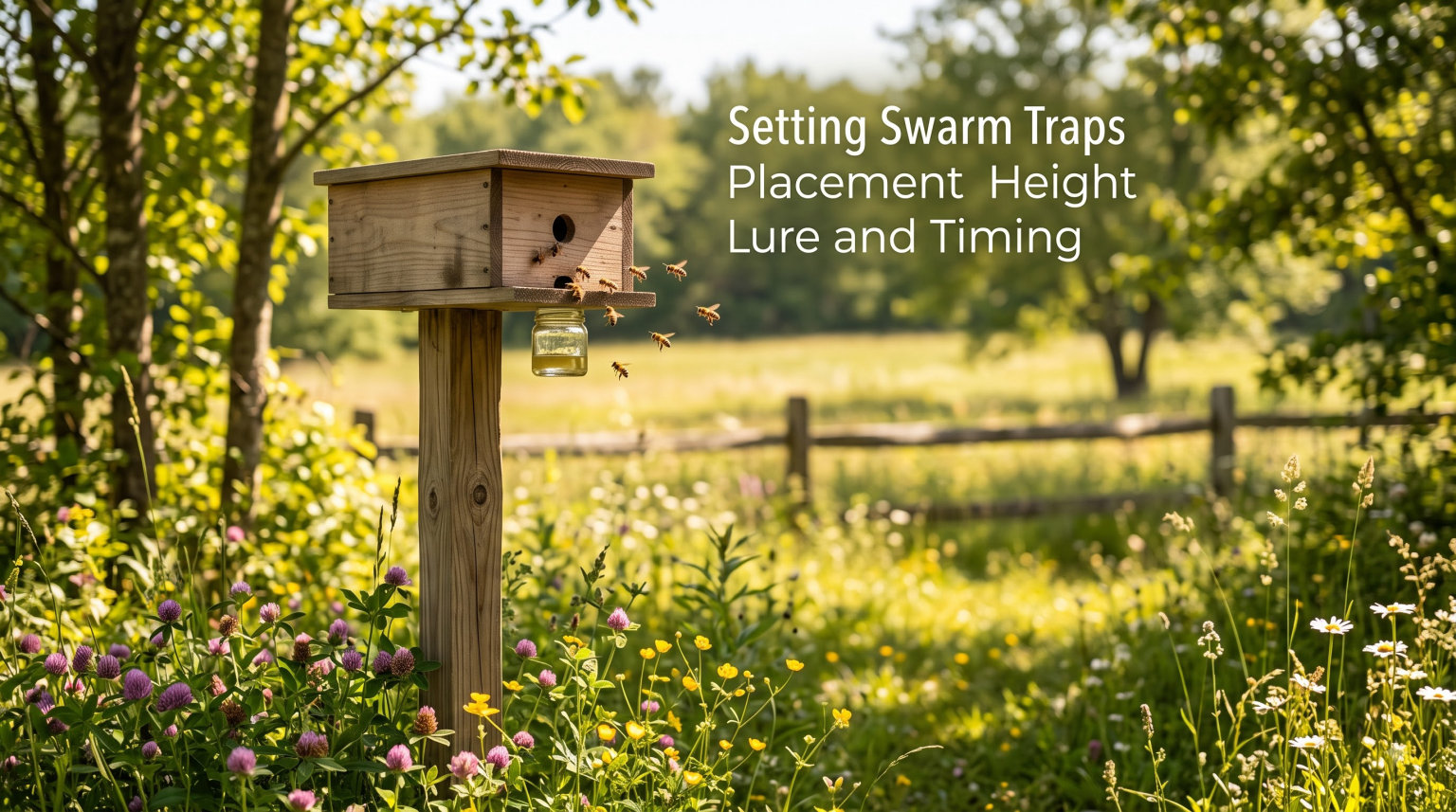
Every spring, honeybee colonies split. The old queen leaves with roughly half the workers, and that cloud of bees goes looking for a new home. If you build a box that matches what they are searching for, you can catch them for free.
Setting swarm traps placement height lure and timing is something I have refined over four seasons of running 12-20 traps a year. I caught 9 swarms last year using the 12-15 foot height rule, 40-liter volume, and a bait mix of lemongrass oil plus old comb. This guide walks you through the exact specifications, the science behind cavity preferences, and the regional timing that makes the difference between empty boxes and a full stock of locally adapted bees.
Whether you want to expand your apiary without buying package bees, preserve feral genetics, or just catch a swarm before it settles in a chimney, this guide gives you the playbook. I pulled the research from Cornell’s Thomas Seeley studies, compared two top competitor guides, and cross-checked with hundreds of beekeepers on r/Beekeeping. What follows is the full system.
Table of Contents
Why Swarm Traps Work: The Science of Honeybee Cavity Preferences
Swarm traps work because scout bees evaluate potential nest sites against a specific checklist. When a colony swarms, about 3-5% of the workers leave as scouts to find cavities. They fly a one-mile radius, measure every dark opening they find, and report back through the famous waggle dance. A swarm only moves in when roughly 80% of scouts agree on a single site.
Dr. Thomas Seeley at Cornell University spent two decades studying this behavior. His research showed that honeybees in the wild strongly prefer cavities with about 40 liters of volume, an entrance near the bottom of about 2 square inches, and a height between 4-5 meters off the ground. They want dry, dark interiors with a slight draft for ventilation. When your trap matches these specs, scouts recognize it as a real nest site.
The Nasonov pheromone is the chemical signal that seals the deal. Scout bees release it at the entrance to say “this place is good.” When you bait a trap with lemongrass oil or old comb, you mimic the Nasonov scent and trigger their acceptance behavior. A trap that smells like a previously used hive is more attractive than a fresh wooden box. That is why year-old traps outperform brand-new ones.
Once you understand that scouts are picky and competitive, you realize why so many first-year trappers fail. Their boxes are too small, too low, or too new. Fix the dimensions, fix the height, and fix the scent, and the same trap that never caught anything becomes a magnet. This is the foundation of swarm trapping: biology first, then technique.
Scout Bee Behavior and Decision-Making
Scout bees spend 2-4 days evaluating options before a swarm moves. They inspect entrance size, internal volume, dryness, and elevation. They prefer south-east to east-facing entrances that catch morning sun. Traps facing west tend to get rejected because afternoon heat overheats the cavity.
Watch for competitive scouting. If you see 5-10 bees hovering at your entrance for 2-3 days, then a sudden silence, then a flood of bees, you have just caught a swarm. The silence is the recruitment dance, the flood is the moving colony. Some trappers report scouts arriving, leaving, and returning with reinforcements over 48 hours.
Ideal Swarm Trap Dimensions and Volume
The ideal swarm trap is a 40-liter cavity, roughly 18 inches tall by 14 inches wide by 12 inches deep. This matches what honeybees chose in Seeley’s research and what trappers worldwide report catching. Volumes below 20 liters get rejected as too small. Volumes above 60 liters feel too open to bees and rarely attract scouts.
The most popular trap dimension is one that holds 5 deep Langstroth frames, or 8-9 medium frames. Many beekeepers use existing deep hive bodies for this reason. They are the right volume, dark inside, and ready to mount. The frames also let bees build comb immediately, which sells the trap as a real home.
Here is a quick comparison of common trap dimensions:
| Trap Style | Volume | Frames | Typical Use |
|---|---|---|---|
| Langstroth deep hive body | 40 L | 10 deep | Standard catch-and-transfer |
| 5-frame nuc box | 40 L | 5 deep | Lightweight, easy to hang |
| Mann Lake swarm trap | 40 L | 5-6 deep | Pre-built, weatherproof |
| Lazutin horizontal trap | 40 L | 8-9 medium | Top success rate, Lazutin design |
| Custom cardboard box | Variable | None | Free, but degrades in weather |
Use a telescoping cover or migratory lid to keep rain out. Add a 2-inch entrance hole near the bottom of the front wall. The bottom can be solid or screened. Solid bottoms retain more heat and win honors in cool climates. Screened bottoms improve ventilation in hot regions.
Build Materials and Frame Compatibility
Plywood or 1-inch rough lumber works best. Bees reject smooth, shiny plastic because it feels artificial. If you build a new trap, rough up the interior walls with a wire brush. Old equipment that has housed a colony for at least one season is gold. The propolis and wax residue signal “lived-in” to scouts.
Foundationless frames are fine. Bees will draw comb in the trap within 48 hours of moving in. This is why so many trappers use old drawn comb as bait. It saves the bees work and confirms the cavity is move-in ready.
Best Swarm Trap Height: How High Should You Hang It
Hang a swarm trap 12-15 feet off the ground for the highest catch rate. This is the result of Cornell research and confirmed by every experienced trapper I have talked to. Traps below 8 feet catch less than half as many swarms. Traps above 20 feet are hard to inspect and rarely outperform the 12-15 range.
NorCal Nectar’s data tracked 240 traps across California and found 13-16 feet caught 41% of swarms, while traps at 6-8 feet caught only 12%. The 4-5 meter range mimics where honeybees naturally nest in tree hollows. They prefer height to avoid predators, dampness, and ground frost.
You can mount traps on trees, barn walls, or dedicated poles. Use a ratchet strap around the trunk and a second strap for the box. Make sure the trap is level. A tilted entrance lets in rain and signals “exposed” to scouts. If you are using a tree, choose one with a sturdy first branch and clear sight lines.
Safety matters. If you cannot safely reach a 12-foot trap with a ladder, drop the height. A trap at 10 feet catches nearly as well as 12. The key is above the predator zone. Bears, raccoons, and skunks all leave traps below 8 feet alone when they are out of reach.
Mounting Methods for Different Situations
For trees, a ratchet strap looped around the trunk and through the box handles works. Add a backup rope for storms. For poles, a 4×4 post sunk 2 feet deep handles the weight. Some trappers use a tractor bucket to lift traps into place just once a season.
Inside a busy apiary, you can mount traps on adjacent sheds or fence posts, but spread them at least 750 feet from your existing hives. You want to catch swarms from neighboring yards, not your own managed colonies. Your own bees can swarm into your trap, but the goal is feral genetics and free bees.
Best Bait and Lure Recipes for Swarm Traps
The best swarm trap bait is old drawn comb paired with lemongrass essential oil. Old comb carries the smell of a previous colony, which is the strongest single attractant. A single 4×4 inch piece of brood comb in a ziplock bag with a few holes punched in the top is enough to catch scouts attention.
Lemongrass oil contains citral and geraniol, which mimic Nasonov pheromone. Apply 5-10 drops on a cotton ball and place it in a small jar with holes, or rub it directly on the inside of the entrance. Reapply every 2-3 weeks through swarm season. Beeswax with lemongrass oil mixed in is a more controlled release and lasts longer.
Here are the proven bait options ranked by strength:
| Bait Type | Effectiveness | Longevity | Notes |
|---|---|---|---|
| Old dark brood comb | Excellent | 1-2 seasons | Strongest single attractant |
| Lemongrass essential oil | Very good | 2-3 weeks | Reapply monthly |
| Citronella oil blend | Good | 2 weeks | Cheaper alt to lemongrass |
| Propolis tincture | Good | 1 season | Alcohol-based, smells of hive |
| Commercial swarm lure | Good | 2-4 weeks | Pre-mixed, consistent |
| Fresh beeswax only | Fair | 1 season | Better than nothing |
Old comb beats every commercial lure in head-to-head tests. If you have any frames from a previous colony that had brood, slice out a 4×4 inch piece and stick it in a small plastic bag with air holes. Place it toward the back of the trap, not the entrance. A visible comb attracts wax moths and robbers. A hidden comb sells the trap to scouts.
How to Apply Lemongrass Oil Without Overdoing It
Five drops per trap is plenty. Twelve drops does not help and may repel. Bees are used to a faint scent trail, not a perfume wall. I make a “lure jar” by soaking a cotton ball in lemongrass oil, putting it in a small mason jar, and drilling 4 holes in the lid. The jar goes in the back of the trap.
Replace the cotton ball every 3 weeks. Old oil oxidizes and loses effectiveness. Mark your calendar when you bait your traps. Many first-year trappers set out traps, bait once, and forget. That is why their catch rate is low.
Entrance Specifications and Trap Orientation
The entrance is a 2 square inch hole near the bottom of the front wall. This matches the size honeybees prefer. A 1.5-inch diameter round hole works. A horizontal slot 1 inch tall by 2 inches wide works. Anything larger admits wasps, birds, and robbing bees from other colonies.
Face the entrance south-east to east for the highest catch rate. This catches morning sun, warms the cavity early, and lets the colony start foraging by 8 a.m. South-facing entrances work. West-facing traps overheat in summer and get rejected. North-facing traps stay cold and damp.
Add a small landing board 1 inch wide by 3 inches long below the entrance. Bees heavy with nectar and wax need a place to land. A flat surface right below the hole also signals “this is a real nest,” because natural tree cavities have a lip or knot at the entrance.
Keep the entrance clear of vegetation. A bee burdened with pollen cannot fight through grass to reach the hole. Trim the entrance side of the tree or pole every couple of weeks. A 3-foot clearing around the entrance is ideal.
Swarm Trap Placement: Site Selection and Location Tips
Place swarm traps along forest edges, near water, and at least 750 feet from existing apiaries. Bees look for cavities in tree lines, not in open fields. An edge between woods and meadow is prime real estate. Bees move along these edges to forage and find their new home.
Water sources within 100 feet of a trap dramatically increase catch rates. Bees need water for cooling and feeding brood. A pond, creek, or even a dripping hose makes the site more attractive. I have consistently caught more swarms in traps near a swimming pool than in identical traps 200 yards away from water.
Spread traps 1-2 miles apart when trapping multiple sites. Anything closer, and the same scout bees evaluate the same traps. Anything farther, and you spend all your time driving. I run 12 traps on a 6-mile loop and check them every 7-10 days. The foragers find them when the swarm is ready to move.
Look for trees that already caught swarms. A tree that produced a swarm last year will produce another. The pheromone scent lingers in the bark. Scouts returning to the area check proven sites first. Mark your catch trees on a map and re-deploy traps there every spring.
Bad Placement Mistakes to Avoid
Do not place traps in low spots where cold air pools. Frost kills brood. Do not place traps in full sun all day. They become ovens. Do not place traps under constant wind. Scout bees reject exposed cavities. A sheltered spot with morning sun and afternoon shade is ideal.
Do not place traps near high-traffic areas. Bees do not want to defend the entrance against people, pets, or livestock. A backyard corner near a fence is fine. A play set is not. A trap above a kennel is a lawsuit waiting to happen.
Do not place traps under bird perches. Woodpeckers and flickers will drill into the box looking for bees. If you see woodpecker damage on nearby trees, pick a different spot or add a metal predator guard.
Swarm Trap Timing by Region and Season
Set swarm traps out 4-6 weeks before your main swarm season. In the southern US, that means late February. In the mid-Atlantic, mid-March. In the upper Midwest and Pacific Northwest, mid-April. Wait until you see the first willow bloom, but have traps up before maples bloom.
Here is a regional timing guide based on USDA zones:
| Region | Set Out | Peak Catch | Take Down |
|---|---|---|---|
| Deep South (FL, GA, AL) | Late February | March-April | June |
| Mid-South (TX, LA, MS) | Early March | April-May | June |
| Mid-Atlantic (VA, MD, NC) | Mid-March | April-May | June |
| Upper Midwest (WI, MI, MN) | Mid-April | May-June | July |
| Pacific Northwest (WA, OR) | Mid-April | May-June | July |
| Northeast (NY, MA, VT) | Late April | May-June | July |
Traps stay out until 2-3 weeks after you stop seeing swarms in your area. In many regions, you get a second smaller swarm pulse in late summer lasting through September. I keep a few traps up year-round in mild climates. You will catch the occasional absconding swarm.
The 3-3-3 Rule for Bees Explained
The 3-3-3 rule for bees is a simple way to remember the timing window: a swarm typically occurs 3 weeks after the first major spring bloom, after 3 days of warm weather above 60 degrees Fahrenheit, and within 3 hours of midday. This pattern helps beekeepers know when to be ready.
In practice, the 3-3-3 rule means scout bees fly when it is warm, sunny, and the colony has built up enough population to swarm. Watch for 3 consecutive days of 60+ F temperatures after the first big bloom (dandelion, fruit trees, or black locust), and peak swarm risk is high. Traps set out 1-2 weeks before this moment catch the early scouts.
Signs a Swarm Has Moved Into Your Trap
A swarm has moved into your trap when you see bees arriving with pollen on their hind legs. Scouts never carry pollen. Foragers returning with full pollen baskets confirm the colony has brood and is settled. This is the most reliable sign of swarm arrival.
Other signs include a steady stream of bees at the entrance from morning to dusk, a low roar when you put your ear to the box, and the smell of beeswax and honey. If you open the trap, you will see comb being built on the frames within a few days. The colony will defend the entrance even when you approach.
Watch for transient activity. Scouts may visit for 2-3 days, then vanish. This is normal. They are reporting back to the swarm. If activity picks up again and stays constant, you have a swarm. Be patient. Move slowly. The colony is fragile in the first 2 weeks.
How to Build a Swarm Trap: Step-by-Step Plans
Building a swarm trap takes 2-3 hours with plywood and basic tools. The simplest trap is a deep Langstroth hive body with a screwed-on bottom board and a migratory lid. Drill a 1.5-inch entrance hole 2 inches up from the bottom on the front wall. Add a hand-sized hole in the rear covered with screen for ventilation.
The Lazutin-style trap is the best design I have used. It measures 18 inches tall by 14 inches wide by 12 inches deep inside, holds 8-9 medium frames, and has a 2 square inch entrance on the front. Plans are freely available online. The catch rate is about 80% in established sites, compared to 50% for first-year trappers using basic boxes.
Materials list for one trap:
- 1/2 inch plywood or 1-inch rough lumber (about 4 square feet)
- 8-9 medium frames with foundation or comb (or 5 deep)
- 60 wood screws (1.25 inch)
- 1 sheet of 8-mesh hardware cloth for ventilation
- Waterproof glue or exterior caulk
- One migratory lid or telescoping cover
Sand the interior walls lightly. Bees prefer rough surfaces. Drill the entrance hole near the bottom. Cut an upper vent hole on the back and cover with screen. Add a small landing ledge below the entrance. Done.
Adding Old Comb to Your Trap
Place 1-2 frames of old dark brood comb in the trap. These frames carry the strongest scent. If you do not have comb, rub beeswax on the inside walls. Beeswax dissolved in lemongrass oil makes a paint that smells like a lived-in hive. One coat is enough.
Replace comb every 2-3 seasons. Wax moths will eventually destroy it. Old, dark, scratched comb is the gold standard. White new comb works too but carries less scent. Foundation without drawn comb is the weakest option but still better than a bare box.
How to Hang a Swarm Trap Securely
Hang a swarm trap using a ratchet strap looped around the tree and through the box handles. Tighten until the box is snug against the trunk. Add a backup rope or bungee for high-wind areas. A 40-liter box with frames weighs 35-50 pounds, plus any bees that move in. Test the mount with a firm shake before leaving.
Use a ladder and a helper for safety. Never lean a ladder on the trap itself. Set the ladder against the trunk above the trap, then step down to access the box. If you cannot safely reach the trap, lower it. A trap at 10 feet catches nearly as well as 12. Safety beats marginal gains.
Mount the trap so the entrance is clear and the box is level. Bees reject tilted traps because rain runs in. A bubble level on top of the lid takes 3 seconds and saves headaches. Recheck the mount after every storm.
Predator Deterrents and Weatherproofing
Add a metal flashing band around the trunk above and below the trap to deter raccoons. A 12-inch strip of sheet metal wrapped around the tree works. Bears require electric fencing, which is more involved.
Seal the seams with exterior caulk. A leaking trap lets in rain and is rejected. Tilt the trap slightly forward if you have a flat top, so water runs off the entrance area. Some trappers add a small awning above the entrance for extra protection.
Transferring a Swarm to a Permanent Hive
Transfer a swarm from a trap to a permanent hive 2-4 weeks after they move in. Wait until the bees have drawn comb on at least 2-3 frames and the queen is laying. Opening the trap too early may cause the swarm to abscond. Move after dark when all foragers are home.
To transfer, place the trap next to the permanent hive. Move each frame of comb into the hive body, keeping the order. Set the trap on its side in front of the new hive, with the entrance pointing toward the hive entrance. Stragglers will walk over. Within 24 hours, the colony is in its new home.
Some beekeepers do a “reorientation” by moving the trap to the new location 3-7 days before transfer. This forces foragers to reorient to the new spot. Either method works. The dark transfer is faster and less disruptive.
Preventing Absconding After Transfer
Use a queen excluder between the brood box and the entrance for 4-7 days. This contains the queen while letting workers come and go. Once the bees settle and the queen is laying well, remove the excluder.
Feed the new colony with 1:1 sugar syrup for the first 2 weeks. They have limited stores and need to build new comb. Open feeding near the hive causes robbing. Use a frame feeder or entrance feeder inside the hive.
FAQ: Setting Swarm Traps Placement Height Lure and Timing
How high should I place my swarm trap?
Hang a swarm trap 12-15 feet off the ground for the highest catch rate. Cornell research on honeybee cavity preferences found that swarms prefer 4-5 meter heights, which matches 13-16 feet. Traps below 8 feet catch less than half as many swarms. If you cannot safely reach 12 feet, 10 feet is close enough.
What is the 3-3-3 rule for bees?
The 3-3-3 rule for bees is a timing pattern: a swarm typically occurs 3 weeks after the first major spring bloom, after 3 days of warm weather above 60 degrees Fahrenheit, and within 3 hours of midday. Watch for 3 consecutive warm days after dandelion or fruit tree bloom, and peak swarm risk is high. Setting traps out 1-2 weeks before this moment catches the early scouts.
What is the success rate of swarm traps?
First-year trappers using properly built traps typically catch swarms in 30-50% of their traps. Experienced trappers using Lazutin-style traps at proven sites report 70-80% success rates. Location, height, and bait freshness all matter. Year-old traps that have caught swarms before outperform new traps by at least 20%.
How long should you leave a swarm in a swarm trap?
Leave a swarm in a swarm trap for 2-4 weeks before transferring to a permanent hive. This gives the queen time to start laying and the workers time to draw comb on 2-3 frames. Transfer at night or dusk with a queen excluder to prevent absconding. Open the trap too early and the colony may leave.
What is the best bait for swarm traps?
Old dark brood comb is the strongest single bait for swarm traps. A 4×4 inch piece in a ziplock bag with air holes carries the scent of a previous colony. Pair it with lemongrass essential oil, 5-10 drops on a cotton ball, which mimics Nasonov pheromone. Replace the oil every 2-3 weeks for best results.
Final Thoughts on Setting Swarm Traps Placement Height Lure and Timing
Setting swarm traps placement height lure and timing is the foundation of every successful swarm catch. Aim for 12-15 feet, 40 liters, 2 square inch entrances, lemongrass oil plus old comb, and set out 4-6 weeks before your local swarm peak. Match those numbers and you will catch free bees.
Bee biology drives everything. Scout bees check the same specs honeybees have used for millions of years. Give them what they want, and they will move in. Skip the basics, and you will spend another season wondering why your neighbors are catching swarms and you are not.
Build the trap, bait it, mount it high, and wait. Check every 7-10 days. The first swarm is the hardest. Once you have it, the rest are easier because your traps now smell like a real home. Good luck, and happy trapping.