
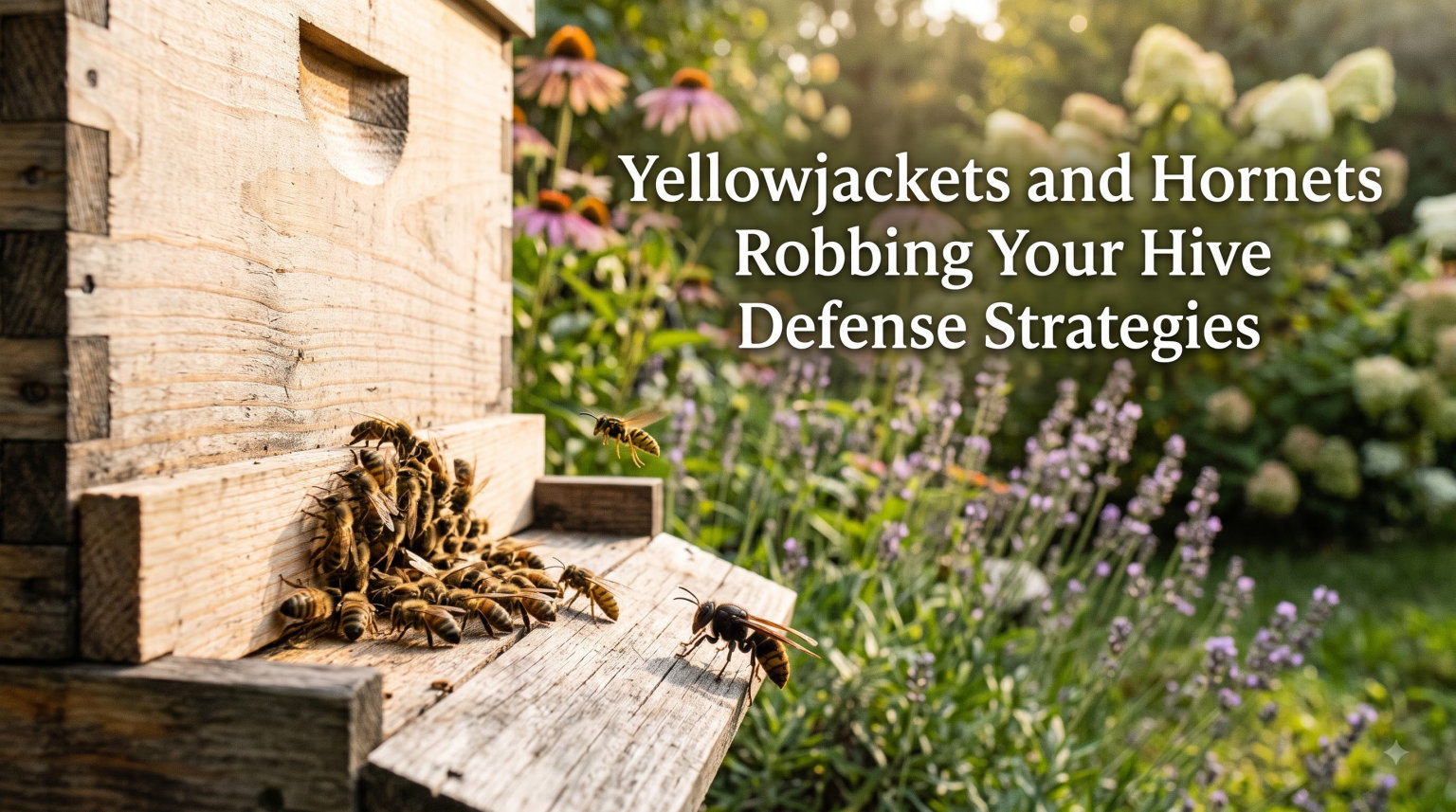
Every late summer, beekeepers across the country watch a familiar scene unfold. Wasps circle the hive entrance, guard bees fight pitched battles at the landing board, and dead bees pile up on the ground. If you have ever stood helplessly while yellowjackets and hornets decimated a colony, you know how urgent this problem becomes.
Yellowjackets and hornets robbing your hive defense strategies start long before the first wasp appears at your entrance. The work happens in spring management, midsummer monitoring, and knowing exactly what to do when pressure peaks in August and September. This guide walks through every layer of protection, from identifying the specific threat to executing an emergency response that saves your colony.
Our team has compiled methods from university extension research, experienced beekeeper forums, and field-tested techniques that actually work when hives are under siege. Whether you are dealing with a single weak colony or managing a full apiary, these strategies will help you protect your bees through the most dangerous part of the season.
Table of Contents
Identifying the Threat: Yellowjackets, Hornets, and Honey Bees
Telling yellowjackets, hornets, and honey bees apart is the foundation of every effective defense plan. Many beekeepers confuse these insects, which leads to wasted effort and sometimes harming the wrong species entirely.
Yellowjackets are the most common hive attackers in North America. They belong to the Vespula and Dolichovespula genera and are semi-social wasps with bright yellow and black striped abdomens. Their bodies are sleek and hairless compared to honey bees, and they fly with rapid, side-to-side movements that look distinctly different from the steady flight of a foraging bee. Yellowjackets also have a noticeably narrower waist and longer legs that dangle during flight.
Hornets are larger and more intimidating. The European hornet (Vespa crabro), established in parts of the eastern United States, measures over an inch long with a reddish-brown thorax and yellow-and-brown striped abdomen. The northern giant hornet (Vespa mandarinia), sometimes called the murder hornet, represents an even more devastating threat where it appears. Hornets can slaughter entire colonies in a matter of hours by deploying their powerful mandibles against guard bees.
Honey bees, by contrast, are fuzzy, golden-brown insects with more subdued coloration. They carry pollen in baskets on their hind legs and fly with a purposeful, direct path back to the hive. When you see insects fighting at the entrance, look closely. The smooth, bright yellow bodies of yellowjackets stand out sharply against the fuzzy, amber bodies of your bees.
| Feature | Yellowjacket | Hornet | Honey Bee |
|---|---|---|---|
| Size | 3/8 to 5/8 inch | 3/4 to 1.5 inches | 1/2 inch |
| Body Texture | Smooth, hairless | Smooth, large mandibles | Fuzzy, covered in hair |
| Color | Bright yellow and black | Reddish-brown with yellow | Golden-amber and brown |
| Flight Pattern | Erratic, side-to-side | Direct, hovering | Steady, purposeful |
| Waist | Very narrow | Narrow | Not pronounced |
| Pollen Baskets | None | None | Present on hind legs |
One beekeeper on the r/Beekeeping forum put it well: if you see bright yellow insects with dangling legs circling your entrance like fighter jets, those are yellowjackets, not your bees.
Why Yellowjackets and Hornets Attack Bee Hives
Yellowjackets and hornets attack bee hives for one simple reason: your colony sits on a massive pile of food. Honey provides the carbohydrates they crave, and brood and adult bees supply the protein their growing colonies need. Understanding this motivation helps you predict when attacks will happen and prepare accordingly.
Both yellowjackets and hornets live in annual colonies. Queens emerge in spring, start small nests, and build their populations through summer. By late July through September, wasp colonies reach their peak size just as natural food sources begin to dwindle. This timing is the crux of the problem. When wild nectar and insect prey become scarce during the late summer nectar dearth, wasps turn to the most concentrated food source available, which is your hive.
The recruitment behavior makes yellowjacket attacks especially dangerous. When a single foraging yellowjacket discovers your hive, it returns to its own nest and releases pheromone signals that recruit dozens more. Within hours, a lone scout can become a full-scale siege. These wasps forage within a radius of roughly 1,100 feet, so a yellowjacket nest in your neighbor’s yard poses a direct threat to your apiary.
Hornets operate with even more devastating efficiency. Northern giant hornets use a coordinated slaughter phase where groups of hornets enter a hive and decimate the adult bee population. A small group of these hornets can wipe out a colony of 30,000 bees in a single afternoon. European hornets, while less coordinated, still prey heavily on foraging bees and will raid hives for honey during dearth periods.
The connection between yellowjacket pressure and bee-on-bee robbing is another factor beekeepers often miss. When yellowjackets stress a colony, the hive becomes weakened and its scent becomes detectable to bees from other colonies. This invites robbing bees, which compounds the damage. Yellowjackets and robbing bees frequently appear together, and both must be addressed.
Yellowjackets and Hornets Robbing Your Hive: Prevention Strategies
Prevention is where you win or lose this battle. Every experienced beekeeper agrees that proactive prevention beats reactive emergency response every time. The following strategies build layers of protection that make your hive a difficult, unappealing target long before wasps arrive.
Entrance Reduction: Your First Line of Defense
Entrance reduction is the single most effective action you can take to protect your hive. By narrowing the entrance, you give your guard bees a much smaller perimeter to defend, which dramatically increases their effectiveness against attacking wasps.
Use an entrance reducer to narrow the opening to a single bee space, roughly the width of one bee. This allows your bees to enter and exit while making it nearly impossible for groups of yellowjackets to push past the guard bees. Reddit beekeepers consistently report that reducing to one bee space is the critical step that saves colonies under attack. Install reducers in mid to late July before yellowjacket pressure peaks, and keep them in place through fall.
Robbing Screens: How They Work
A robbing screen takes entrance protection a step further. This simple device covers the actual hive entrance with a screen panel that forces insects to work their way around the sides to get inside. Your resident bees quickly learn the new layout, but wasps and robbing bees from other colonies become confused and give up.
Experienced beekeepers describe robbing screens as highly effective, especially during late summer dearth periods. Install robbing screens in the afternoon or evening when foraging has slowed, giving your bees time to reorient overnight. Choose screens with adjustable openings so you can match the entrance size to your colony strength and current pressure level.
Building Colony Strength Year-Round
A strong colony is your best defense against any threat. Colonies with strong populations of guard bees can repel yellowjacket attacks that would overwhelm a weak hive. Focus on maintaining colony health throughout the season with regular varroa mite monitoring, adequate food stores, and proper ventilation.
Varroa mites deserve special attention here because they weaken colonies and make them more vulnerable to yellowjacket predation. A colony fighting a heavy mite load cannot simultaneously mount an effective defense against wasps. Test for mites regularly using alcohol wash or sugar shake methods, and treat when levels exceed recommended thresholds.
Tidy Apiary Practices
How you manage your apiary day-to-day has a direct impact on yellowjacket attraction. Wasps are drawn to the scent of honey, wax, and sugar syrup more than almost anything else. Every drop of honey or syrup that reaches the ground around your hives is an invitation.
Keep your apiary spotless during inspections. Never leave frames of honey or burr comb exposed on top of hives. Clean up wax cappings immediately after extraction, and avoid open feeding of sugar syrup during dearth periods, since the scent attracts wasps from hundreds of feet away. Schedule inspections for early morning when yellowjackets are less active, and keep them brief during peak pressure weeks to minimize the honey scent you release into the air.
Active Defense Methods: Trapping and Hornet-Specific Strategies
When prevention is not enough, active defense methods give you tools to reduce yellowjacket and hornet populations around your apiary. Trapping is the most common approach, but it must be done correctly to avoid making the problem worse.
Trapping Yellowjackets Effectively
Yellowjacket traps use attractants to lure wasps away from your hives. The most effective commercial bait contains heptyl butyrate, a compound that specifically attracts western yellowjacket species (Vespula pensylvanica). Some beekeepers make homemade traps using meat or sugar water, though these can attract honey bees as well, so heptyl butyrate baits are safer.
Trap placement matters enormously. University extension research recommends placing traps at least 20 feet away from your hives and positioning them low to the ground, since yellowjackets forage near ground level. If you place traps too close to hives, you risk drawing more wasps directly to your bees rather than away from them. Hang traps in late July and check them weekly through September, replacing bait as needed.
However, forum users consistently note that traps alone rarely solve the problem. Traps reduce pressure, but they cannot keep up with large yellowjacket populations. Use trapping as one layer in a multi-strategy approach that also includes entrance reduction and robbing screens.
Hornet-Specific Defense Strategies
Hornets require different tactics than yellowjackets because of their size, aggression, and hunting behavior. Standard yellowjacket traps with heptyl butyrate are largely ineffective against hornets, since hornets are attracted to different cues. Hornet traps often use a combination of protein bait and sweet liquid, and some beekeepers in hornet-affected areas use specialized trapping systems designed for Vespa species.
If you deal with European hornets, focus on locating and destroying their paper nests in hollow trees, wall voids, or structural cavities near your apiary. These nests are often hidden but can be found by tracking the flight paths of returning hornets at dusk. Never attempt nest destruction during the day when hornets are most aggressive. Contact a professional pest control service if the nest is in a wall void or otherwise difficult to reach.
For northern giant hornet sightings, the situation is far more serious. These hornets represent a catastrophic threat to honey bee colonies and require immediate reporting to state agricultural departments. In areas where these hornets have been detected, authorities use specialized tracking and nest eradication programs. If you suspect northern giant hornets in your area, report the sighting immediately and follow guidance from your local extension office.
Natural and Chemical-Free Options
Many beekeepers want to protect their hives without introducing chemicals into the apiary. The good news is that the most effective yellowjacket and hornet defense strategies are entirely chemical-free.
The sprinkler method is one creative approach reported by small-scale beekeepers. Setting a lawn sprinkler on a gentle mist near hive entrances during peak yellowjacket activity can disrupt wasp flight patterns and discourage attacks. Bees tolerate light mist better than wasps do, giving your colony an advantage during critical afternoon hours.
Plant-based repellents offer another option. Some beekeepers report success with planting mint, eucalyptus, or wormwood around the apiary perimeter, though evidence is largely anecdotal. The key principle is to avoid using any chemical insecticides near your hives, since these products do not discriminate between pest wasps and beneficial bees.
Emergency Response: Saving a Hive Under Active Attack
Despite your best prevention efforts, you may walk out to your apiary one afternoon and find a full-scale attack in progress. Acting quickly and correctly in these moments can mean the difference between a colony that recovers and one that collapses entirely.
Signs Your Hive Is Being Robbed
Recognizing the signs of active robbing early gives you time to respond. Look for these five indicators: frantic, erratic flight around the entrance; fighting and grappling at the landing board; dead bees with torn wings on the ground in front of the hive; increased numbers of wasps circling the entrance; and a loud buzzing roar that sounds distinctly different from normal hive activity.
Distinguishing between yellowjacket robbing and bee-on-bee robbing takes practice. Yellowjacket robbing features smooth, bright yellow wasps fighting your bees. Bee robbing involves honey bees from other colonies trying to enter. Both can happen simultaneously, and both require immediate intervention.
The Wet Towel Method and Immediate Actions
When you confirm an active attack, take these three steps immediately. First, reduce the entrance to one bee space using an entrance reducer. Second, drape a wet towel or bedsheet over the entire hive to mask the honey scent that draws attackers. Third, if one hive is receiving most of the attention, consider temporarily relocating it to disrupt the attack pattern.
The wet towel method is a favorite among experienced beekeepers and works by covering the hive with a water-soaked cloth that conceals the honey aroma wasps use to locate their target. Keep the towel damp and leave it in place for 24 to 48 hours while the colony recovers. Facebook beekeeping groups report consistent success with this technique, especially when combined with entrance reduction.
Stay calm during the response. The psychological pressure of watching your colony under attack can lead to hasty decisions that make things worse. Close the entrance enough to protect the bees but not so tightly that they cannot ventilate on hot days. Check the colony the following morning when wasp activity is low, and assess whether the queen survived and the brood pattern is intact.
Frequently Asked Questions
Can yellow jackets destroy a beehive?
Yes, yellowjackets can absolutely destroy a beehive. During late summer when wasp populations peak and natural food sources dwindle, yellowjackets can overwhelm weak colonies, kill adult bees, consume brood for protein, and rob honey stores. A small or queenless colony can be wiped out in just a few days of sustained yellowjacket pressure.
How do I stop a hive from being robbed?
To stop hive robbing, immediately reduce the entrance to one bee space using an entrance reducer, then install or adjust a robbing screen to confuse attackers. Cover the hive with a wet towel to mask honey scent, avoid open feeding, and postpone inspections until robbing subsides. Keep these protections in place for 24 to 48 hours.
What repels yellow jackets instantly?
Nothing repels yellowjackets instantly and reliably near a beehive. The most effective immediate action is masking the honey scent with a wet towel or bedsheet and reducing the entrance so guard bees can defend it. Sprinklers on a gentle mist can also disrupt wasp flight. Avoid chemical sprays near hives, since they harm honey bees too.
Why do hornets invade bee hives?
Hornets invade bee hives to feed on honey for carbohydrates and on adult bees and brood for protein. This behavior intensifies during late summer nectar dearths when natural food sources decline and hornet colonies reach peak population. Hornets also hunt honey bees as prey to feed their developing larvae back at their own nest.
What kills yellow jackets but not honey bees?
Heptyl butyrate traps kill yellowjackets without harming honey bees, since the bait specifically attracts Vespula wasps and not bees. Physical entrance reducers and robbing screens protect bees without killing anything. Never use broad-spectrum insecticides near hives, as these do not discriminate between wasps and bees.
What is the 3 3 3 rule for bees?
The 3 3 3 rule for bees refers to a general beekeeping guideline: check on a new package or nuc after 3 days, again after 3 weeks, and expect it to be fully established after 3 months. This timeline helps beekeepers monitor colony establishment without over-inspecting, which is especially important during yellowjacket season when each inspection releases honey scent.
Protecting Your Hives All Season Long
Yellowjackets and hornets robbing your hive defense strategies come down to layered preparation and decisive action. Start with colony strength and varroa management in spring. Add entrance reducers and robbing screens in midsummer before pressure builds. Deploy traps strategically, keep your apiary clean, and know the emergency response steps before you need them.
The beekeepers who lose the fewest colonies to wasp attacks are the ones who treat late summer defense as a season-long project rather than a last-minute scramble. Begin planning your defense now, and your bees will thank you with strong, healthy colonies that survive through winter and thrive again next spring.