
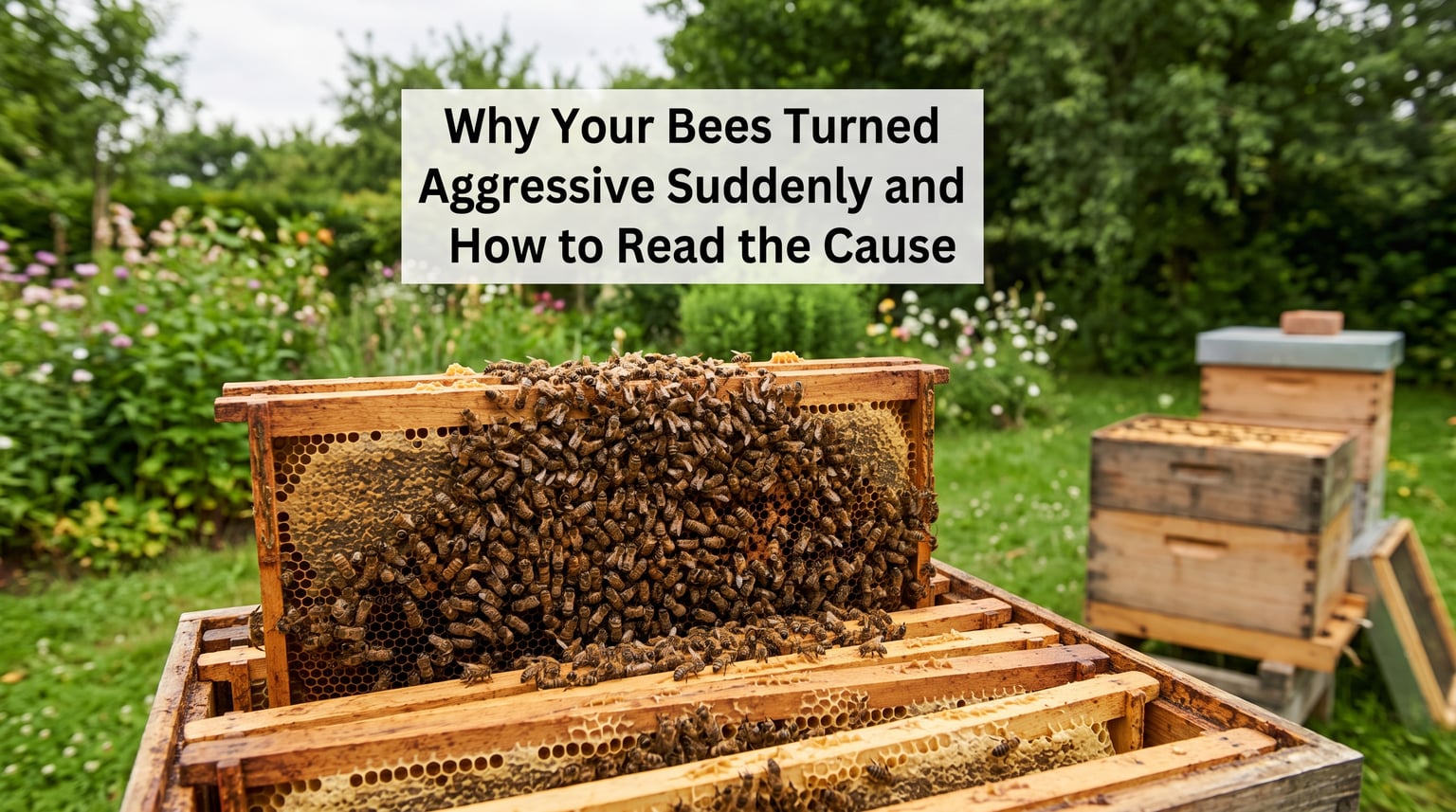
One of the most jarring moments in beekeeping is opening a hive that has been calm for months and getting met with a wall of angry, stinging bees. I have been there, and I know the panic that sets in when your formerly gentle colony suddenly turns hostile. If you are dealing with this right now, you are not alone. Sudden defensiveness is one of the most common questions posted on beekeeping forums every single season.
Here is the most important thing to understand first: bees do not actually get “aggressive.” What you are seeing is defensive behavior. Your bees are reacting to something they perceive as a threat, and that trigger could be genetics, environment, hunger, predators, or the loss of their queen. Figuring out which one is the key to fixing the problem.
In this guide, I will walk you through every major cause of sudden bee defensiveness, how to read the signs, and exactly what to do about it. Whether you are a first-year beekeeper or someone with a decade of hives behind your house, you will leave knowing how to diagnose and resolve cranky bees. Let us start with why bees become aggressive suddenly and what triggers the shift in temperament.
Table of Contents
Defensive Behavior vs Aggression: Getting the Terminology Right
Bees are not capable of aggression in the way we typically think about it. They do not hold grudges, seek revenge, or attack unprovoked. What beekeepers call “aggression” is almost always defensive behavior, meaning the bees are protecting their hive, their queen, and their food stores from something they perceive as dangerous.
This distinction matters more than you might think. If you frame the problem as “my bees are mean,” you might miss the actual trigger causing the defensiveness. If you frame it as “my bees are defending against a threat,” you start looking for that threat. That mental shift is the first step toward solving the problem.
Truly aggressive honey bees, meaning bees that attack without provocation or pursue targets for long distances, are rare outside of regions with Africanized genetics. The vast majority of “aggressive” hives are simply stressed colonies reacting to a specific, identifiable cause. Find the cause and the behavior usually resolves.
Why Bees Become Aggressive Suddenly: The Main Causes
When formerly docile bees turn defensive overnight, the cause almost always falls into one of six categories. Let me break down each one so you can match your situation to the right trigger.
Queen Genetics and Temperament
The queen’s genetics are the single biggest factor in how your bees behave. She passes her temperament down to every worker in the colony, and a hive is only as gentle as the queen that produced it. This is why experienced beekeepers will tell you that the fastest fix for a mean hive is replacing the queen.
Queens mate with up to 20 drones, which means the genetic mix can shift even within a single colony. If your queen mated with aggressive drones, the next generation of workers may be noticeably hotter than the previous one. I have seen a calm hive turn defensive over a single brood cycle because the queen’s new offspring carried cranky genetics.
If your bees were always gentle but changed over a few weeks as new workers emerged, genetics from the current queen’s mating is the likely culprit. The good news is that requeening with a known gentle stock usually resolves the problem within one brood cycle, typically four to six weeks.
A Queenless Hive Turns Mean Fast
A colony without a queen becomes anxious, disorganized, and often defensive. Without the pheromones a queen produces to keep the hive calm and cohesive, worker bees lose their sense of order. This is one of the fastest triggers for sudden aggression, sometimes changing a hive’s temperament within days.
You can usually identify a queenless hive by looking for a few telltale signs. Check for eggs first, because if you cannot find a single egg, your queen may be gone. Listen for a characteristic queenless roar, which is a louder, more agitated buzzing than normal. Look for queen cells on the face or bottom of frames, which indicate the colony is trying to raise a replacement.
One beekeeper on a forum described being attacked within one second of lifting the lid on a previously docile colony. When they investigated further, the hive had gone queenless after a failed supersedure. Once they introduced a new queen, the defensiveness faded within two weeks.
Nectar Dearth and Starvation
A nectar dearth is a period when flowers stop producing nectar, and it is one of the most common environmental triggers for cranky bees. When food becomes scarce, every bee in the colony goes on high alert. They have stores to protect, robbers to fight off, and nothing new coming in, which creates a perfect storm of defensiveness.
Dearths typically happen in midsummer between major flows and again in fall as temperatures drop. The drought-related dearth is especially common, and I have seen colonies that were perfectly calm in June turn absolutely hostile by August because the rain stopped and the flowers dried up.
You can confirm a dearth by watching the hive entrance during the warmest part of the day. If you see bees wrestling, fighting, or biting each other at the landing board, robbing is likely underway. This is a strong signal that resources are tight and the colony is in full defense mode.
Weather and Environmental Stress
Bees are sensitive to weather conditions, and certain conditions make them predictably defensive. Storms approaching, high humidity, overcast skies, and extreme heat all raise stress levels in the hive. If your bees seem cranky on a particular day but were fine yesterday, check the forecast before assuming a deeper problem.
Wind is an underappreciated trigger. Inspections on windy days almost always go worse than calm days because the wind disrupts pheromone communication and makes it harder for guard bees to assess what is happening. I learned this the hard way and now reschedule inspections whenever the wind picks up.
Cold weather also plays a role. Opening a hive when temperatures are below 60 degrees Fahrenheit stresses the colony because it breaks their brood nest temperature regulation. Stressed bees are defensive bees, so timing matters enormously.
Predators Harassing the Hive
If your bees seem on edge and you cannot find another cause, look for predators. Skunks are the classic culprit and one of the most underdiagnosed causes of hive defensiveness. A skunk will sit in front of the hive at night, scratch at the entrance, and pick off bees one at a time as they come out to investigate.
This nighttime harassment leaves the colony in a state of constant alarm. By the time you open the hive the next morning, the bees are already primed for defense. Skunk predation also leaves a distinctive sign: scratch marks on the front of the hive and dark stains on the landing board from bee feces.
Other predators to watch for include mice nesting in the bottom board during winter, wasps raiding the entrance in late summer, and in some regions, bears. Each one raises the colony’s stress level and makes them more likely to sting you during your next inspection.
Africanized Genetics and Cross-Breeding
In southern states and parts of the southwest, Africanized honey bee genetics are a real factor in colony temperament. Africanized traits include intense defensiveness, pursuing intruders for long distances, and stinging in large numbers over minor disturbances. These genetics can enter your apiary through packaged bees, swarms, or drones mating with your queen.
If your bees chase you for more than 50 yards from the hive, continue stinging long after you have left the area, or respond to any vibration with mass alarm, Africanized influence is worth considering. A standard European hive might send a few guards after you for a short distance, but sustained pursuit is a red flag.
If you suspect Africanized genetics, the solution is requeening with certified gentle stock from a reputable supplier. The current workers will die off over the next several weeks, and the colony will gradually return to normal temperament as the new queen’s offspring take over.
How Bees Detect Threats: The CO2 Detection Mechanism
Understanding how bees actually detect a threat helps explain why they react the way they do. Honey bees have specialized sensors that detect carbon dioxide, and this ability plays a direct role in their defensive response. When you breathe near a hive, you exhale CO2, and guard bees interpret elevated carbon dioxide as a sign that a large mammal is nearby.
This is why beekeepers are told to breathe through their nose and avoid exhaling toward the hive. Bees are hardwired to associate CO2 with predators like bears and skunks that historically raided their colonies. The more CO2 they detect, the more alarmed they become.
Bees also detect threats through vibrations and scent. Pounding on a hive, dropping frames, or stepping heavily near the entrance sends warning signals through the comb. When a bee stings, she releases alarm pheromone that smells like banana, and this chemical signal spreads rapidly through the colony, triggering more bees to join the defense.
Smoker works against this system by masking alarm pheromones and triggering a feeding response. When bees detect smoke, they gorge on honey in preparation for abandoning the hive, which makes them calmer and less likely to fly up defensive. This is why proper smoker use is so effective at reducing stings.
Seasonal Aggression Patterns: When Are Bees Most Defensive?
Bee defensiveness follows a predictable seasonal cycle, and knowing this calendar helps you anticipate problems before they start. The short answer is that bees are most defensive in late summer and early fall, typically from July through September, when nectar flows end and colonies are at peak population.
In spring, bees are usually at their gentlest. The nectar flow is on, the colony is growing, and resources are abundant. Everyone is busy foraging, and the hive has plenty to do besides worry about you. Most beekeepers find spring inspections go smoothly with minimal smoke needed.
By midsummer, the situation shifts. The main spring flow ends, populations are large, and a dearth often sets in. This is when forums light up with questions about suddenly aggressive hives. The colony has more guard bees than ever, fewer incoming resources, and a stronger instinct to protect what they have stored.
Fall brings another spike in defensiveness. Bees are preparing for winter, robbing pressure increases as colonies try to steal from each other, and wasps become aggressive in their own right. If your bees seem hot in September, it may simply be the season rather than a permanent problem.
Winter is the quietest period, mainly because you should not be opening hives when it is cold. But colonies under winter stress can still be defensive if you must inspect, so keep visits brief and use smoke generously.
How to Read the Cause: Genetics vs Environment
One of the hardest skills to develop is distinguishing whether your hive’s defensiveness comes from genetics or environment. This matters because the solutions are completely different. Environmental causes resolve on their own once the trigger passes, while genetic causes require requeening.
Start by asking yourself when the behavior changed. If it happened suddenly over a day or two, the cause is likely environmental. A dearth, a storm, a predator, or a rough inspection can all flip a hive’s mood overnight. If the defensiveness has been building gradually over several weeks as new bees emerge, genetics is the more probable explanation.
Next, check whether the behavior is consistent or situational. If your bees are calm on warm, sunny mornings during a nectar flow but cranky on humid afternoons during a dearth, the environment is driving the behavior. If they are defensive regardless of conditions, time of day, or season, the queen’s genetics are probably at fault.
Finally, look at the colony’s overall health. A queenless hive, a starving colony, or a hive fighting off robbing will all show defensiveness alongside other symptoms. If the hive is queenright, well-fed, and otherwise healthy but still mean, the answer almost always points back to the queen.
How to Calm Aggressive Bees: Solutions That Work
Once you have identified the cause, you can apply the right solution. Here are the approaches that actually work, based on what experienced beekeepers and forum communities recommend.
Requeen with gentle stock. This is the single most effective fix for genetically defensive bees. Order a queen from a reputable breeder that selects for temperament, introduce her properly, and wait one brood cycle for the old workers to die off. Most beekeepers report a dramatic improvement within four to six weeks.
Use your smoker correctly. A properly lit smoker with cool, white smoke calms bees by masking alarm pheromones. Give the entrance a few gentle puffs before opening, wait two minutes for the smoke to take effect, and puff again as needed during the inspection. Avoid hot smoke, which agitates rather than calms.
Time your inspections wisely. Inspect during the warmest, calmest part of the day, typically between 10 AM and 2 PM, when most foragers are out of the hive. Avoid windy days, rainy days, and the hour before a storm. Fewer bees in the hive means fewer defenders to deal with.
Eliminate predators. If skunks are the problem, raise your hive stands to 18 inches or place a board with small nails pointing upward in front of the entrance. For mice, reduce the entrance in fall and use mouse guards. Removing the nightly harassment lets the colony settle down within days.
Feed during a dearth. If food scarcity is driving defensiveness, syrup feeding can take the pressure off. Use entrance reducers to prevent robbing, and feed in the evening so you do not excite the colony during the hottest part of the day.
What to Do Immediately After an Attack
If you do get attacked, the first priority is getting away safely. Walk away calmly and steadily without swatting, because swinging your arms releases more alarm pheromone and attracts more bees. Move into dense brush, a vehicle, or a building, and do not stop until the pursuing bees give up, which can take 50 yards or more in extreme cases.
Once you are safe, scrape stings out sideways with a fingernail or hive tool rather than pinching them. Pinching squeezes more venom into your skin. Wash the sting sites with water to remove alarm pheromone, which otherwise attracts additional stings to the same area.
For multiple stings, monitor yourself closely for signs of a systemic reaction. Symptoms like difficulty breathing, swelling away from the sting sites, dizziness, or nausea require immediate medical attention. Even if you have never reacted before, sensitization can develop over time, so take every significant reaction seriously.
FAQs
Why are my bees so aggressive all of a sudden?
Sudden defensiveness almost always has an identifiable trigger. The most common causes are a lost queen, a nectar dearth, predator harassment, bad weather, or new genetics emerging from the current queen. Check for eggs to confirm the queen is present, look for signs of robbing or dearth, and inspect for skunk damage. If the hive is queenright and well-fed but still mean, genetics is the likely cause and requeening is the fix.
How to stop bees from being aggressive?
Start by identifying the cause. If genetics are the problem, requeen with gentle stock and wait one brood cycle for the temperament to shift. If the cause is environmental, fix the trigger by feeding during a dearth, removing predators, or rescheduling inspections for calm warm days. Always use a properly lit smoker, work during midday when foragers are out, and move slowly to avoid triggering alarm pheromone.
What month are bees aggressive?
Bees are most defensive in late summer and early fall, typically July through September. During this period, nectar flows end, colony populations peak, and robbing pressure increases, all of which raise stress levels. Spring bees are usually the calmest because resources are abundant and everyone is busy foraging.
Why do bees like me all of a sudden?
Bees are not attracted to you personally, but they may be detecting you through CO2 in your breath, scents you are wearing, or vibrations from your movement. If bees suddenly seem interested in you near the hive, it usually means the colony is already on alert from another trigger like a dearth or queenlessness. Move away calmly without swatting.
Conclusion
Sudden bee defensiveness is frightening when it happens, but it is almost never random. Your bees are telling you something, whether it is that they lost their queen, that the nectar has dried up, that a skunk is haunting them at night, or that their genetics need an upgrade. Understanding why bees become aggressive suddenly gives you the tools to read the cause and respond with the right fix instead of guesswork.
Start with observation, work through the causes systematically, and remember that patience is part of beekeeping. A hive that is hot today can be calm again in a few weeks with the right intervention. Keep your smoker lit, your inspections timed well, and your gentle queens on order.