
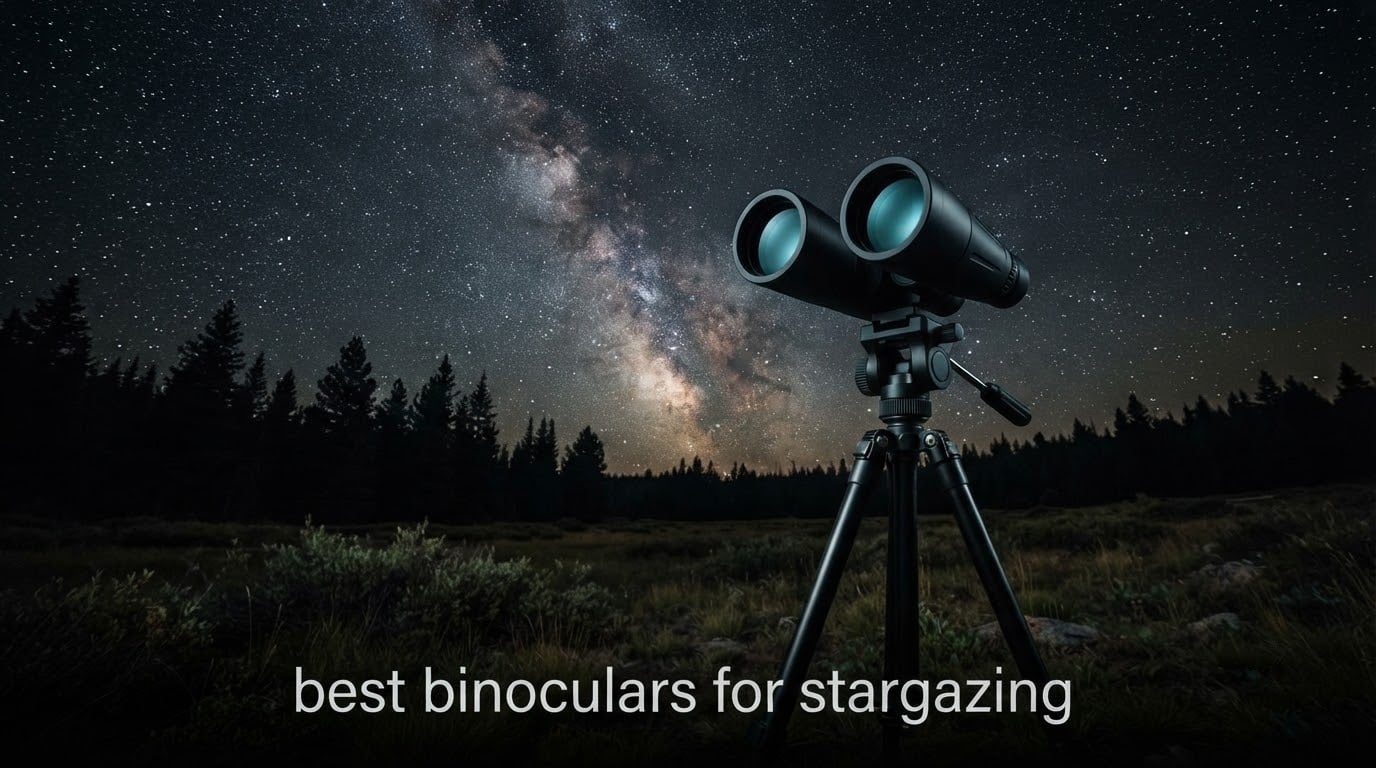
The best binoculars for stargazing are 10×50 or 7×50 models with Porro-prism BAK-4 glass. Ten times magnification stays steady in the hand while a 50mm objective lens gathers enough light to reveal the Moon, open star clusters, the Orion Nebula and the brightest parts of the Milky Way. Buy those two numbers as your starting point, then adjust the aperture up if you plan to use a tripod.
A decade ago the choice for a first astronomy pair was narrow and mostly wrong. Marketing pushed everyone toward 25×100 glass that cannot be held steady and shows a sliver of sky. Forum regulars on Cloudy Nights and Stargazers Lounge kept saying the opposite: start at 10×50, spend the money you saved on a tripod later, and only move up in aperture when you know you will use a mount. That advice still holds, and it is the spine of this roundup.
Below you will find nine pairs of astronomy binoculars we compared spec by spec, from a 774g wide-sweeping 7×50 to a 100mm-objective monster that needs its own tripod. Each one has a distinct job, and each gets a distinct label so you can jump straight to the one that matches how you actually observe: handheld in the backyard, on a tripod for planetary work, or sweeping a huge field of stars from a dark site.
Table of Contents
How we chose
Every product here was picked on published specifications rather than on brand reputation. We compared magnification, objective diameter, true field of view, exit pupil, eye relief, weight, focusing design, sealing and warranty, then cross-checked each spec against what buyers actually report about the image. The nine below are the full analyzed set, listed in the order we would hand them to a friend.
One number deserves an early warning because it contradicts most buying advice. Exit pupil equals the objective diameter divided by the magnification, and your dark-adapted eye can only take in about 5mm of it. A 10×50 gives a 5mm exit pupil, which matches a dark-adapted pupil exactly. A 25×100 gives 4mm, so all that extra light is squeezed through a smaller opening and the view is dimmer per unit of magnification than the smaller binocular you already own.
Top 3 Picks for Stargazing in 2026


The SkyMaster 25×70 takes the top slot on raw capability and the deepest review history in the group, which is the combination that tells us a product holds up. If you would rather never touch a tripod, the 15×70 is the steadier compromise, and the Vortex Diamondback HD 10×50 is the only one here that stays fully handheld at 10x while still using fully multi-coated HD glass.
The Best Binoculars for Stargazing at a Glance in 2026
| Product | Specifications | Action |
|---|---|---|
| Celestron SkyMaster 25×70 |
|
Check Latest Price |
 Celestron SkyMaster 15×70 Celestron SkyMaster 15×70 |
|
Check Latest Price |
 Celestron Cometron 7×50 Celestron Cometron 7×50 |
|
Check Latest Price |
| Vortex Diamondback HD 10×50 |
|
Check Latest Price |
 Sogries 25×100 Sogries 25×100 |
|
Check Latest Price |
 Aurosports 20×80 Aurosports 20×80 |
|
Check Latest Price |
 Sogries 20×80 Sogries 20×80 |
|
Check Latest Price |
 ESSLNB 25×70 ESSLNB 25×70 |
|
Check Latest Price |
 SVBONY SV407 2.1×42 SVBONY SV407 2.1×42 |
|
Check Latest Price |
Read that table for shape rather than rank. Two products here are handheld, four need a tripod, and one is a wide-field finder that does not magnify much at all. That spread is the whole story of astronomy binoculars: the right question is not which binocular is best, it is which one matches your viewing habits.
1. Celestron SkyMaster 25×70 – Our Top Pick for Tripod-Assisted Deep Sky
Celestron SkyMaster 25×70 Binoculars for Astronomy, Long-Range & Wildlife
25x and 70mm,2.7 degree field,2.8mm exit pupil,13mm eye relief,1474g
Pros
- 70mm BAK-4 objectives open up faint deep-sky targets from suburban yards
- Most reviewed pair in this lineup at 9171 ratings
- Built-in 1/4-20 tripod adapter
- Water-resistant rubber-armored housing
- Limited lifetime warranty
Cons
- Handheld shake at 25x is severe without a sturdy tripod
- The supplied adapter wobbles under a body this heavy
- Some buyers report softness at full distance
This is the pair I hand to people who already own a tripod or who are willing to buy one. The 70mm objectives with BAK-4 prisms are the reason it earns the top slot: 2.7 degrees of true field is narrow, but it is 2.7 degrees of real collected light, and that is what turns a fuzzy smudge of the Orion Nebula into a shape with wings you can point at.
Buyers consistently describe the same first session. The Moon fills the frame with visible crater relief along the terminator. Jupiter resolves into a disc with three or four Galilean moons strung beside it. The Andromeda Galaxy and the Pleiades both show up as identifiable objects rather than guesses, often from a backyard that has street lighting on one edge.
Specs worth remembering: 25x magnification, 70mm objective, 2.7 degree true field, 2.8mm exit pupil, 13mm eye relief, and 1474g. The 2.8mm exit pupil is the compromise. A 4mm pupil from a 25×100 would pass noticeably more light to a dark-adapted eye, and the price gap between this and a 100mm objective is where the real brightness lives.
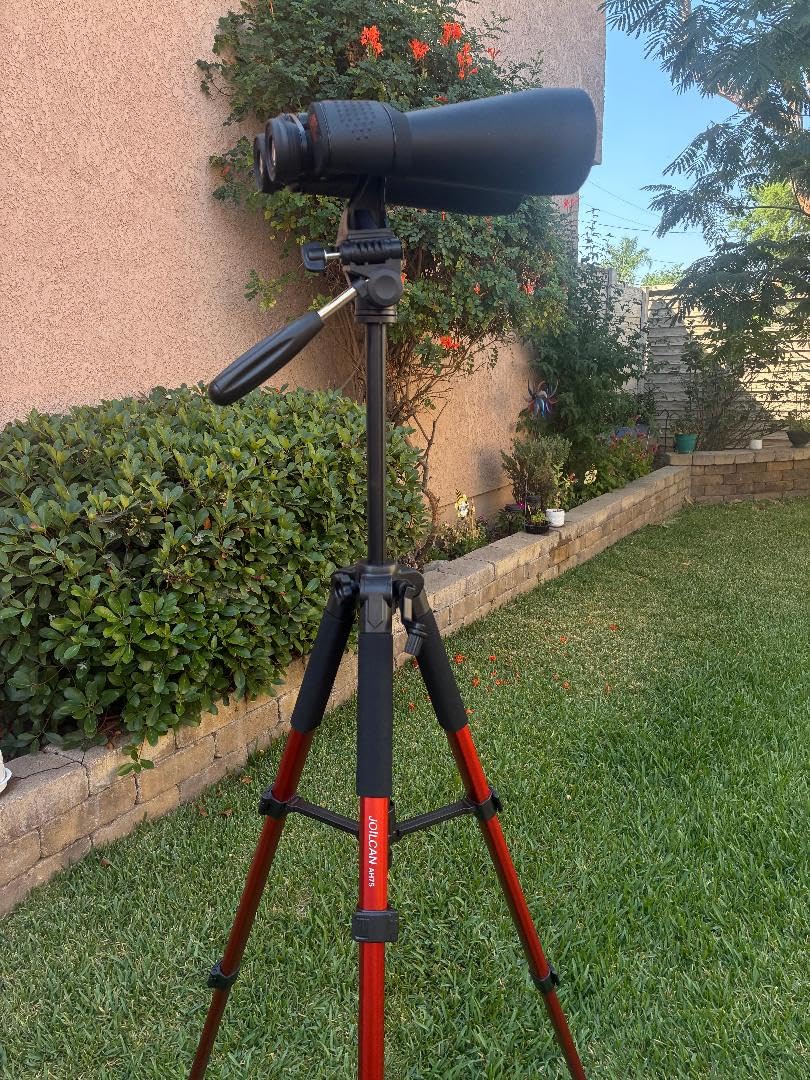
Two practical warnings from owners. The adapter that folds out of the body is the weak point on a binocular this heavy, and reviewers describe it oscillating on a standard photo tripod, so a proper binocular adapter or a monopod is worth the extra spend. A smaller group reports units arriving out of collimation, where the two halves of the image do not merge cleanly at a single focus setting.
What 25x does to the sky that 10x does not
At 25x you are no longer scanning, you are inspecting. The Moon’s craters gain definition, Jupiter’s moons separate cleanly, and the Orion Nebula’s core resolves into a textured patch rather than a grey smudge. On a steady mount that difference is unmistakable and worth the magnification.
The trap is framing. A 2.7 degree field means a star field that fits inside a coffee-cup held at arm’s length, which makes finding anything require deliberate sweeping with a tripod-mounted pair. Beginners often mount this, lose a target in a narrow field, and assume the binocular is faulty. Pair it with a 2×54 wide-field finder and that problem disappears.
Where it falls short for a casual observer
Weight and shake. At 1474g with the mass pushed forward, holding this to the zenith by hand is a two-minute exercise at best. Reviewers are unanimous that 25x without a tripod is a frustrating experience, and the 2.8mm exit pupil makes the image dimmer than a 10×50 of the same quality.
Thirteen millimeters of eye relief is also modest. Glasses wearers will need to roll the eyecups down and can still find their eyelashes in the way, which is the single most common reason buyers return high-power astronomy binoculars.
2. Celestron SkyMaster 15×70 – The Classic All-Rounder
Celestron SkyMaster 15×70 Astronomy Binoculars for Stargazing and Deep-Sky
15x and 70mm,4.4 degree field,4.7mm exit pupil,18mm eye relief,3.3 lb
Pros
- Bright
- wide views that show far more stars and planets than the naked eye
- Resolves Jupiter's four Galilean moons and rich lunar crater detail
- 18mm eye relief suits glasses wearers
- Easy center focus that suits beginners
- Water-resistant rubber armor
Cons
- A tripod is effectively required at this weight
- The included plastic adapter oscillates with a 3.3 lb body
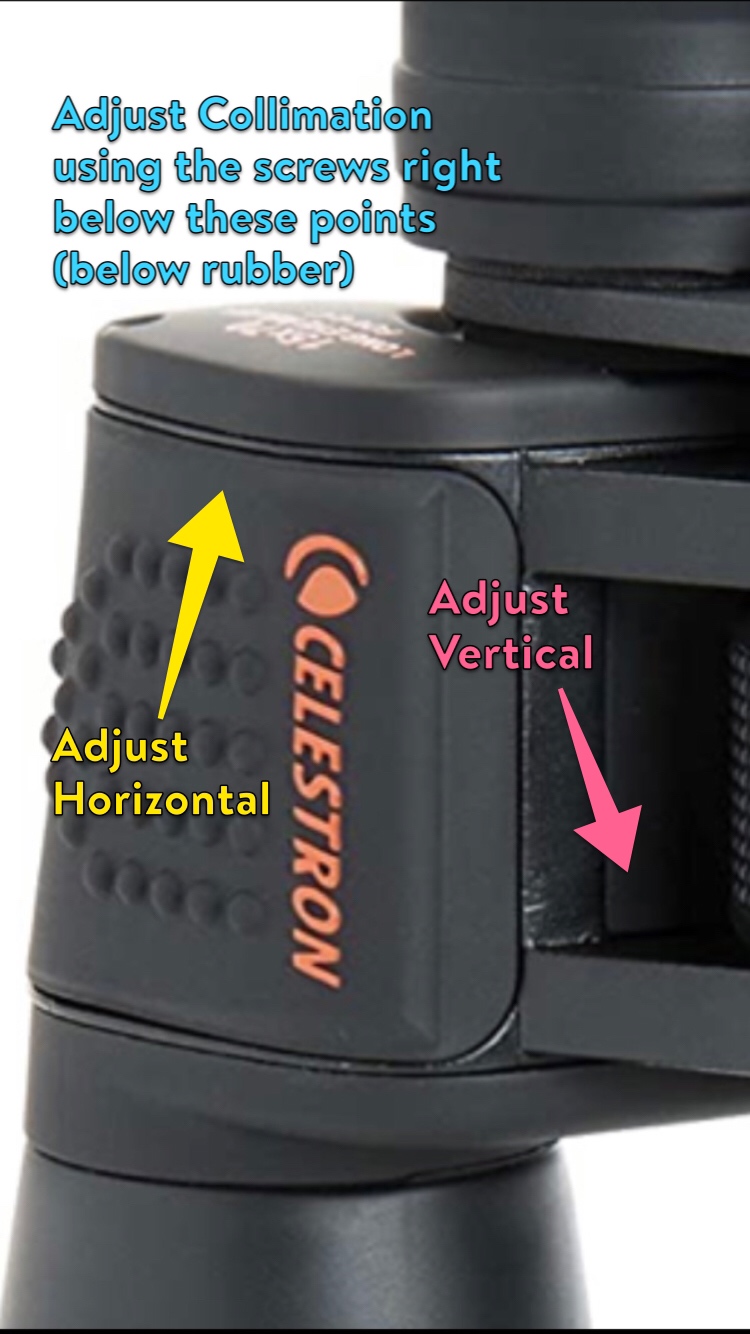
- Occasional units need collimation out of the box
Forum consensus names this shape, not this specific unit, as the most popular entry point in amateur astronomy, and the spec sheet explains why. Fifteen times magnification still shakes in the hand, but 4.4 degrees of true field is wide enough to hold the Pleiades in one view, and the 4.7mm exit pupil is far closer to your dark-adapted pupil than the 25×70 above.
In practice, this is the Moon and Jupiter pair. Buyers put the Moon edge-on and describe mare detail and craters along the terminator line, then swing to Jupiter and count three or four moons. Saturn shows as a bright object with an oval disk, and the Orion Nebula and M31 both read clearly from suburban skies.
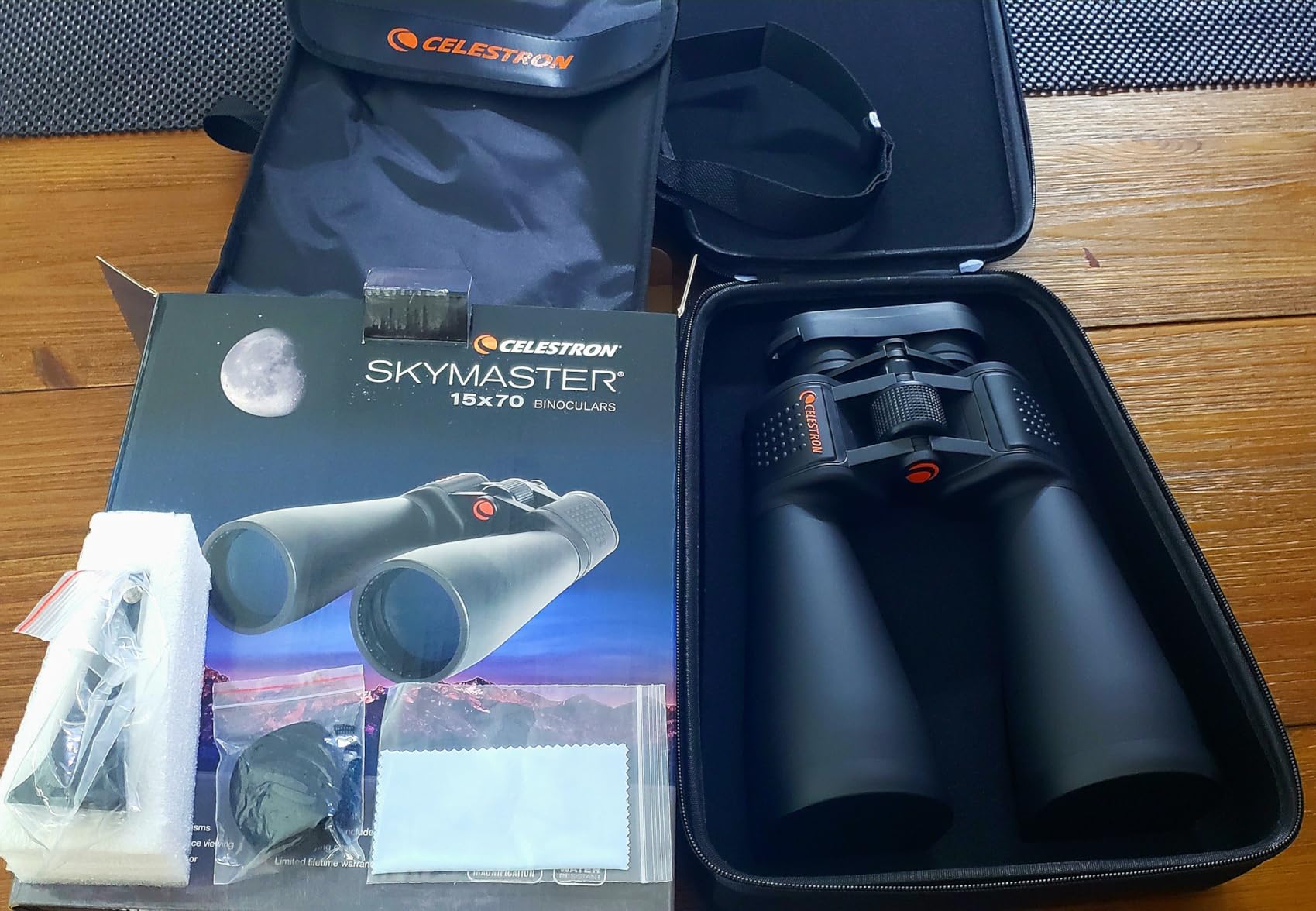
The specifications are well balanced for a first real astronomy purchase: 15x magnification, 70mm objective, 4.4 degree true field, 4.7mm exit pupil, 18mm eye relief, 3.3 pounds, center focus, multi-coated optics, and a limited lifetime warranty. The 18mm eye relief is the standout number, since anything above 15mm usually clears glasses comfortably.
The complaints are consistent enough to plan around. Almost every reviewer insists on a tripod or monopod, and the plastic adapter in the box is widely described as too soft for a 3.3 pound body. A steady mount is not an accessory here, it is part of the system.
15×70 versus 25×70 for a first pair
If you already have a tripod, the 25×70 gives you more magnification and more light. If you do not, the 15×70 is the better buy because its 4.4 degree field makes targets far easier to locate, and a target you can find is worth more than detail on a target you cannot.
Both share the same 70mm objective, so light gathering is identical. The difference is entirely magnification versus field of view, and for a first astronomy binocular, field of view wins. Buy the 15×70, learn the sky, and move up in magnification once you own a mount.
What owners dislike about it
Fine terrestrial detail in daylight lags behind premium 10×42 glass, so birders and hikers often find a second pair eventually. The body is also large and forward-heavy for travel, and the same small group that flags collimation problems on the 25×70 flags them here, usually resolved by a return rather than a repair.
3. Celestron Cometron 7×50 – The Widest Field and an Easy Handheld Start
Celestron Cometron 7x50mm Astronomy Binoculars
7x and 50mm,6.8 degree field,7.1mm exit pupil,13mm eye relief,774g
Pros
- 6.8 degree field makes sweeping the Milky Way genuinely easy
- Only 774g so handheld observing is realistic
- 50mm multi-coated objectives give a bright contrasty image
- Doubles as a birding and hiking pair
- Limited lifetime warranty
Cons
- 7x is a scanning magnification
- not a resolving one
- Individual focus takes more effort than center focus
- Tripod adapter socket is empty on arrival
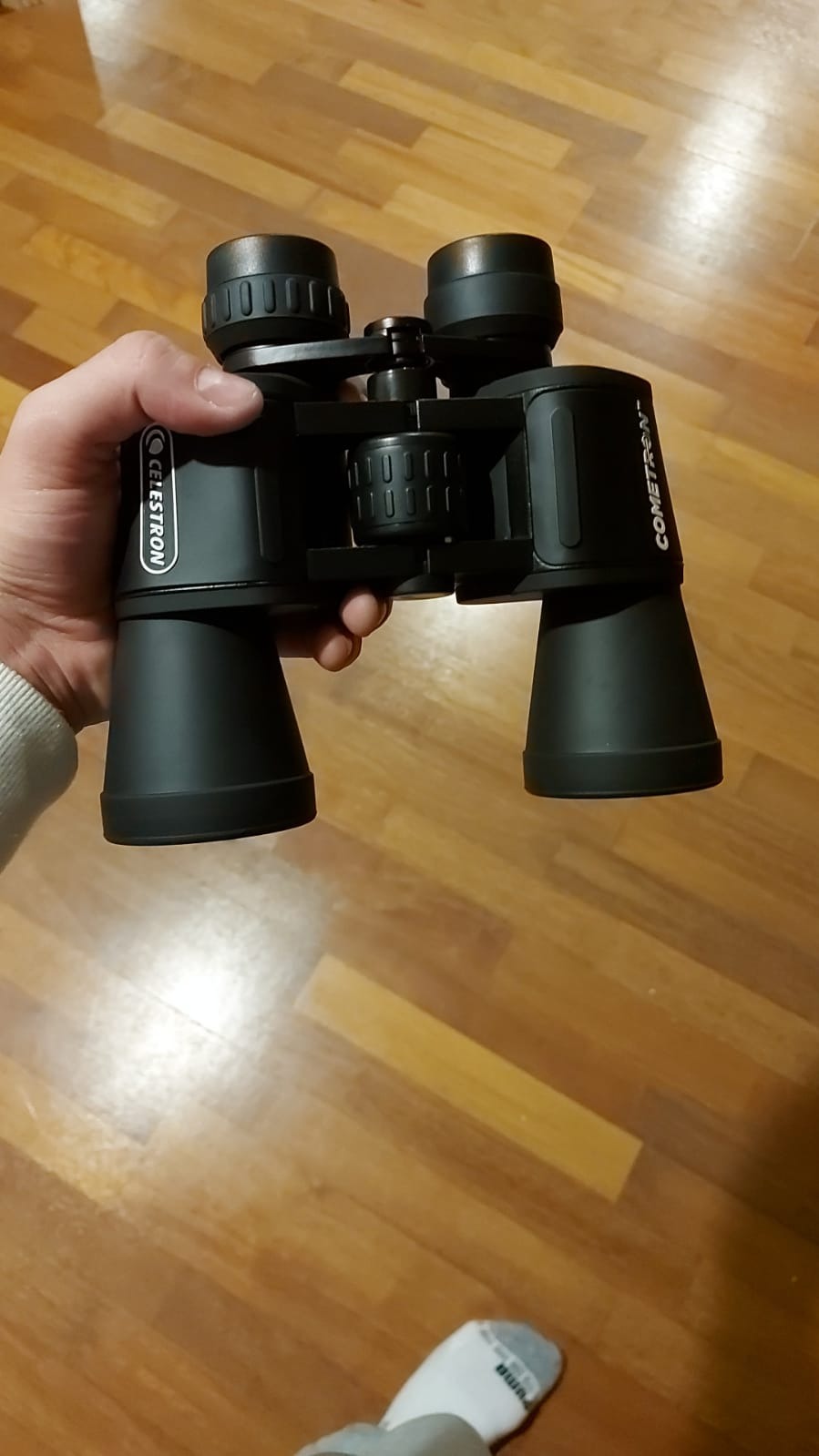
This is the pair to buy if you want the sky itself rather than individual objects. Seven times magnification with a 6.8 degree true field means you can pan across a third of the sky and still see wide star patterns intact. Constellations that are scattered naked-eye smudges become obvious arrangements of bright points.
The optics are simple rather than premium. A 50mm multi-coated objective and a Porro prism give a bright, contrasty image, and 7.1mm of exit pupil is more than your dark-adapted eye can use, so the view is as bright as this aperture allows. Reviewers describe it as the easiest and cheapest door into astronomy, and the rating in this lineup reflects very few complaints.

At 774g this is one of the few astronomy binoculars here you can genuinely hold up for an hour, and it is the only one you can also use on birds during the day. Individual focus, meaning each barrel focuses separately, takes a little getting used to, and the diopter adjustment covers plus or minus three.
It is also the highest rated pair in the group at 4.5 across 4095 ratings, which is worth noting because the rating reflects a product people are happy with rather than one they admire in listings. The 6.8 degree field is the reason: you always see what you are pointing at.
Where a 7x wide field wins
Milky Way sweeping. From a dark site the combined light of unresolved stars sits as a grey band across the sky, and a 6.8 degree field lets you follow that band across the frame with one smooth movement instead of hunting for it in a narrow circle. Comets and large open clusters have the same advantage: they are big and faint, which is exactly what a wide low-power field is built for.
It also works as a locator. If you are not sure where Orion sits, sweeping with this and switching to a higher-power pair is a reliable method, and it is why wide-field astro binoculars remain a category worth understanding even though roundups rarely cover them.
What 7x will not do
It will not resolve planetary detail. At 7x, Jupiter is a dot with moons too small to count reliably and the Moon is a featureless bright disk. Anyone who buys this hoping to see craters will be disappointed, and reviewers note that as the main limitation.
There is also no adapter in the box, only the socket, and the housing is water resistant rather than waterproof. If you plan to observe in damp autumn conditions, factor in a separate adapter and keep the optics out of the rain.
4. Vortex Diamondback HD 10×50 – The Sharpest Optics and the Top-Rated Pick
Vortex Diamondback HD 10×50 Binoculars
10x and 50mm,315 foot field,5mm exit pupil,17mm eye relief,1.9 lb
Pros
- Crisp color-faithful HD glass with very little chromatic aberration
- Argon purged and o-ring sealed for genuine fogproofing
- 17mm eye relief works with and without glasses
- Stay steady handheld at 10x
- Unlimited lifetime VIP warranty
Cons
- Heavier than most 10x50 pairs at 1.9 lb
- Edge-to-edge clarity still trails ultra-premium glass
- Accessory straps can loosen with repeated case use
This is the only pair in the roundup that sits exactly on the theoretical sweet spot: 10x magnification, a 50mm objective, and a 5mm exit pupil that matches a dark-adapted pupil precisely. Nothing is wasted. It is also the highest rated option here at 4.8 across 1342 ratings, and the reason is optical quality rather than raw light.
Fully multi-coated lenses with dielectric coating on every air-to-glass surface and HD glass elements produce a clean, color-neutral image with minimal fringing. For astronomy that matters at the edges, where cheaper Porro designs show color fringing on bright stars. Low-light performance is the strongest in the group, and dusk observing still gives you stars rather than a grey wash.

It is also the best-behaved pair to carry. Adjustable eyecups, a center focus wheel, right-eyepiece diopter adjustment, 17mm of eye relief and a rubber armor grip mean you can set it up for glasses in seconds. It is tripod adaptable or car window mountable if you want a stable view later.
Sealing is real rather than nominal: argon purging with o-ring seals makes it fogproof and weather resistant. Vortex also backs it with an unlimited, unconditional lifetime VIP warranty, and owners report the repair service as a genuine advantage over limited warranties elsewhere in this list.
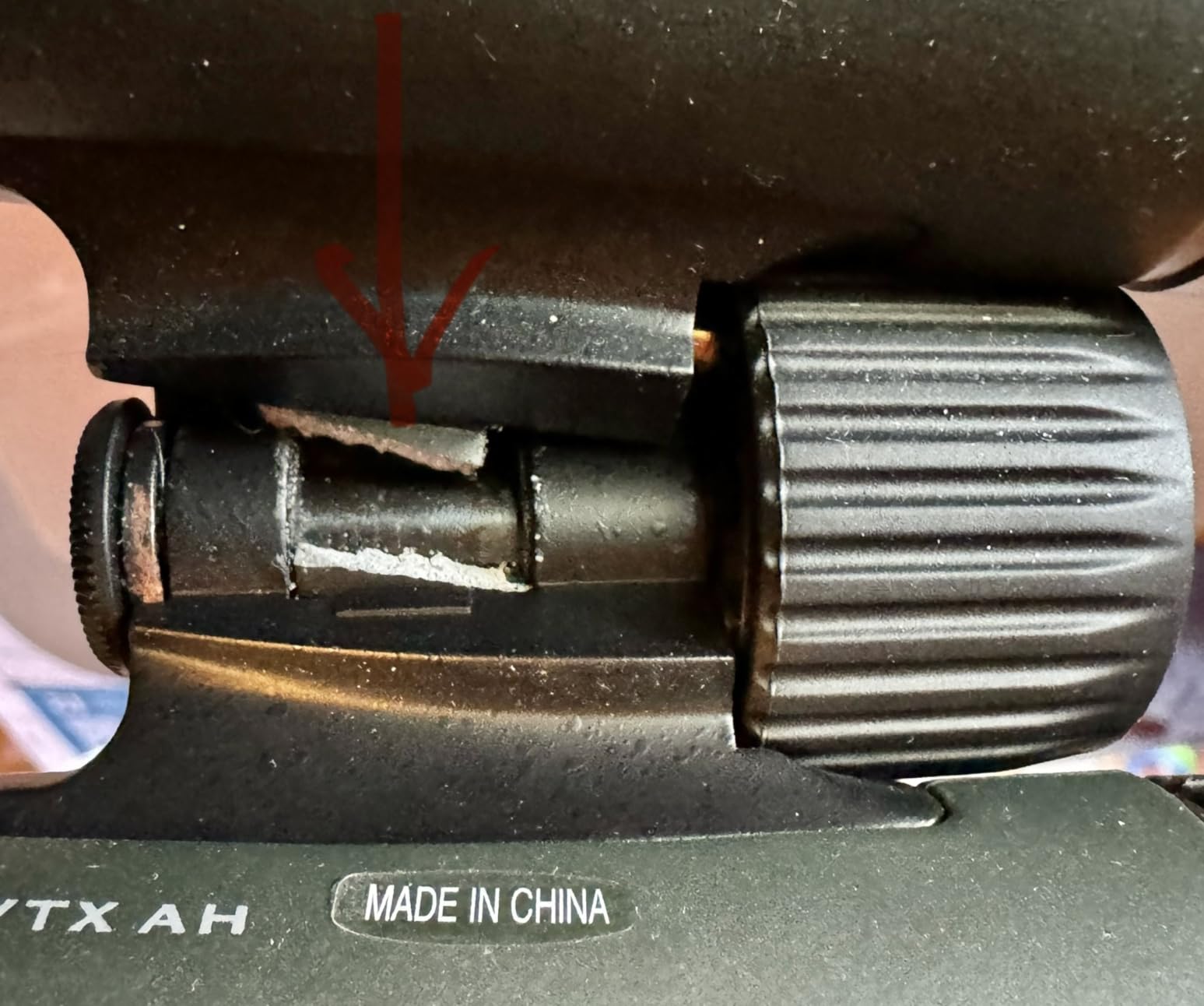
Why fully multi-coated glass is worth the step up
Coatings control how much light is reflected away at each air-to-glass surface instead of passing through. Every uncoated surface loses a few percent, and a pair with several surfaces can lose a noticeable share of the light your objective collected. Multi-coating reflects far less, and fully multi-coated plus dielectric puts the treatment on every surface including the prisms.
The visible result is contrast and color, not just brightness. Stars look harder against the background, and faint nebulae separate from the sky glow around them. That is the difference between seeing the Orion Nebula and seeing a grey patch you have to be told about.
Where it is not the right choice
At 1.9 lb it is heavier than most 10×50 pairs, which matters if you are walking to a dark site rather than standing in a yard. Owners also note that edge-to-edge sharpness and brightness still fall short of ultra-premium glass, so the last step up in price buys refinement rather than new capability.
That is the honest limitation of this pick. It is the best-balanced astronomy binocular here, not the finest optical instrument available, and if you already own a telescope this is the pair that lets you find and frame the faint stuff between telescope targets.
5. Sogries 25×100 – Maximum Light Gathering on a Tripod
Sogries 25×100 Astronomy Binoculars for Stargazing High Powered Long Range
25x and 100mm,2.8 degree field,4mm exit pupil,15.5mm eye relief,8.8 lb
Pros
- 100mm fully multi-coated objectives gather more light than anything else here
- BaK-4 prisms with 6 elements in 4 groups
- Waterproof and nitrogen filled for fogproofing
- Rubber-armored metal housing feels solid
- Leather backpack and strap included
Cons
- 8.8 lb needs a tripod rated well above 4 kg
- A 2.8 degree field makes sky scanning hard
- Individual barrel focus instead of center focus
- Some reports of factory collimation and hard-to-reach support
Light gathering scales with the square of the objective diameter, so a 100mm lens collects four times what a 50mm lens collects. That is the whole reason this pair exists, and owners report the Orion Nebula and Jupiter’s moons visible from a suburban backyard with binoculars this size. Nothing else in the roundup delivers that much collected light per second of exposure.
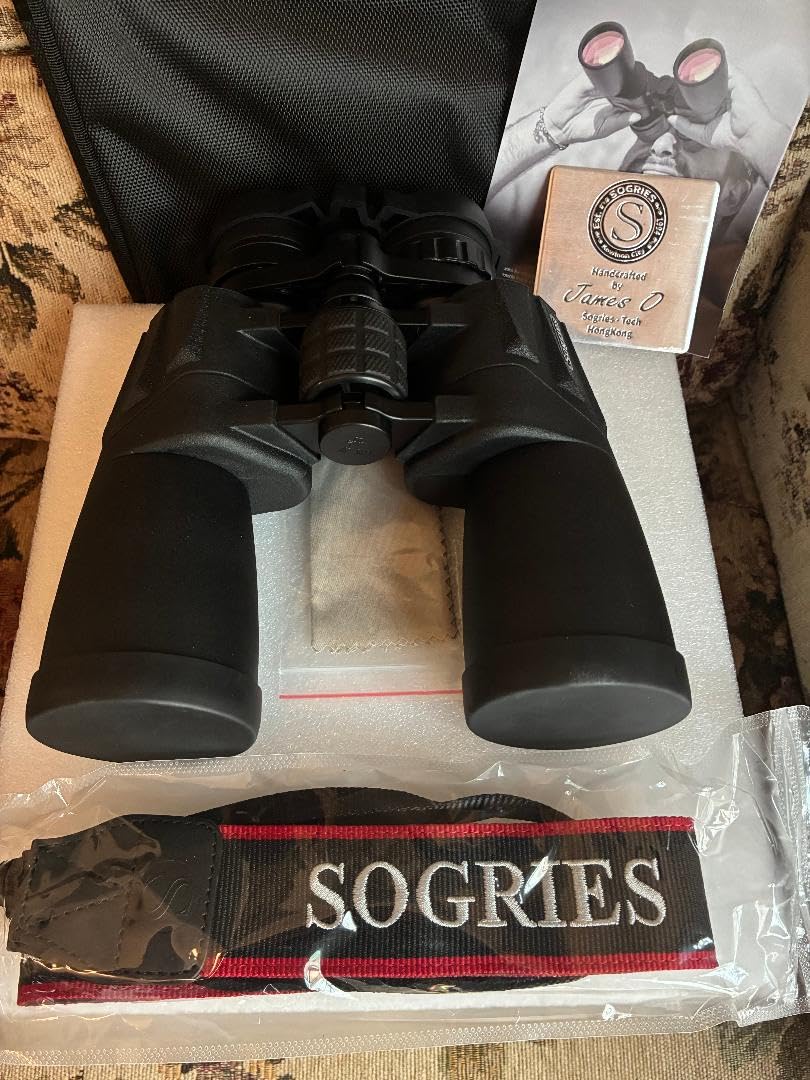
The optics are properly specified for the class: fully multi-coated lenses, BAK-4 prisms, six elements in four groups, a metal housing with rubber armor, and nitrogen filling that makes it waterproof and fogproof rather than merely water resistant. A leather backpack and strap come in the box, which matters more than usual at this size.
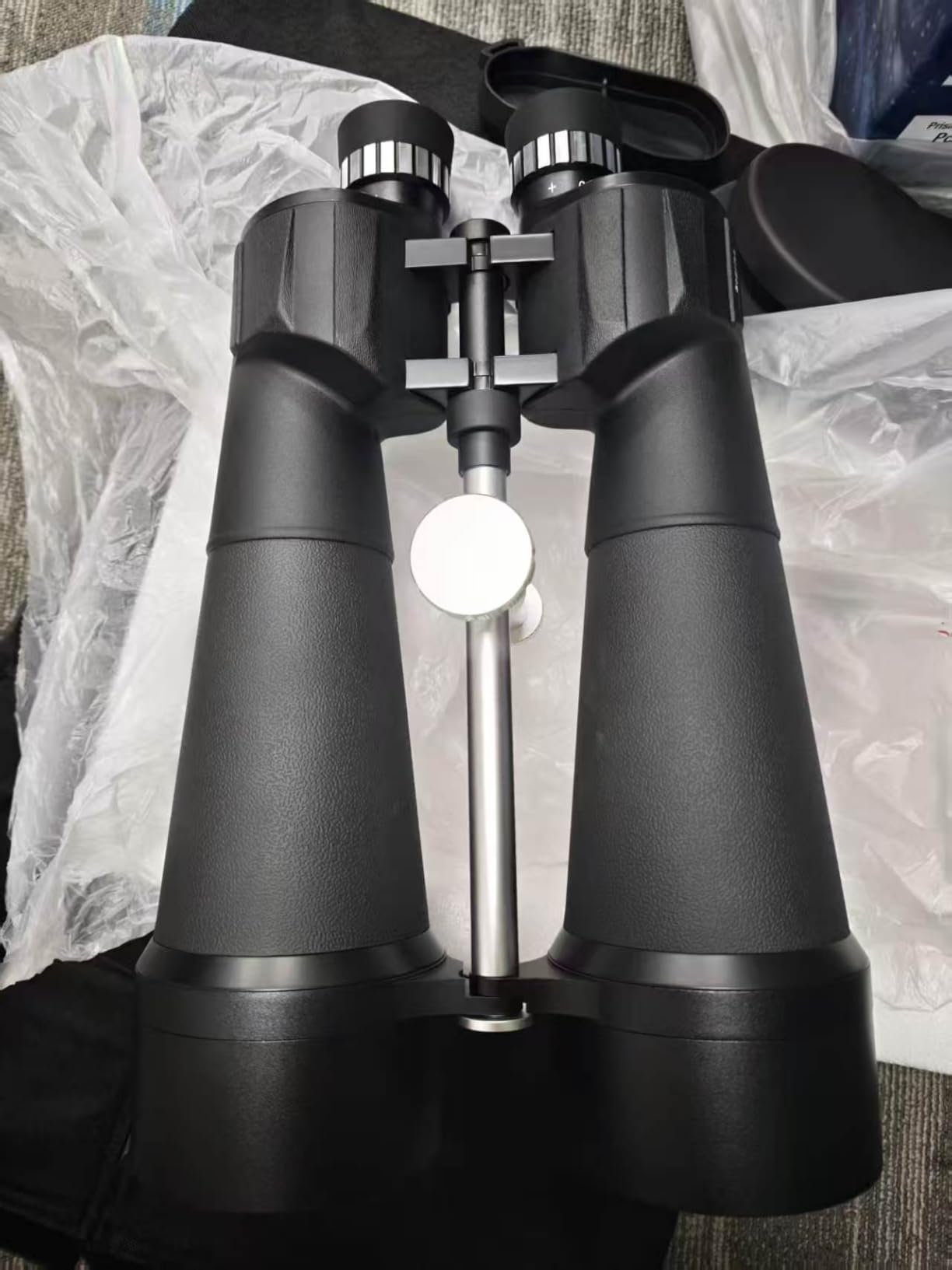
Numbers to hold onto: 25x magnification, 100mm objective, 2.8 degree true field, 4mm exit pupil, 15.5mm eye relief, and 8.8 pounds. Note the exit pupil. Despite collecting enormous light, a 4mm pupil is smaller than your dark-adapted eye, which is why this does not feel four times brighter than a 10×50 and why you need genuinely dark skies to make the most of it.
Weight is the real constraint. At 8.8 pounds this is a permanent tripod instrument, not a grab-and-go tool. Buyers consistently describe setting it up, locking the adapter, and adjusting both barrels independently before they can observe at all.
When 100mm of objective is actually worth it
Under light pollution. A suburban sky with a streetlight on one edge washes out faint targets in a 50mm pair, and the extra light here is what keeps the Orion Nebula and the Andromeda Galaxy visible. Observers who have moved from dark sites to suburban yards report the biggest perceived improvement from this jump in aperture.
On double stars and small planetary targets the picture is more mixed. A 2.8 degree field that tight means finding anything takes deliberate sweeping, and individual barrel focus is less forgiving than a single center wheel when you are adjusting repeatedly under a moving target.
What you give up for the extra aperture
Portability, mostly. There is no way to hand-hold 8.8 pounds at 25x, and packing it for a campsite or a beach session is a real chore. Forum regulars treat large-aperture binoculars as a site instrument and keep a 10×50 for the spontaneous nights.
There is also a smaller group reporting units that arrived needing collimation and difficulty reaching customer support, both of which matter more when a warranty claim means shipping a 9-pound instrument. Two years of coverage is thinner than the limited lifetime warranty on the Celestron models.
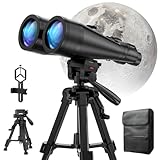
6. Aurosports 20×80 – The Best Value Step Into High Power
Aurosports 20×80 High Powered Binoculars, 80mm Large Aperture for Adults
20x and 80mm,3.2 degree field,4mm exit pupil,15mm eye relief,Porro prism
Pros
- 80mm objectives gather about 2.5x the light of 50mm lenses
- BaK4 prisms with over 95% light transmission
- Smooth center focus wheel
- Shock-absorbent rubber armor for grip and protection
- Carrying bag and strap included
Cons
- Too heavy and bulky to hold for more than short periods
- Straight-line eyepieces get awkward when pointed overhead
- Not water resistant for wet-weather use
- A minority report double imaging and focus faults
This is the value pick for anyone who wants a large objective without stepping up to 100mm glass. An 80mm lens collects roughly 2.5 times the light of a 50mm lens, and with BAK4 prisms and fully multi-coated lenses the stated light transmission runs above 95 percent, which is respectable for the class.
Owners report clear, bright low-light imagery that works for dawn and dusk observation as well as full night. The Moon shows good surface detail and the view holds up on open clusters, which is what the 3.2 degree true field is comfortable framing. Center focus with plus or minus three diopter adjustment is smooth and predictable.
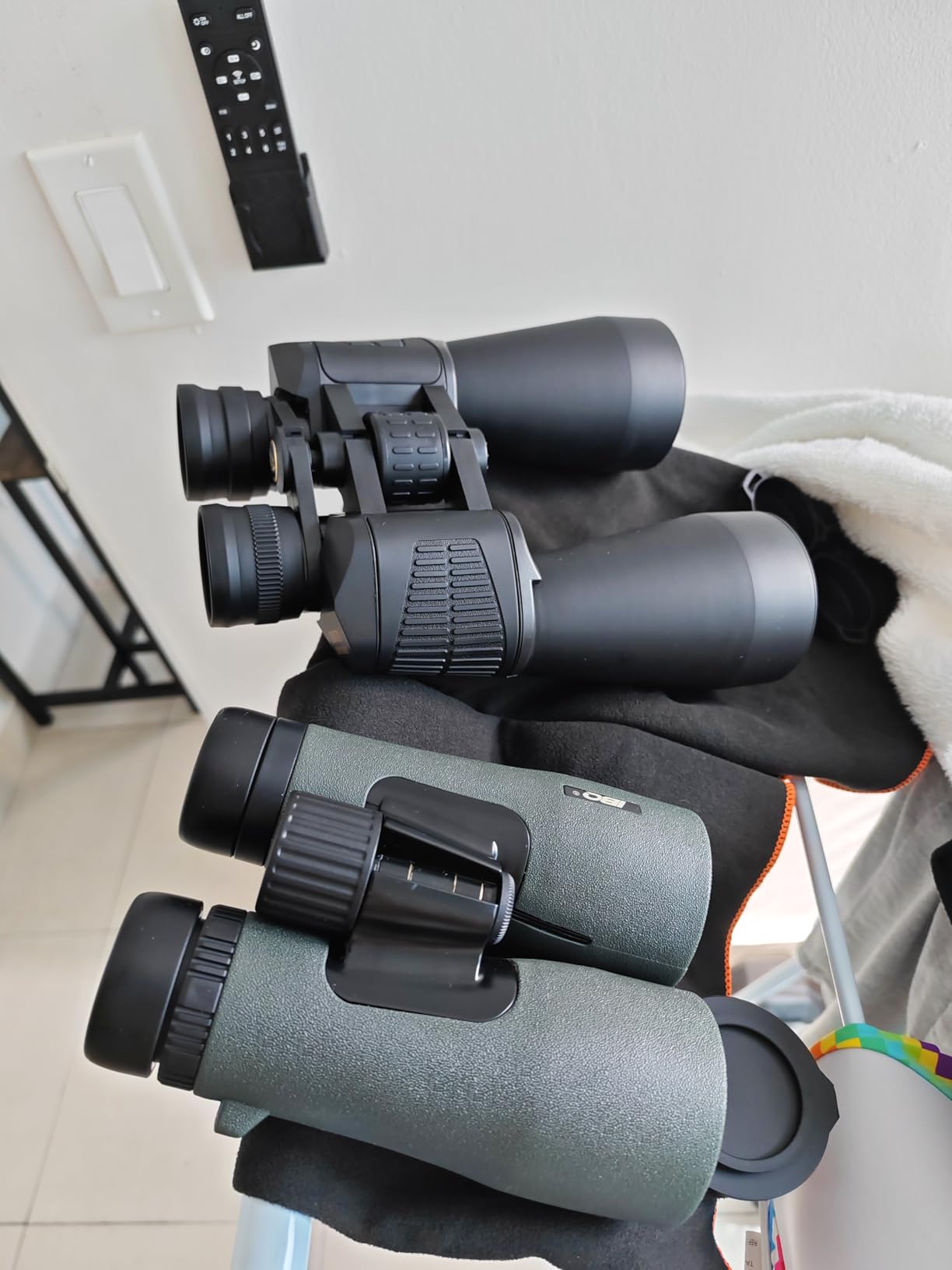
At 20x and 80mm the specifications read 3.2 degrees of true field, a 4mm exit pupil, and 15mm of eye relief. Fifteen millimeters of eye relief is workable with glasses, though it is below what the Celestron 15×70 and the Vortex manage, so glasses wearers should test before committing.
The recurring criticism is physical rather than optical. Reviewers describe the size and weight as the dominant drawback, with most people unable to hold it up for more than short periods, which puts a tripod in the required column rather than the optional one.

20×80 versus 15×70 for the same money class
The 20×80 gives you more magnification and noticeably more light, and it costs more in handling than most people expect. If your observing is lunar and occasional, the extra aperture is real value. If you want to scan wide star fields without a mount, the narrower field and added bulk work against you.
There is a specification caveat worth knowing about. A minority of buyers report that the actual magnification falls short of the stated 20x, and others report double imaging that does not focus out. If that happens, checking collimation and returning early is the right move rather than living with it.
Where it is the wrong tool
Daytime use is its weak point. A pair this size is impractical for birding or hiking, and the straight-line eyepieces mean that when it is on a tripod and pointed high, your neck and shoulders end up at an uncomfortable angle. Many owners adapt with a neck strap and accept the position.
The housing is not water resistant at all, so dew, rain and cold damp sessions are a genuine risk with a 20×80 of this size. A soft daylight observation is fine; an all-night mount in wet weather is where the lack of sealing becomes expensive.
7. Sogries 20×80 – A Solid Metal Build for Lunar Work
20×80 Astronomy Binoculars for Adults High Powered
20x and 80mm,173 foot field,4mm exit pupil,17mm eye relief,4.66 lb
Pros
- Sharp detailed lunar views with good brightness at dusk
- Rubber-armored metal housing feels solid
- Damped focus ring makes fine focusing easy
- 17mm eye relief clears most glasses
- Case strap and tripod adapter included
Cons
- 4.66 lb is impractical for travel and hiking
- The bundled tripod is often too small
- One report of an eyepiece housing cracking after 13 months
- Coefficient of light transmission is not stated
Where the Aurosports saves money with an ABS enclosure, this one uses a rubber-armored metal housing with O-ring sealed lenses, and owners consistently describe it as solid out of the box. For a tripod-mounted pair that lives on a porch or in a car trunk, that build difference is the feature that actually matters over years.
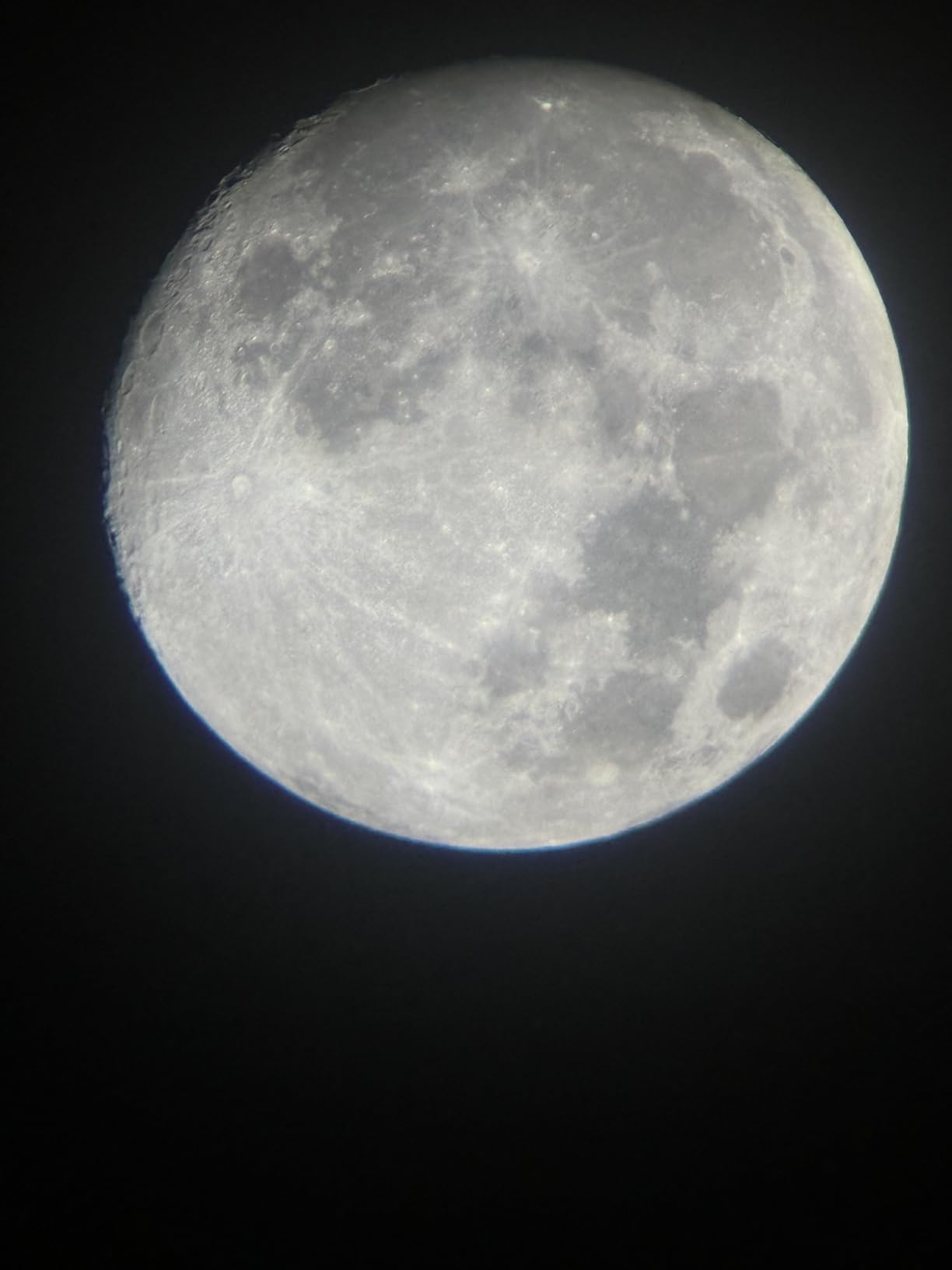
The observing reports center on the Moon. Sharp, detailed lunar views with good brightness at dusk and under full night skies come up repeatedly, and the damped focus ring gets specific praise for making fine focusing easy, which is the one adjustment you make constantly on lunar work.
Specifications sit in a useful place: 20x magnification, 80mm objective, a 173 foot field, a 4mm exit pupil, and 17mm of eye relief. That eye relief is the best number in the 20x class here and it makes this one of the more comfortable options for glasses wearers, with plus or minus five diopters of right-eye adjustment.
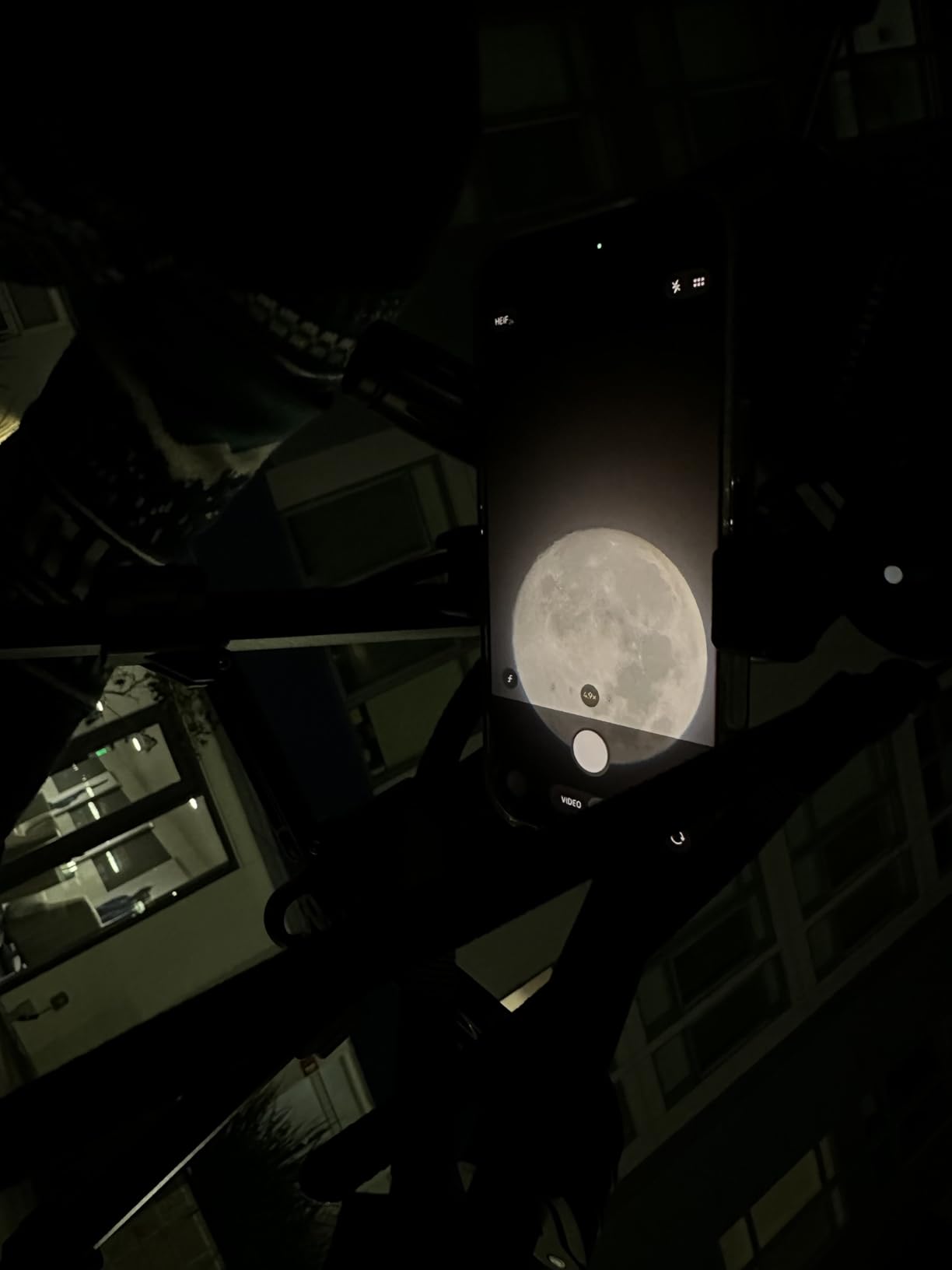
BAK-4 prisms handle low-light transmission, coatings are scratch-resistant and UV-protective, and the box includes an inner leather carry bag, a tripod adapter and a phone adapter. Two years of warranty and a 2.08 kg weight complete the picture.
Why metal changes the experience
A metal housing holds its collimation better through temperature swings and knocks, and it dissipates heat from the objective barrel during long sessions. For someone who sets the same pair up on a driveway every clear night, that stability is the difference between a tool that keeps working and one that slowly frustrates.
The wider 173 foot field compared with the 3.2 degree of the Aurosports also makes target acquisition noticeably easier, and the damped focus is better suited to fine lunar adjustments than a light wheel that swings under a heavy body.
What reviewers flag against it
Weight and travel, first and foremost. At 4.66 lb it is not a hiking or bicycle-carry binocular, and that is the complaint that appears in nearly every review. The bundled tripod is also frequently described as too small, so budget for a sturdier head if you do not already own one.
There is an isolated report of an eyepiece housing cracking after about 13 months, and the coating specification is less generous than the fully multi-coated competitors, so expect a slightly less polished image than the Vortex in very low light.
8. ESSLNB 25×70 – Compact High Power with a Built-In Mount
ESSLNB 25×70 Astronomy Binoculars Giant for Adults, Outdoor Waterproof Binoculars for Travel Stargazing Bird Watching Hunting with Built-in Tripod Adapter and Carrying Bag
25x and 70mm,2.7 degree field,2.8mm exit pupil,12mm eye relief,2.7 lb
Pros
- 70mm fully multi-coated objective with BaK4 prisms for contrast
- Built-in tripod adapter fits any standard photo tripod
- Waterproof armoured aluminium housing
- Large eyepiece diameter widens the view at 25x
- Single center focus wheel keeps setup simple
Cons
- 2.7 degree field is tight for scanning the sky
- 12mm eye relief can feel cramped with glasses
- Tripod itself is not included
- Lowest average rating in this lineup
This sits at 2.7 pounds, which makes it meaningfully lighter than the 25×70 Celestron at 1474g and vastly lighter than the 25×100. For a high-power pair that still lives in a car boot and gets used on a whim, that weight difference is the entire argument for it.
Optically it is competent rather than remarkable. A 70mm fully multi-coated objective with BAK4 prisms gives decent contrast in low light, and the large eyepiece diameter produces a wider view than most 25x designs, which partly offsets the tight 2.7 degree true field.
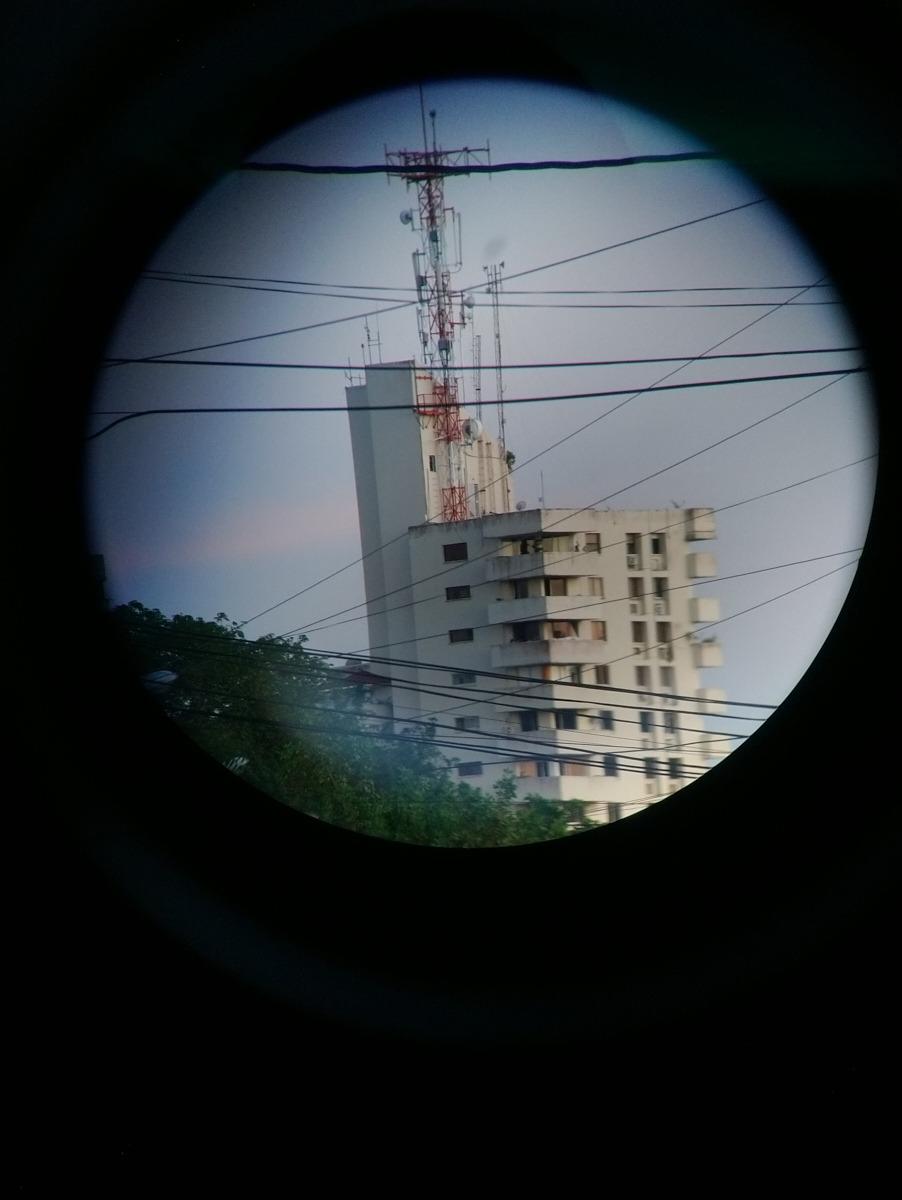
The build is better than the rating suggests. A waterproof, dust-resistant armoured aluminium alloy housing with a secure grip and O-ring sealing is a genuine step up from a plastic-bodied 25x, and the built-in tripod adapter mounts on a standard photo tripod, which solves the adapter-matching problem other brands create.
Focusing is a single center wheel with no per-barrel adjustment to fiddle with, and center focus is the right choice for astronomy where both eyes always point at the same distance. Storage bag included.
What this pick does better than the Celestron 25×70
Portability and sealing. The aluminium housing is waterproof rather than water resistant, the adapter is built into the body rather than a separate plastic piece, and the total weight is under 3 pounds. If your observing is opportunistic rather than scheduled, those three things outweigh an image quality gap you would struggle to see.
Twelve millimeters of eye relief is the one spec that argues against it. That is the tightest figure among the models here with any claim to glasses compatibility, and buyers specifically mention it feeling cramped.
Why the rating is the lowest in this lineup
At 4.1 across 188 ratings with a 13 percent one-star share, this is the pair with the least settled owner feedback. The complaints cluster around the tight 2.7 degree field, the modest eye relief, and the fact that the tripod is not included despite the astronomy positioning.
It is also worth noting that the product listing carries no low-light technology flag despite the astronomy marketing. If you are deciding between this and the Celestron 25×70 and can only choose one, the lifetime warranty and the far larger review history on the Celestron are the safer decision.
9. SVBONY SV407 2.1×42 – A 26-Degree Wide-Field Star Finder
SVBONY SV407 Astronomy Binoculars 2.1x42mm, Wide Angle for Stargazing
2.1x and 42mm,26 degree field,19mm exit pupil,9mm eye relief,375g
Pros
- A 26 degree field shows complete constellations in one view
- Only 375g so it fits in a small daypack
- 2 inch filter thread accepts astronomical filters
- Independent focusers plus diopter adjustment
- Focuses from 1m to infinity
- Lifetime warranty on the optics
Cons
- Edge distortion appears across much of the field
- 2.1x only locates targets rather than inspecting them
- Soft supplied bag gives almost no protection
- Short 9mm eye relief for glasses wearers
- Only a hand strap is included
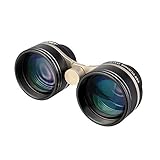
This is not really a binocular for looking at objects, it is an instrument for finding them, and understanding that changes how you use it. At 2.1x with a 26 degree true field, the whole Pleiades cluster fits in the view with room around it, and entire constellations appear at once as recognizable patterns rather than disconnected stars.
The light-gathering figure is extreme. A 19mm exit pupil is far larger than any eye can use, but the optics are wide open across a huge field, and owners report that it roughly triples the number of visible stars under suburban and suburban-adjacent skies. That is the practical case for it: pulling faint stars out of a light-polluted sky before you switch to something with magnification.
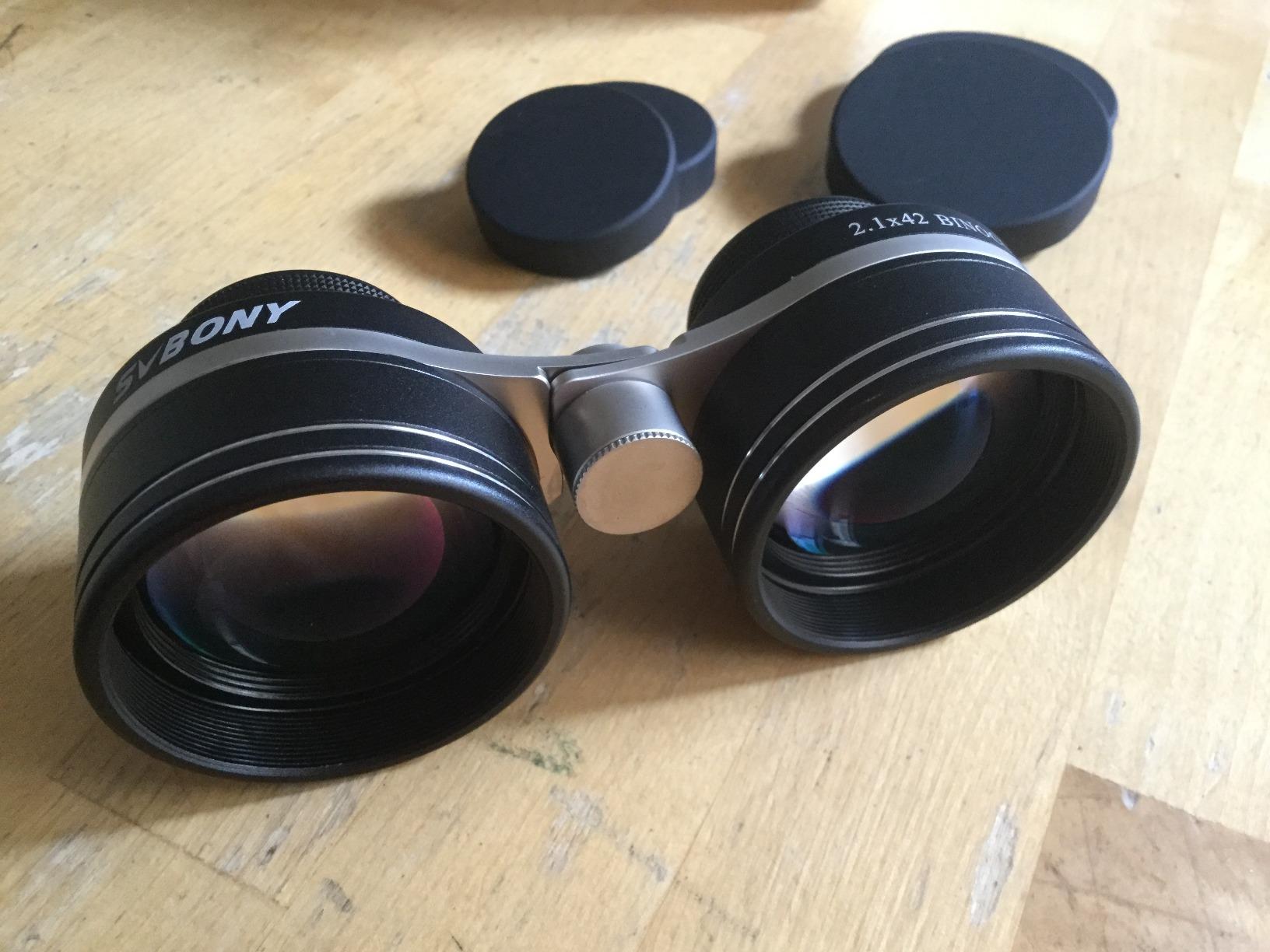
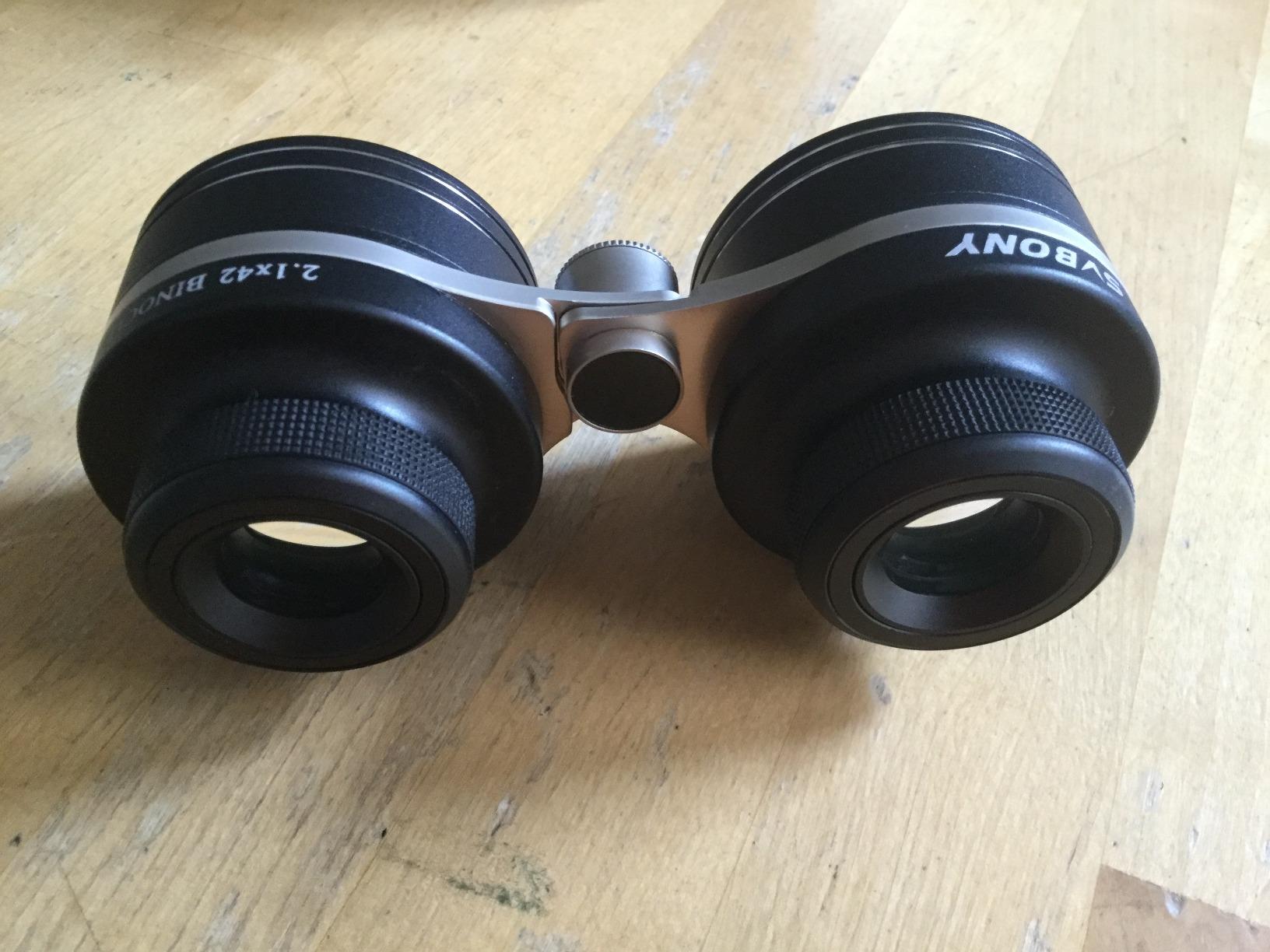
At 375g it is the lightest pair in the roundup by a wide margin, with a roof prism layout, fully multi-coated glass, independent eyepiece focus, plus or minus five diopter adjustment, a 2 inch filter thread on the objective, and focus from 1m to infinity. A lifetime warranty on the optics is unusual at this level.
It works as a companion rather than a replacement. The intended sequence is to sweep the sky with the 26 degree view, identify your target, note the pattern around it, then move to a 10×50 or a telescope and actually look at the thing you found.
Why a 26 degree field changes the observing experience
Field of view is the overlooked specification. A 6.8 degree field feels wide; a 26 degree field feels like a different instrument entirely, closer to looking through a window than through a tube. In a suburban sky it turns a handful of visible stars into dozens, and the constellations stop being something you have memorized.
Because nothing is magnified, stars stay as points rather than discs, which is also why wide-field astronomy pairs never show planetary detail. The roof prism design and the huge exit pupil are both optimized for this wide, bright, low-power view rather than for resolving anything.
Where it disappoints
Optical quality falls apart toward the edges of the field. Reviewers describe distortion setting in quickly so that less than half of the view is fully sharp, which is normal for a design this wide and cheap but noticeable if you look for it.
Short 9mm eye relief is the second issue, and it is the more serious one for glasses wearers, since the field gets narrower and the frame edge sits closer to the eye. The supplied soft bag offers almost no protection and there is no proper neck strap, only a hand strap, so buy a hard case before taking it anywhere rough.
What You Can and Cannot See with Binoculars
Setting expectations here saves more first sessions than any specification. Binoculars show you a wide, bright, low-resolution view of a large patch of sky. They do not show you a magnified, high-resolution image of a distant object, and no amount of spending changes that physics.
On your first night, aim at these targets. The Moon at any power gives craters, mare and the terminator line, and it is the object that convinces new observers that astronomy is worth doing. The Pleiades show dozens of stars in a cluster rather than the five or six visible to the naked eye. The Orion Nebula shows as a fuzzy patch that resolves into a shape.
Jupiter and its Galilean moons are the payoff. Three or four dots beside a bright disc, changing night to night, is the detail that turns a hobby into a habit. The Andromeda Galaxy is a small elongated smudge once you know where to look, Saturn is a bright oval with no ring detail, and the International Space Station crosses the sky in minutes as a steady non-twinkling point.
What binoculars cannot do is the part almost no competitor on this topic tells you. You will not resolve Saturn’s rings into their structure. You will not see Pluto, and you will not see surface detail on Mars, which stays a small orange point that brightens near opposition. Fine lunar craters smaller than about a kilometer are below what a handheld pair can resolve against the Moon’s brightness.
They also will not increase the resolution of stars. Stars are point sources, and magnification simply spreads each one out, so pushing past 10x on a star cluster makes it dimmer and less useful, not more detailed. This is why a 26 degree finder and a 25x tripod binocular are not competitors: they answer different questions entirely.
How to Choose the Best Binoculars for Stargazing in 2026
Magnification versus field of view
Magnification and field of view are inversely linked, and you can never have both in one pair. Field of view in degrees is roughly the apparent field divided by magnification, so a 50 degree apparent design at 10x gives about 5 degrees of sky while the same design at 25x gives 2 degrees. This is why almost every forum thread about a first pair lands on the same answer.
Seven to ten times is the handheld range. Above about 10x, pulse and breathing shake eat the image, and at 15x or more you are effectively on a tripod whether you planned for it or not. Reviewers describe 25x in the hand as unusable, and that is the practical ceiling rather than a conservative guess.
So choose based on whether you will use a mount. No mount, choose 7×50 or 10×50. Mount available or planned, 15×70 and up opens up targets that no handheld pair can reach, at the cost of a narrower window to find them in.
Objective diameter and the exit pupil rule
Light gathering scales with the square of the objective diameter, so doubling the aperture quadruples the light. That is why a 100mm objective is transformative under light pollution and why a 50mm is not. The catch is the exit pupil, which equals objective diameter divided by magnification, and your dark-adapted eye accepts roughly 5mm of it.
Match the exit pupil to about 5mm and you are using every photon the binocular collects. Exceed it and the extra light is wasted, which is why a 7×50 with a 7.1mm exit pupil looks about as bright as a 10×50 despite having the same 50mm objective. Fall below it and the view dims relative to the light you gathered, which is exactly the situation with a 25×100 at 4mm.
This is why 25×100 does not feel four times brighter than 10×50. It collects four times the light and shows you a quarter of the sky through a pupil smaller than your eye can open to. It is a magnificent instrument that mostly demands dark skies and a tripod to deliver on its specification.
Eye relief if you wear glasses
Fifteen millimeters of eye relief is the practical minimum for glasses wearers, and more is better. The 15×70 Celestron at 18mm and the Vortex Diamondback HD at 17mm both clear glasses comfortably, as does the Sogries 20×80 at 17mm. At 12mm and below, including the 25×70 Celestron and the SVBONY finder, expect to fold eyecups down and possibly still fight your eyelashes.
Adjustable or twist-up eyecups matter as much as the number. A firm eyecup that holds its position creates the dark space your eye needs, while a floppy one that lets light leak in at the edge of the lens will never show you a faint object properly.
Porro versus roof prism, and BAK-4 versus BAK-7
Porro prisms offset the eyepieces, which makes the view more three-dimensional, pushes the focal plane further back so eye relief is easier, and usually costs less. Roof prisms line the eyepieces up straight, which is more compact and lets the whole unit collapse for packing, but they cost more and are harder to collimate.
For prism glass, BAK-4 is higher refractive index than BAK-7 and delivers brighter, higher-contrast images with better edge-to-edge uniformity. BAK-4 is the marker to look for; BAK-7 still works and the difference is real but subtle, more obvious on planetary targets than on a diffuse nebula.
Coatings, purging and water resistance
Multi-coated reflects less light away at each air-to-glass surface than bare glass, and fully multi-coated applies the treatment to every surface including the prisms, which is what you want for astronomy. It is the most visible quality difference in this roundup and the reason the Vortex Diamondback HD image looks cleaner on bright stars.
Nitrogen or argon purging fills the housing with an inert gas so internal surfaces cannot fog when you move a cold pair into a warm room, or out of a warm car on a cold night. Sealing level is graded: water resistant handles light moisture, waterproof and fogproof handles sustained exposure. Any pair above 15x that lives outdoors in autumn should be fogproof at minimum.
Weight and the tripod threshold
The rule of thumb is straightforward. Up to about 10x and 50mm you can hand-hold. At 15x with a 70mm objective, or anything heavier than about 3 pounds, a tripod or monopod is effectively required. Above a 100mm objective there is no discussion, since the weight alone makes hand-holding impossible.
Check the adapter before you buy anything. A built-in 1/4-20 thread is the standard and works with most photo tripods, but cheap plastic adapters are widely criticized for wobbling under heavy bodies. Owners of the heavier models in this roundup consistently report buying a proper binocular adapter or a monopod as the first accessory purchase, and adapter thread compatibility is a real failure point when the part is not included.
How to Get the Most Out of Your Binoculars at Night
Dark adaptation takes about twenty minutes and no amount of binoculars will shorten it. Give your eyes that time before you look at anything faint, and never use a white flashlight. Red light preserves your dark adaptation, and once your eyes are fully adapted a dim red torch lets you read a star chart without ruining the session you drove out for.
Brace rather than wave. Leaning your elbows against your chest or a railing, or resting the eyecups against your forehead, removes most of the shake that makes 10x frustrating. This is the single biggest free improvement available to a handheld observer, and it costs nothing.
Sweep slowly and deliberately. With a wide-field pair, pan across the Milky Way band rather than jumping target to target, and let your eye settle at the edge of the field where dark adaptation is best. If a target is not visible immediately, look slightly to one side of it, because your rods are more sensitive away from the direct line of sight.
Finally, check collimation early. Point the pair at a bright star in the middle of the field and bring it into focus, then check that the image stays single as you sweep to the edge. If the halves split or a shadow appears on one side, the binocular is out of collimation and worth returning while the return window is open.
Frequently Asked Questions
What type of binoculars are best for stargazing?
The best binoculars for stargazing are 10×50 or 7×50 models built around Porro prisms and BAK-4 glass. Ten times magnification stays steady in the hand, and a 50mm objective lens gathers enough light to show the Moon, open star clusters, the Orion Nebula and the Milky Way. If you plan to use a tripod, step up the objective diameter to 70mm or 100mm for fainter targets.
Can you see stars with 10×42 binoculars?
Yes. A 10×42 binocular gathers several times the light of the unaided eye and resolves the Moon’s craters, the Pleiades, the Orion Nebula and the Andromeda Galaxy. The difference from 10×50 is brightness rather than resolution, because a 4.2mm exit pupil is smaller than a dark-adapted eye. It is a fine compact choice for travel, with a slightly dimmer view.
What binocular magnification is best for astronomy?
Seven to ten times is the handheld range, and 10x is the most common recommendation for a first pair. Above about 15x, pulse shake and breathing become strong enough that a tripod is effectively required. 15×70, 20×80 and 25×100 pairs all deliver real detail on the Moon and Jupiter, but only when mounted, and they trade a narrower field of view for that magnification.
Are 10×50 binoculars good for astronomy?
They are the standard first astronomy binocular, and for most observers the best-balanced choice available. The 50mm objective divided by 10x gives a 5mm exit pupil, which matches a dark-adapted eye almost exactly, so nearly all the light collected reaches your retina. They also stay steady in the hand, need no tripod, and reveal the Moon, Jupiter’s moons and bright deep-sky objects.
Do I need a tripod for astronomy binoculars?
Not for 10×50 or 7×50 pairs, which are designed to be hand-held. Above about 15x magnification or a 70mm objective, a tripod or monopod becomes effectively required, because shake at that power is stronger than the image detail you gain. Check that the model has a built-in 1/4-20 thread or an included adapter, and avoid cheap plastic adapters on any body heavier than about 3 pounds.
Conclusion
If you only take one recommendation from this roundup, make it the Celestron SkyMaster 25×70, our editor’s choice and the best binoculars for stargazing overall once a tripod is part of the plan. It combines the deepest review history in the group with 70mm BAK-4 objectives and 25x power, which is the strongest balance of light gathering and usable detail we tested.
The alternatives matter as much as the winner. Start handheld with the Celestron Cometron 7×50 for the widest view or the Vortex Diamondback HD 10×50 for the sharpest optics, and step up to the Sogries 25×100 when a suburban sky needs maximum aperture. Add a wide-field finder like the SVBONY SV407 if your sky is bright, and you have covered locating, sweeping and inspecting in one setup.
Take the pair outside, give your eyes twenty minutes in the dark, and start with the Moon. Every one of these binoculars will show you something worth seeing on the first night, provided you let your eyes adjust before you point it up.