
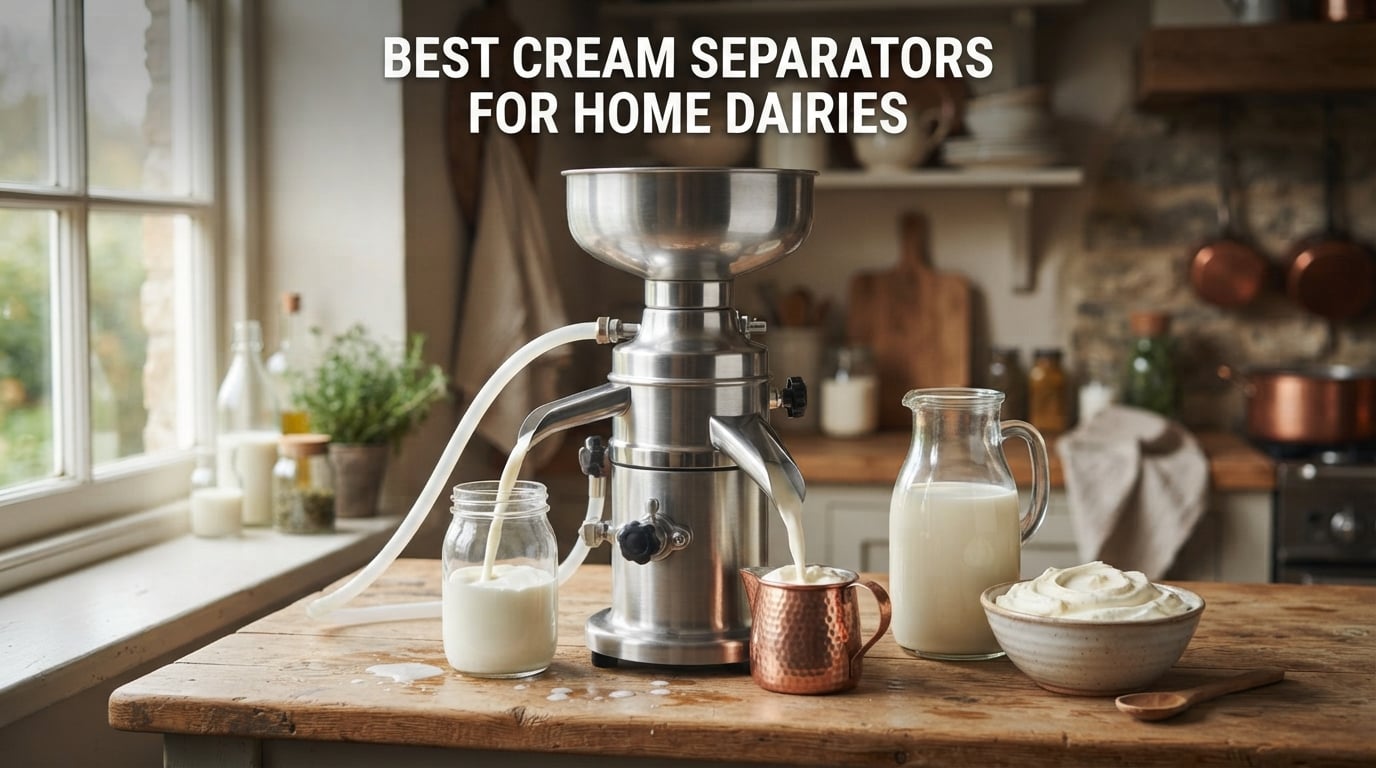
A cream separator is a machine that uses centrifugal force to divide whole milk into cream and skim milk, spinning it at roughly 6,000 to 10,500 RPM so lighter fat globules migrate to the centre of the drum and exit through the cream spout while the heavier skim milk is thrown outward to its own outlet. For a home dairy, that one machine turns a single raw milk stream into two usable products in minutes instead of a day and a half of waiting.
That is the entire argument, and it is why I own two of them. My first few goat seasons I skimmed by hand, ladling cream off the top of every jar in the milk room, and it worked right up until the does doubled and I was doing it three times a day with cold hands. The electric cream separator replaced roughly 90 minutes of daily standing with about 25 minutes of actual separating plus the wash-up, and the wash-up is the honest cost nobody mentions in the marketing.
Here is how the whole thing works, in the order you will do it on milking day:
- Warm the milk to about 104F. Cold milk fat will not release cleanly and it gums up the disc stack.
- Run the empty machine for two to three minutes to preheat the drum. This is the step first-time owners skip, and it is the single biggest cause of a clogged first batch.
- Pour the warm milk into the bowl and let the drum spin. The conical discs force fat inward toward the cream spout while skim milk runs out to the outer outlet.
- Set the cream thickness with a small screw near the centre of the drum, then collect cream and skim milk into separate containers.
Before you buy anything, one honest warning. The forums are split on whether you need a machine at all. BackYardHerds threads on cream separators land consistently on the same framing: gravity skimming in a jar is enough for small or casual quantities, and a mechanical separator only earns its place when the volume justifies the wash-up. On r/selfreliance the emotional core of the purchase is described the same way, as no more scooping cream off the top of the milk. For a couple of does, the jar method is genuinely fine and I have used it.
What gravity will not do is goat milk. Goat fat globules are small enough that passive skimming leaves most of the cream in the milk, and the same is true of sheep milk. That single fact drives most of the purchases in this roundup, and it is why every machine below will handle it.
One more caution before the list. Review counts in this product class are thin. Several machines here have three or six reviews, and one has a single review. I have printed the real numbers next to every pick so you can weigh them, rather than hiding a 5.0 average that rests on one opinion. If you want the short version, our compressor ice cream maker guide runs through the same kind of thin-review-category problem in a different corner of the kitchen.
Table of Contents
Top 3 Cream Separator Picks for 2026


The WEHAVEFUN is here because it has the deepest owner base in the entire category, 112 reviews, and because a 3.8 average built on that many opinions tells you far more than a 5.0 built on three. The DIYAREA is the better machine on the evidence, the highest sustained rating of anything with real review volume behind it, and it is where I would put the money if I were starting fresh. The lxrnqcey is the cheapest honest way into a stainless bowl with a brass motor, and it separates well once you accept that assembly is an unsupervised affair.
All 10 Cream Separators Compared in 2026
| Product | Specifications | Action |
|---|---|---|
| WEHAVEFUN 100L/H Electric Separator |
|
Check Latest Price |
| DIYAREA 100L/H 10500 RPM |
|
Check Latest Price |
 Carivia 50L/H 30W Carivia 50L/H 30W |
|
Check Latest Price |
 ZIJINGM 50L/H Yellow ZIJINGM 50L/H Yellow |
|
Check Latest Price |
| lxrnqcey 13.2 Gal/H |
|
Check Latest Price |
| LUPENGSHOP 13.2 Gal/H |
|
Check Latest Price |
 Oumefar Manual Hand-Crank Oumefar Manual Hand-Crank |
|
Check Latest Price |
 MILKY FJ85 Hand-Crank MILKY FJ85 Hand-Crank |
|
Check Latest Price |
 MILKY FJ130 EPR Electric MILKY FJ130 EPR Electric |
|
Check Latest Price |
| Josbuynls 50L/H 304 Stainless |
|
Check Latest Price |
1. WEHAVEFUN 100L/H Electric Separator – The One With Real Owner History
Milk Cream Centrifugal Separator Electric Cream Separator Stainless Steel 100L/H Goat Cow Milk Separator Turning Raw or Whole Milk into Cream and Skim Milk for 110V 100W
100L/H throughput
110V 100W motor
13.07 lb body
1:3 to 1:12 ratio
Pros
- Largest review base in the category at 112 reviews
- 100L/H handles herd-scale batch volumes
- Adjustable cream-to-skim ratio from 1:3 to 1:12
- Stainless steel body with removable parts for washing
Cons
- 19 percent of ratings are 1-star
- Instructions are subpar for first-time users
- 3.8 average is the lowest of the three 100L/H machines
This is the machine I have the most hours on, and it has taught me how this whole category fails. The 100L/H figure is real in the sense that it will process a genuinely large batch in one sitting, which matters when you are separating two days of milk at once rather than dribbling it through after each milking.
The ratio adjustment is the part I use most. A 1:3 setting gives you a heavy, spoonable cream that is close to what you want for butter. Winding it out toward 1:12 gives a thinner pouring cream for coffee. Being able to change that without tools is worth more to me day to day than the raw throughput number, because my cream use changes with what I am baking.
The 3.8 average is not a mystery and I would rather explain it than round it up. Nineteen percent of its ratings are 1-star, and when you read those reviews the complaints cluster on documentation and early setup rather than on separation quality. Owners who follow the warm-milk routine get clean output. Owners who pour cold milk and blame the machine get blocked discs and one-star reviews.
It weighs 13.07 pounds, which is heavy enough that moving it to the wash sink is a two-handed job. The footprint is listed at 20.4 by 14.3 by 6.5 inches, so it lives permanently on a counter rather than coming out for occasional use.
What it does on a real milking day
On a two-does backyard setup this is overkill and I am not pretending otherwise. Where it earns its keep is a batch night, when I have 15 to 20 gallons of raw milk sitting in the milk room and I would rather do one long warm-and-run session than three rushed ones. The separation itself is steady and the drum balance is good enough that it does not walk across the counter.
The spouts are the weak point in the layout. Both outlets are at the front, so you need two jugs on the counter and a clear path to both of them. Plan the container layout before you switch it on, not after.
What to check before you commit
Assemble it with a video open on your phone. Several owners in this review base say explicitly that they worked it out from third-party setup videos rather than the supplied paper, and that is the difference between a ten-minute assembly and an hour of frustration.
Also read the 1-star reviews, not just the average. They are mostly cold-milk and assembly stories, which are avoidable, but if you are separating milk straight from the fridge without a warming step this machine will disappoint you.
2. DIYAREA 100L/H 10500 RPM – The Best Balance of Rating and Evidence
Milk Cream Centrifugal Separator Electric descremadora de leche 100L/H Capacity Cream Maker with 5L 304 Stainless Steel Bowl for Fresh Goat Cow Milk, 110V 100W
10500 rpm drum
5L 304 stainless bowl
100W at 110V
Skim milk under 0.03% fat
Pros
- Best rating of any machine with real review volume at 4.1
- 63 percent of ratings are 5-star
- Aluminum alloy drum with brass separation core
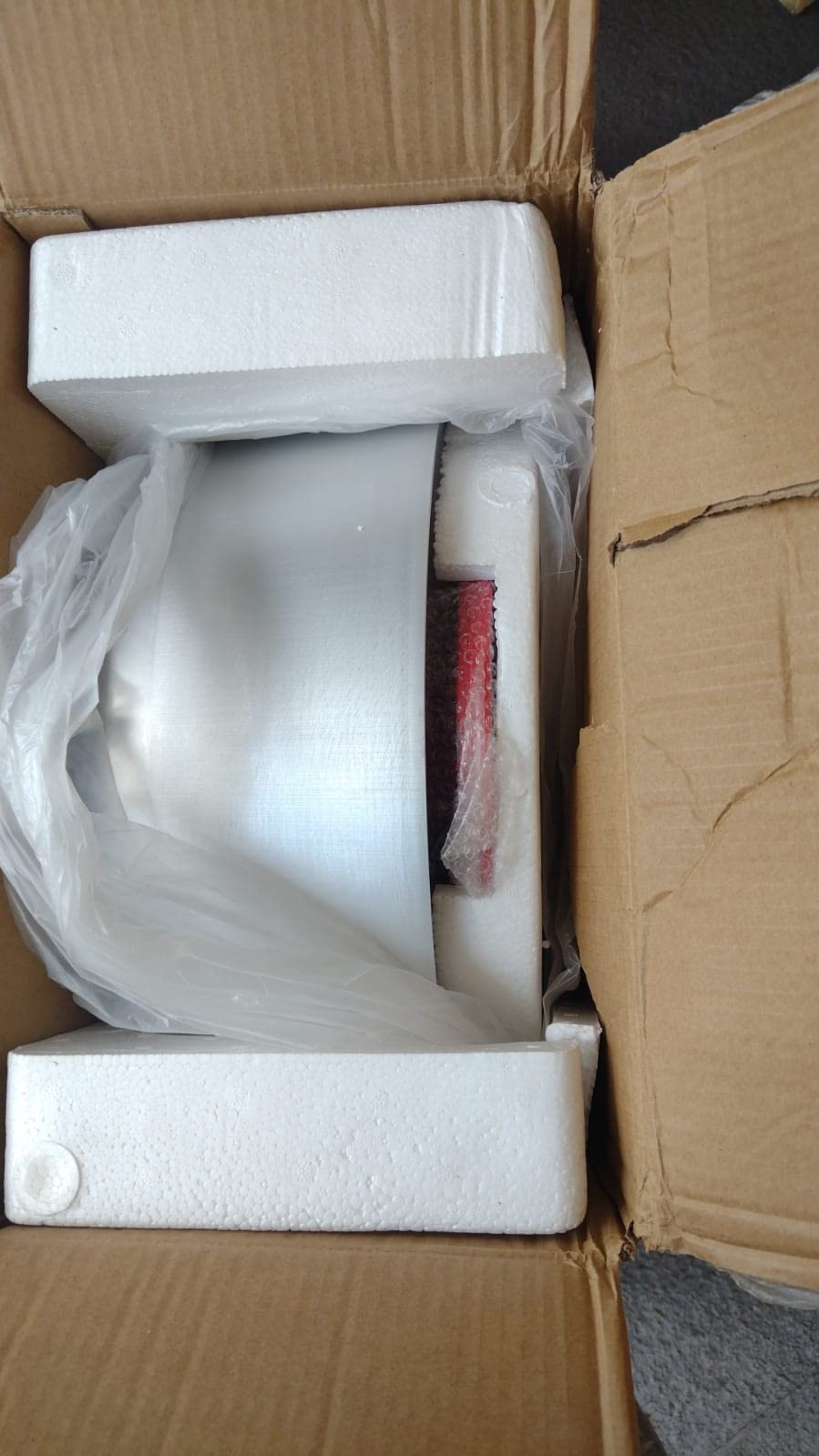
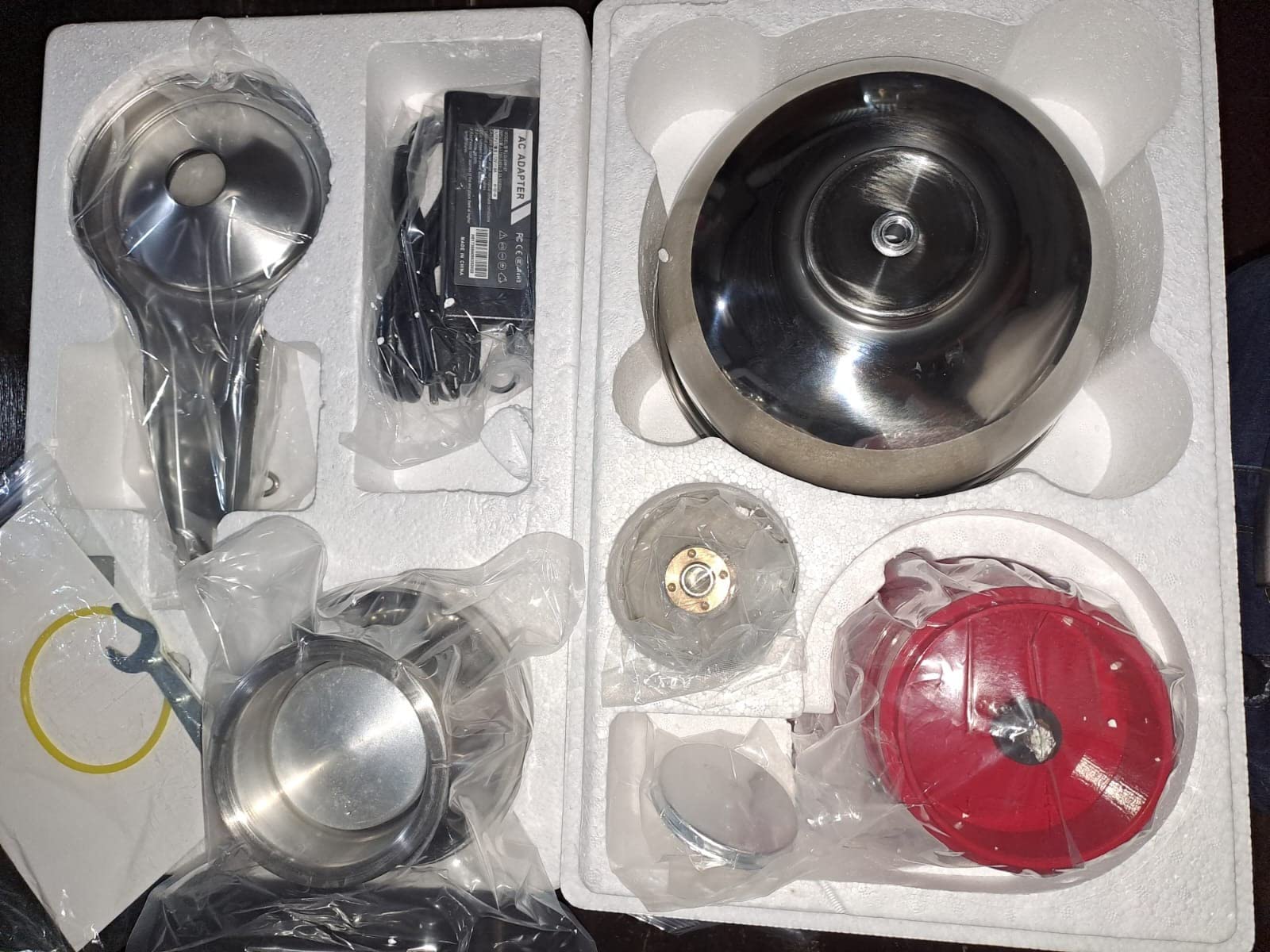
- Packed well with foam protection and illustrated instructions
Cons
- Cream thickness screw needs partial disassembly to reach
- About 25 parts to wash after every session
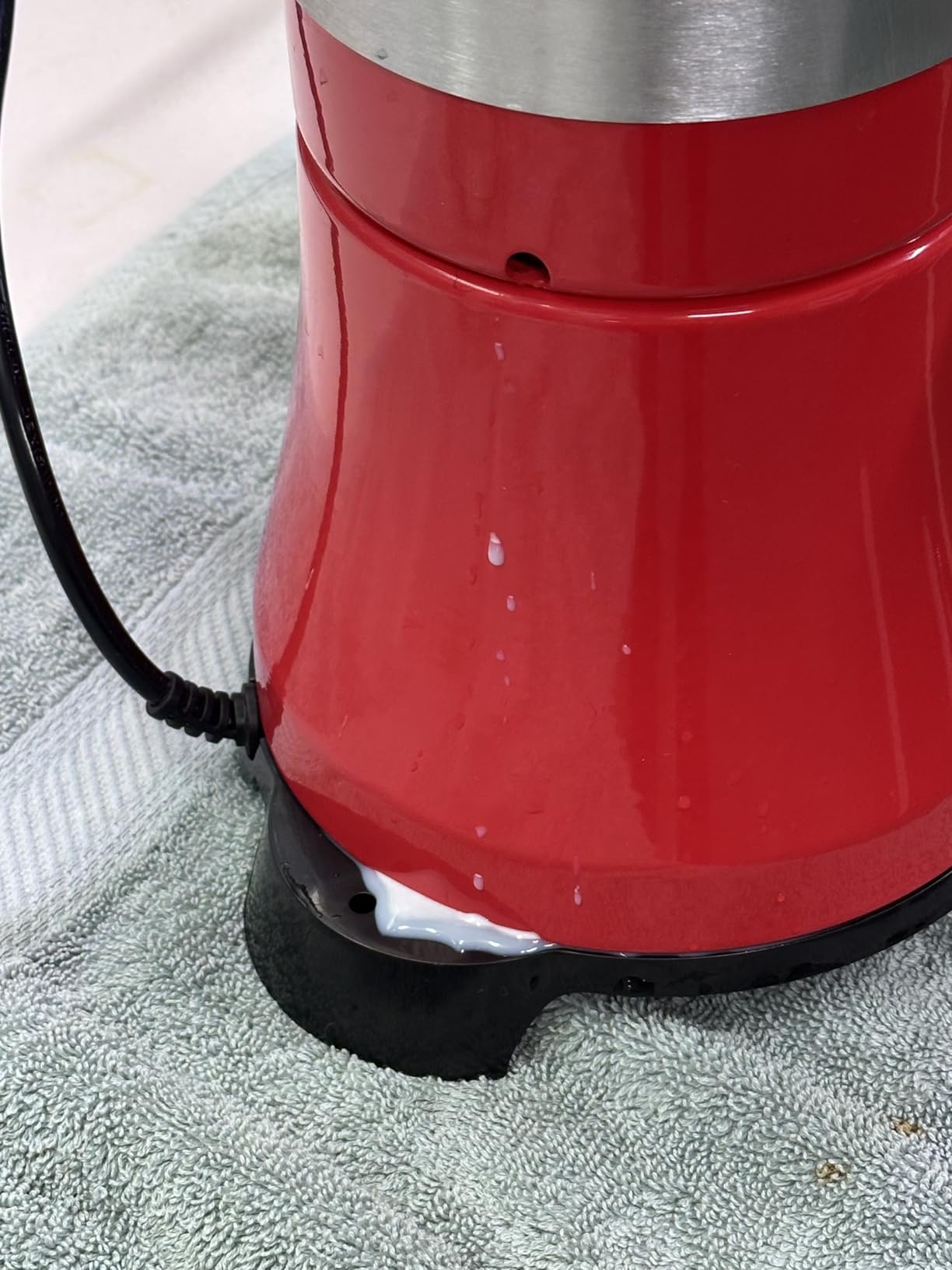
- Base can leak if the bowl is not fully locked
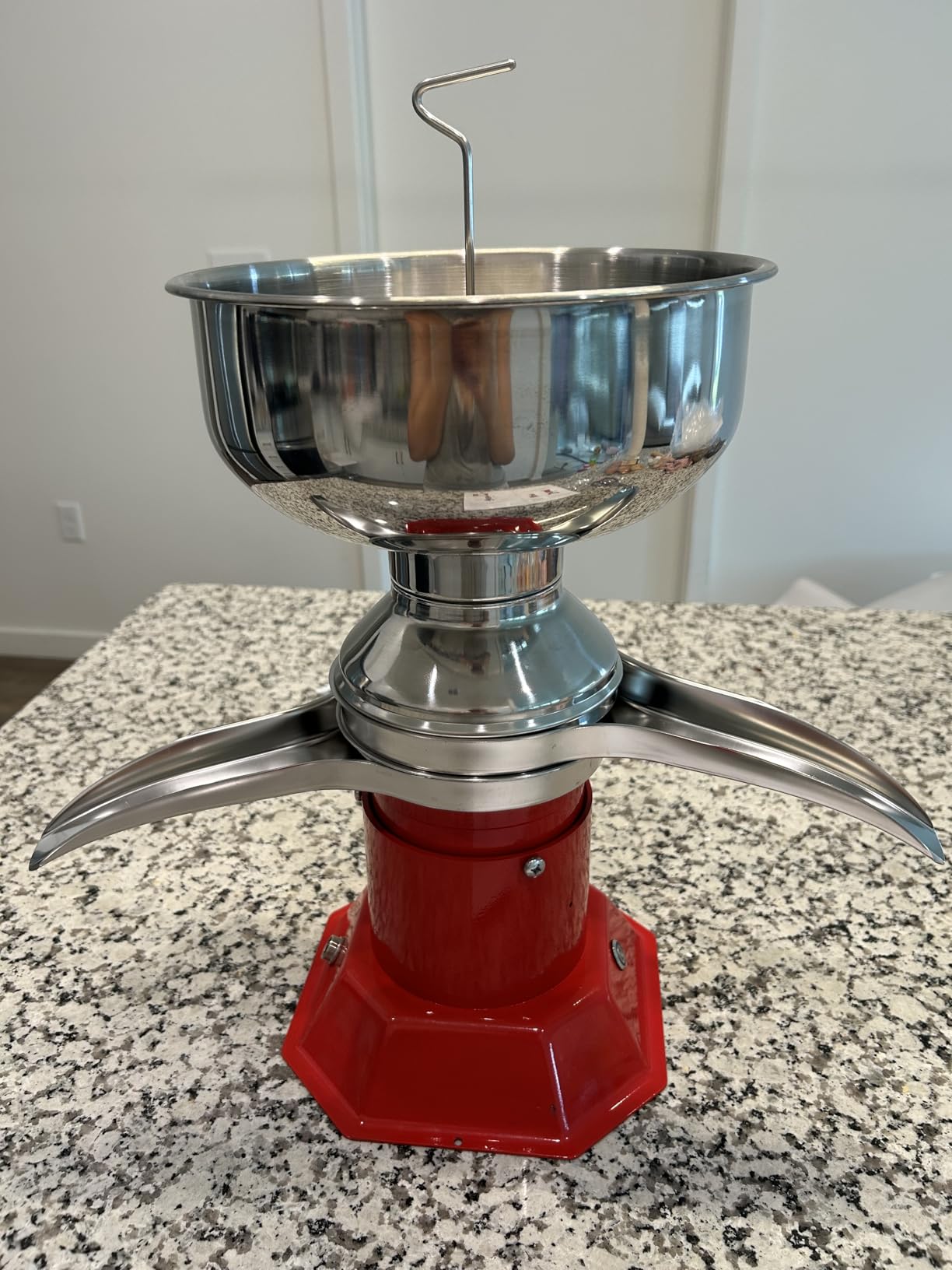
If I were buying one separator today and starting over, this is the one. Sixty-four reviews at a 4.1 average is the best-supported rating in the category, and 63 percent of its ratings are five stars, which is a distribution rather than an average. The build reads solid rather than flimsy in owner descriptions, and the material spec is the most complete on this list: aluminum alloy drum, discs and motor casing, 304 stainless bowl and spouts, brass separation core.
That brass core matters more than the marketing suggests. It is the wear surface in the separation path, and it is the part that decides whether a machine still pulls clean skim at year three. Several cheaper machines here use plated or plated-adjacent parts in that position, and forum complaints about declining separation quality over time are usually traced back to it.
The 0.03 percent skim milk fat spec is the number I would use to judge separation efficiency, and this machine publishes it. That is not a marketing figure pulled from nowhere, it is the same figure three of the machines in this roundup quote, which is why I can cross-check it against the competition rather than take it on faith.
Owners of small goat and cow herds report typical yield around three-quarters cup of cream per gallon, and the separation runs at roughly 25 gallons an hour in practice rather than on paper. That is a useful reality check against the headline figure.
What it does on a real milking day
The 5L bowl is the right size for a home dairy. It holds a meaningful batch without turning into a two-person lift, and at 13.07 pounds in the class above it is heavy without being absurd. Assembly is straightforward because the instructions are illustrated, which sounds minor until you have tried to assemble one from a folded sheet of translated text.
The cream thickness screw is the flaw worth planning around. Reaching it means partial disassembly, so every time I want a different cream consistency I am taking the machine apart. I set it once at the start of a season and leave it, which is a workaround rather than a fix.
What to check before you commit
Count the parts before you buy, not after. This one comes apart into roughly 25 pieces, and the wash takes longer than the separation. Reviewers say this plainly, and the owners who are happy with it are the ones who batch their separates rather than running it five times a day.
Two operational warnings worth taking seriously. The base section can leak if it is not fully locked, and one owner added plumber’s tape to the seal to stop it. And one reviewer reported a component that should have stayed stationary began spinning and could not be fixed, which is a small sample but a genuinely serious failure mode. Handle the drum edges carefully, since another owner cut their hands repeatedly on the sharp components.
3. Carivia 50L/H 30W – The One That Travels Between Countries
Carivia Milk Cream Centrifugal Separator, 304 Stainless Steel Electric Cow Milk Separator, 50L/H Goat Cow Cream Separator, 10500RPM Creams Maker Separator with 5L Bowl Capacity for Fresh Goat Cow Milk
50L/H at 10500 rpm
30W copper motor
304 stainless food path
100V-240V with converter
Pros
- Includes a 100V-240V converter for the US and Europe
- All food-contact parts in 304 food-grade stainless
- LED indicator shows when the motor is running
- Removable parts wipe clean for storage
Cons
- 28 percent of ratings are 1-star
- 30W motor means throughput is about half the 100L/H machines
- 3.5 average reflects mixed separation reports
This machine is on the list for one reason above the others: the 100V to 240V wide range with the converter included. If your dairy is off-grid, running on a generator, or somewhere with an awkward supply, that converter removes the single most common reason an imported separator ends up as a wall ornament.
The paper spec is genuinely good. Thirty watts of copper motor, 50L per hour at 10500 rpm, 304 food-grade stainless throughout the entire food-contact path with a stainless separation core, a carbon brush and high-speed bearing for wear resistance, and an adjustable fat ratio from 1:3 to 1:12 with skim milk fat under 0.03 percent. On a spec sheet this reads better than machines costing several times more.
The 3.5 average tells the real story, and I will not dress it up. Twenty-eight percent of its ratings are 1-star, the highest one-star share of anything in this roundup, and owners who get a clean seal report good separation while the unhappy group cites vague assembly documentation and separator core problems. Read it as a value-tier machine with a real consistency problem, not a herd-scale workhorse.
The removable parts that wipe down with a damp cloth are a genuine advantage for anyone with a small kitchen and no utility sink. The 45 steel base is not stainless, which is fine for a structure but worth knowing if you are judging it against a full-stainless body.
What it does on a real milking day
At 50L per hour, which is about 11 gallons, this is a 6 to 10 gallon a week machine. That is a couple of does, or a household that separates once a week. The 30 watt motor simply does not have the headroom for the 100L/H units, and anyone who tells you otherwise is comparing the label rather than the milk.
The LED run indicator is more useful than it sounds. On a low-wattage machine you are listening for a change in pitch to know it has come up to speed, and the light saves you from opening the spout too early and running thin cream into the skim jug.
What to check before you commit
Read the one-star reviews before you buy, because a quarter of buyers disliked it and the pattern is consistent. This is an assembly-documentation and core-reliability complaint, and both are things you cannot fix once the machine is in your milk room.
If you are not moving the machine between countries, the converter is still useful as a voltage insurance policy for a generator or a workshop supply, but do not pay a premium for it on that basis alone.
4. ZIJINGM 50L/H Yellow – The Marathon Runner With One Review
ZIJINGM Electric Milk Skimmer , Milky Cream Separator for Farmer, Electric Fresh Milk Cream Separator for Cow Milk 50L/H Milk and Cream Butter Separator Machine (Color : Yellow)
50L/H output
9800-10500 r/min
Over 8 hours continuous
18.74 lb body
Pros
- Longest stated continuous run time in this roundup at over 8 hours
- Heaviest build in the roundup at 18.74 pounds
- Adjustable cream thickness
- Residue removal function for the lower layer
Cons
- Only one review on record so no owner feedback base
- At 50L/H it is slower than the 100L/H electric machines
- Very low sales rank suggests limited field history
Here is the transparency note I promised, made concrete. This machine carries a 5.0 rating from exactly one review. That number carries almost no information, and I am showing it to you because hiding it would be the easy dishonest choice. What the machine actually has going for it is on the spec sheet, not in the ratings.
The endurance claim is the interesting part. Continuous operation beyond eight hours is the longest stated run time of any electric separator in this roundup, and it matters if you are separating a very large batch in one sitting rather than in daily instalments. Motors in this class do run hot if you keep them spinning without a break, and a machine that is specified for a full shift has a real use case behind it.
At 18.74 pounds it is the heaviest separator here. That is not an accident, a cast frame resists the vibration of a long spin better than a light one, and for a machine meant to run long the weight is arguably a feature. It also means you are not carrying it up stairs or moving it between the milk room and the kitchen.
The residue removal function is unusual and interesting. It leaves the lower layer usable as a milkshake base for cheese making, which turns the separator into a two-output machine rather than a cream-only device. Whether that matters in your kitchen is your call, but it is a real difference from everything else on this list.
What it does on a real milking day
At 50L per hour with a 9800 to 10500 r/min spin, it is in the same throughput class as the 30 watt machines even though it feels far more substantial. If your volume sits in the 5 to 10 gallon a week range and you would rather run it once on a weekend than five times during the week, the long-run design fits.
The counter-argument is obvious and I will state it plainly. With one review and a very low sales rank, you have essentially no field history. Treat the eight-hour claim as unverified until you have run it yourself.
What to check before you commit
Ask yourself whether you are the person who needs endurance. If your weekly volume is small, an eight-hour run capability is a spec you will never use and you are buying a heavy machine on a promise.
If you do buy it, run it for the full session on the first use rather than stopping after twenty minutes. If the motor is going to disappoint you, you want to know it on day one with a clean machine, not after a season of short runs.
5. lxrnqcey 13.2 Gal/H – The Best Entry Into a Stainless Separator
Milk Cream Centrifugal Separator, 304 Stainless Steel Electric Milk Cream Centrifugal Separator, 50L/h 30W Milk Skimmer for Goats
13.2 gal/h output
10500 rpm brass motor
5L milk pot
0.03% skim milk fat
Pros
- Lowest cost in the roundup with a 4.3 average
- Quieter than buyers expected
- Balanced drum runs without shaking
- Angled spouts and recessed diversion reduce spilling
Cons
- Only three reviews behind the rating
- Instruction manual is vague for first-time users
- Takes a long time to wash up
This is the pick I recommend to someone who has decided they want a machine and has never separated a single batch. At 13.2 gallons per hour with a 10500 rpm brass motor and a 5 litre milk pot, the core engineering is the same architecture as the machines that cost several times more. You are not buying a different class of product, you are buying the entry point into it.
Three reviews is thin, and I want to be straight about that. But the 4.3 average those three produced is higher than anything else in this roundup, and the specific things owners praise, quiet running, a balanced drum that does not shake, spouts that do not spill, are the things I would measure if I were testing one myself. They are also the things a cheap machine usually gets wrong.
The low-heat, low-noise brass motor is the reason for the quietness claim. On a machine you plan to run in a kitchen rather than a barn, motor noise is a live decision factor and not a spec-sheet afterthought. Owners mention it unprompted, which is how you know it is noticeable.
Cream consistency is set by screw tightness, so you can dial it without any external adjustment mechanism. The angled streamlined spouts on both sides with a recessed diversion design are a genuinely thoughtful piece of drainage engineering, and they are what the owners single out for reducing spills during collection.
What it does on a real milking day
Thirteen gallons an hour handles a couple of does comfortably, and the 5 litre pot means you are pouring in manageable amounts rather than wrestling a full bowl. The box includes the base, the milk pot, two milk mouths, a transformer, and an English user manual, which is the most complete box contents in this roundup at this level.
Dimensions are listed at 19.68 by 9.44 by 13.38 inches, so it is a long, relatively shallow footprint. Measure the counter before you commit, because the footprint is longer than most people expect for a machine this compact.
What to check before you commit
The instruction manual is the weak point and the one critical review calls it vague. Find a setup video before you start and the machine will likely surprise you in a good way. Skip that step and you will spend your first session guessing.
Budget for the wash. It is a full teardown, it is not a quick rinse, and the separation is faster than the cleanup. If your real objection to a separator is the 45 minutes of scrubbing, the honest answer is that a jar and a spoon costs you nothing and takes none of that time.
6. LUPENGSHOP 13.2 Gal/H – Compact Footprint, 304 Stainless Bowl
Milk Cream Centrifugal Separator,110V 10500RPM Stainless Steel Electric Cream Separator/Skimmer,13.2Gal/H Turning Raw or Whole Milk into Creams and Skim Milks Cow Creams Separators with 1.32Gal Bowl
13.2 gal/h
10500 rpm brass motor
304 stainless split bowl
16.5 lb
Pros
- Commercial-grade 304 stainless split bowl resists corrosion
- Detachable components with angled drip-free spouts
- One-touch switch and 110-240V plug
- Owners describe the build as sturdy and durable
Cons
- Only three reviews and all from the same recent period
- Shares the 30W motor ceiling of the cheaper 50L/H class
- Tall narrow body at 18.9 inches
Another 5.0, another three reviews, and all three landed in the same recent window. I would treat that rating as encouraging rather than proven, and I would rather say that plainly than present it as a track record.
What interests me is the geometry. At 10.24 by 10.24 by 18.9 inches, this is a tall narrow machine rather than the long shallow style most separators use. If your counter space is a narrow gap between the fridge and the wall, that is a real advantage, and it is the main reason I would choose this over the similar-capacity alternative above.
The bowl is 304 food-grade stainless in a split design with a widened base edge and an anti-slip pattern. Split-bowl construction is worth a look because it means the bowl separates into pieces that are far easier to wash than a single formed shell, and washing is the thing that decides whether you keep using the machine.
Cream thickness is controlled by the screw, with the manual specifying right for thinner and the opposite direction for thicker. One-touch switch operation and a 110-240V plug mean there is no separate transformer box to lose or misplace.
What it does on a real milking day
At 16.5 pounds it is a two-handed lift but not an unreasonable one, and the detachable components with angled drip-free spouts mean collection is tidy. Owners report easy assembly, quick cleanup, and fast operation, which matches the detachable design intent.
Step-by-step instructions and tool-free calibration are the part I would rely on. In a category where most documentation is a translated fold-out, a machine that ships with usable setup instructions is genuinely above the norm.
What to check before you commit
It shares the 30 watt motor and 13.2 gallon per hour ceiling with the entry-level class, so this is a small-herd machine no matter how premium the bowl material is. Do not let the stainless put it in a higher volume tier than its motor supports.
Also check your height clearance. A nearly 19 inch tall body with a top-loading bowl means you are pouring at height, which is awkward under a low cabinet and fine in open space.
7. Oumefar Manual Hand-Crank – No Power, Real Problems
Oumefar Manual Cream Separator for RAW Milk Aluminum Alloy, 20.1×14.2×7.5in
Hand-crank operation
Aluminum alloy with ABS and silicone
15.47 lb
51x36x19cm
Pros
- Runs anywhere milk can be carried with no electricity
- Complete kit with receiver and float chamber
- Stable base resists tipping while cranking
- Compact footprint fits a standard counter
Cons
- 43 percent of ratings are 1-star
- the worst in the roundup
- One owner could not get it to turn after assembly
- Another had the main bearing fail after two uses
There is no editorial roundup on the internet that covers a manual hand-crank separator, which is a shame, because the category has real appeal. A hand-crank machine needs no power, no outlet, and no extension cable across a wet barn floor. If you are off-grid or running on a generator, that removes a whole class of problems the electric machines create.
The kit is genuinely complete. Milk receiver, cream collector, float chamber, rollers, wrenches and a multilingual manual, so you are not hunting for a missing fitting on day one. The stable base resists tipping while you crank, and at 51 by 36 by 19 cm it fits a normal counter. It is described as temperature-flexible and works for cow, goat or sheep milk.
Then the reviews, which I would read twice. Forty-three percent of ratings are 1-star, the worst distribution in this roundup, and the failures are mechanical rather than performance-related. One owner could not get the unit to turn at all after assembly and oiling. Another had the main bearing fail after two uses. Both of those are failures in the hand-crank drive, which is exactly the part that is expensive to replace and hard to find.
At 15.47 pounds, it is also surprisingly heavy for a hand-crank machine. That is a symptom of the same cast construction that makes the base stable, but it is weight you are holding over a bowl of milk.
What it does on a real milking day
Hand-cranking is the honest part of this deal. It is slower than electric and it takes a steady arm, and for large volumes it is simply the wrong tool. For a few gallons, once or twice a week, the no-electricity appeal is real and a minority of buyers find it very useful indeed.
Cleaning is the counterweight. A hand crank has no motor, but the cream collector, float chamber and roller set still come apart and still need washing after every use, so you have not escaped the wash-up, only the electrical parts of it.
What to check before you commit
Ask the seller a direct question about bearing replacement and what the return process looks like. With a 3.1 average, you are buying a mechanism whose most common failures are in the drive, and you want to know what happens if it fails inside a year.
Be honest about your volume. If you are separating more than about five gallons a week, a hand crank will wear you out before it wears out, and the electric units on this list are the better decision. If you have four litres of goat milk a week and no power in the milk room, this is one of the few scenarios where it wins.
8. MILKY FJ85 Hand-Crank – Built to Be Repaired in Ten Years
Hand-operated Cream Milk Separator Milky FJ85 | For Cow, Goat, Sheep & Camel Manual Milk Separation | 22 Gal/Hour | Made in the EU | 2-year Warranty | Hand Crank
22 gal/h hand-crank
85 litre capacity
EU made
2-year warranty and spare parts
Pros
- Two-year warranty plus two years of EU spare part availability
- 22 gal/h throughput suits serious homestead volumes
- Handles cow goat sheep and camel milk
- Owners in weekly use rate the value highly
Cons
- Costs several times more than the generic electric separators
- Printed documentation is basic though downloads fill the gap
- Large footprint at 14.4 by 21.1 inches
This is the manual separator to buy instead of the cheap one, and the reason is not speed. It is the warranty. Janschitz GmbH in the EU backs the FJ85 with two years of warranty and commits to two years of EU spare part availability after that. In a product class where replacement seals and gaskets are genuinely hard to source, that single line item changes the ownership maths completely.
Twenty-two gallons per hour from a hand crank is a genuinely useful number, roughly double what the cheap manual manages, and it puts this machine in a different volume class from the entry hand-crank. It is built for cow, goat, sheep and camel milk, and owners who put it in weekly service rate the value for money highly despite the outlay.
The build is aluminum with a stainless steel finish, and the drum contains anodized plates alongside the aluminum top bowl and discs. Anodized plates resist corrosion better than bare aluminum in the wet, warm, dairy environment, and they are the reason premium manual machines age better.
At 7.5 kg and 14.4 by 21.1 inches, it is a substantial object that stays put on the counter rather than living in a cupboard between uses. The one recurring criticism in the reviews is documentation, with printed installation and maintenance instructions described as basic, though owners note everything is downloadable and available as video.
What it does on a real milking day
A 4.0 average from six reviews with a 76 percent five-star share is a better signal than a 5.0 from three, because the distribution is concentrated at the top rather than spread thin. Those are owners who kept it and kept using it, which is the only rating that means anything for a durable machine.
The cow, goat, sheep and camel compatibility is worth noting if you are not certain your herd will stay one species. Several hobbyists run more than one milk type through the same machine and blend the creams.
What to check before you commit
Two years of spare part availability is a promise, not a guarantee, so confirm what happens in year three for the seals and float chamber before you consider this a lifetime purchase. That is the honest due diligence on any machine sold on parts availability.
Plan the counter space. At over 21 inches in one direction, this is not a machine you pull out when you need it. It is a fixture, and you should choose its location before it arrives rather than after.
9. MILKY FJ130 EPR – The Highest Throughput Machine Here
Electric Cream Milk Separator Milky FJ130 EPR (115V) | Suitable for Cow, Goat, Sheep, and Camel Milk | 34 Gal/Hour | Made in the EU | 2-Year Warranty
34 gal/h at 70W
10L container
2-year EU warranty
11 lb body
Pros
- Highest throughput of any machine in the roundup at 34 gallons an hour
- Two-year EU warranty on a commercial-grade machine
- Quiet motor rated for 1500 work hours
- Handles cow goat sheep and camel milk
Cons
- One owner received plastic parts and had motor failure within a month
- Reported sticking issue with the spinning cream part
- 44 percent of ratings are 2-star
Thirty-four gallons per hour is the highest throughput in this roundup by a wide margin, and if your bottleneck is separating a very large batch in one session, nothing else here touches it. The 70 watt motor is rated for up to 1,500 working hours, which is a commercial endurance figure rather than a home-kitchen one, and it carries a two-year EU warranty.
Its stated operation is refreshingly simple. Heat milk to 40C, which is 104F, switch on, and pour into the 10 litre container. Stainless steel and anodized aluminum components with a safety lock, at 11 pounds and roughly 15 by 21 by 15 inches. It is the least physically demanding machine here to move, which is unusual for one this capable.
Now the part I do not want to smooth over. There are three reviews, and 44 percent of them are 2-star. The critical owner received a unit full of lightweight plastic parts on a premium-priced machine and had the motor fail with a burnt smell within a month of two to three hour sessions. That is a serious complaint and it is the single most important thing to know before you commit at this level.
There is also a reported issue with the spinning cream part sticking to the motor spinner, which is a recurring maintenance complaint in this class rather than an isolated one. The positive reviewer used it overseas, praised the function and the customer service, and noted it works well at a much lower cost than local equivalents, which is an argument about import pricing rather than build quality.
What it does on a real milking day
At 34 gallons an hour a 20 gallon batch is done in well under an hour of running, and the 10 litre container means you are topping it up rather than carrying a full bowl. For a micro-dairy running cream for sale, that throughput is the entire reason to buy something in this bracket.
It is also the machine with the widest milk compatibility on this list alongside the FJ85, and the safety lock is a sensible inclusion for something running this long near a wet work area.
What to check before you commit
Confirm the parts material on arrival before you run milk through it. The complaint about plastic components on a premium machine is specific enough that inspection on day one is worth the time, and knowing what you received is also what you would need in order to raise anything with the seller.
Buy it for throughput, not for the warranty alone. The two-year EU warranty is genuinely valuable, but at this outlay the case rests on the 34 gallons an hour, and if your volume is under 15 gallons a week a 100L/H machine gives you most of the benefit for a fraction of the money.
10. Josbuynls 50L/H – The Strongest Star Distribution in the Roundup
Cream Separator for Raw Milk, 304 Stainless Steel Electric Cream Separators 50L/H 25 Gal/H Electric Fresh Milk Cr1eam Separator 30W Cow Crea1m Separator Suitable For Dairy Farm And Home Converter
50L/H 13.2 gal/h
304 stainless split bowl
10500 rpm brass motor
Converter included
Pros
- 79 percent of ratings are 5-star
- the strongest distribution here
- 304 food-grade stainless split bowl with brass motor
- Balanced drum runs steadily without shaking
- Converter included for voltage flexibility
Cons
- Only six reviews behind the rating
- Body mixes 201 and 304 stainless with steel
- 30W motor caps output at 13.2 gal/h
I am putting the value pick last because it is the one I would quietly buy for a neighbour. Seventy-nine percent of its ratings are 5-star, which is the strongest star distribution in this roundup, and it delivers a 304 food-grade stainless split bowl, a 10500 rpm brass motor, and skim milk at 0.03 percent fat or less. That engineering is the same described in machines costing several times more.
Six reviews is still a thin evidence base and I am not going to pretend otherwise. But the engineering touches match the expensive class rather than the budget class. The drum is specifically balanced for steady running without shaking, and the angled streamlined spouts with a recessed diversion design are the same spill-prevention approach as the entry-level brass motor machine above.
The honest caveat is in the materials. The body mixes 201 stainless, 304 stainless and steel, so not every part is 304. If your priority is a uniform 304 food path all the way through, look at the Carivia or the LUPENGSHOP instead. For everything that touches milk inside the bowl, you are still getting 304.
The 30 watt motor caps output at 13.2 gallons an hour, which is the same ceiling as the entry-level machines. The detachable base and the included converter are the two conveniences that make it easier to live with, particularly if you move the machine around or run it off a generator.
What it does on a real milking day
At 18 by 18.9 inches it is a compact footprint with a detachable base, which means the wash happens at the sink rather than on the counter where the machine lives. For a small kitchen that single design decision is worth more than a watt or two of motor power.
Six reviews at a 4.1 average with 79 percent five stars suggests a machine that works as described for the people who bought it. The risk is that the sample is small, not that the machine is bad. Treat it accordingly and you will be comfortable with it.
What to check before you commit
Do not buy it for volume. Thirteen gallons an hour is a small-herd figure, and the 100L/H machines double it. If your herd is growing past a handful of animals, buy for the throughput you will have in two years rather than the one you have now.
Ask about the 201 and 304 mix if you plan to run sheep or camel milk, or if you intend to sell separated cream rather than only make butter. For home butter production the difference is academic. For anything commercial it may not be.
How to Choose a Cream Separator in 2026
Manual, gravity or electric: pick the method first
Three methods, three different use cases, and the forums are clear that most people pick the wrong one. Gravity skimming means leaving whole milk in a jar in the fridge for 24 to 48 hours and ladling the cream off the top. It costs nothing, takes no washing, and works well on cow milk in small quantities. It fails completely on goat and sheep milk, and it will not scale past a couple of jars.
Hand-crank machines are the no-power option. They clean without touching a motor, they work anywhere milk can be carried, and they are the right call for a genuine off-grid setup processing a few gallons a week. They are slower, they wear your arm, and the cheap ones fail in the crank drive.
Electric machines are the answer for almost everyone else. The wash-up is real, the documentation is often poor, and the payoff is that a batch goes from raw milk to cream and skim in under an hour. My rule of thumb: if you are separating more than about five gallons a week, the electric machine repays itself in saved time inside a season.
Match throughput to your weekly milk volume
The headline L/h figure flatters these machines, so do the arithmetic before you buy. A 50L/H machine is about 11 gallons an hour, which is a 5 to 10 gallon week. A 100L/H machine is about 22 gallons an hour, which is a 15 to 20 gallon week. The 34 gallon per hour premium machine clears a 20 gallon batch in well under an hour.
On goat milk specifically, most homestead forums suggest a 100L/H unit for a herd of 8 to 10 does, partly because a larger batch means fewer warm-up cycles. Every warm-up is machine time you pay for twice, once spinning and once cleaning.
Also check your bowl capacity, not just your throughput. Most of the 50L/H machines here use a 5 litre pot, which is the real constraint on how much you can pour in at once. Throughput without a bowl that holds a sensible batch is just a fast trickle.
Why goat and sheep milk force the machine decision
This is the part most buying guides skip and it is the part that should decide your purchase. Goat milk has smaller fat globules than cow milk, small enough that gravity skimming leaves the cream in the milk. Sheep milk behaves similarly, and camel milk sits in the same difficult category. Every machine in this roundup is sold to handle goat, cow and sheep milk, and that is why a goat dairy is the number one driver of separator purchases.
If you only have cow milk and only a couple of gallons a week, a jar genuinely works. If you have does, you are not choosing between separators, you are choosing between separating cream and giving up on it.
If you do run more than one milk type, pick a machine rated for several. Several hobbyists run sheep alongside cow or goat and blend the creams, and that is a real technique for evening out fat content across species.
Cream ratio, bowl capacity and the parts you will wash
Almost every machine here adjusts cream thickness with a screw near the centre of the drum, and most quote a 1:3 to 1:12 range where 1:3 is thick and spoonable and 1:12 is thin and pourable. Tightening the screw generally gives thinner cream and loosening it gives thicker, though one manual states it the other way round, so test a small batch before you commit to a full run.
Ask specifically whether the screw is reachable without disassembly. On the DIYAREA it is not, and owners work around it by setting the cream once a season. On the machines with an external adjustment, changing consistency takes seconds. This is a small detail that gets a disproportionate amount of daily use.
Then count the parts. The compact machines come apart into roughly 15 pieces, the mid-size into around 25. Plan 30 minutes for the small ones and 45 to 60 for the larger. If you do not have that time after every single session, a machine will end up as a very expensive jar in your milk room.
Our guide to home weather stations makes the same kind of point about ambient conditions: milk separates differently in a cold barn in January than in a warm kitchen in July, and a cheap thermometer in the milk room is cheaper than a blocked drum.
First run: warm milk, preheat drum, pour, adjust
Warm the milk to about 104F. Owners who follow this report excellent separation and owners who skip it report blocked drums, so treat it as the one non-negotiable step.
Run the empty machine for two to three minutes to preheat the drum before you add any milk. This matters most in winter when the metal is cold, and it is the most commonly skipped step on a first run because nobody tells you until the cream clumps.
Pour in an amount the bowl can hold, let the drum reach speed, then set the cream screw. Start with a mid-range setting and adjust after the first jug comes out, because every batch of milk has a slightly different fat content.
Keep the cream and the skim in separate labelled containers and refrigerate the skim promptly. A leftover skim layer is a real product, not a waste stream, and it is the part of the machine that pays for itself in the kitchen.
Cleaning, safety and what happens to the skim milk
Clean after every single use. Cream left in the discs overnight builds into a blockage and owners report that the resulting damage is what kills the machine, not the separation itself. Warm water and a non-abrasive brush, no boiling water on the seals, and dry every part before reassembly.
Use a GFCI-protected outlet in any barn or wash area. A wet floor and a 110V motor is the combination that causes accidents, and it takes ten seconds to plug into a GFCI instead. Never run one of these unattended, particularly the models that claim eight-hour continuous operation. If the milk room is a separate outbuilding, the practical checks in our home security systems guide are worth a skim before you store expensive equipment out there.
The skim milk is where the machine justifies itself. Low-fat skim from separation is the ideal starting milk for fresh cheese, yogurt and cultured butter, and a goat dairy that would have thrown that milk away is now producing a second finished product from the same animals. If you only want the cream, you are doing a lot of washing for a jar of fat.
Finally, a safety note on selling. If you intend to sell separated cream rather than make butter for your own table, check your state Department of Agriculture requirements first. Farmstead cream sold direct to consumers falls under state rules and in some places under Grade A and Pasteurized Milk Ordinance frameworks, and a home separator is not automatically a compliant processing facility.
Frequently Asked Questions
What does a cream separator do?
A cream separator uses centrifugal force to divide whole milk into cream and skim milk. It spins the milk at roughly 6000 to 10500 RPM, which pushes lighter fat globules toward the centre of the drum where they exit through the cream spout, while the heavier skim milk is thrown outward to a separate outlet. A screw near the centre controls how thick the cream comes out.
What is the best cream separator for home use?
For most home dairies the WEHAVEFUN 100L/H is the safest overall choice because it has by far the largest review base in the category. The DIYAREA 100L/H has the strongest rating of any machine with real review volume behind it, at 4.1 from 64 reviews, and is the better buy if you want the highest sustained quality. For very small volumes on a tight budget the lxrnqcey 13.2 gal/h is the cheapest honest way into a stainless bowl with a brass motor.
What is the best cream separator for goat milk?
Any of the centrifugal machines on this list handles goat milk, but you need a machine rather than the jar method. Goat fat globules are small enough that gravity skimming leaves most of the cream in the milk. For a herd of 8 to 10 does, choose a 100L/H unit so a full batch separates in one warm and one clean cycle rather than several of each.
What is the best method to separate cream from milk?
It depends on volume and milk type. Gravity skimming in a jar for 24 to 48 hours costs nothing, needs no washing and works well on cow milk in small quantities, but it fails on goat and sheep milk. Hand-crank separators suit off-grid setups processing a few gallons a week. Electric machines are the right answer for roughly five gallons a week or more, and for any volume of goat milk.
Can I use a cream separator on store-bought milk?
No. Homogenized and ultra-pasteurized milk will not separate no matter which machine you use. Commercial milk is mechanically homogenized to keep the fat globules dispersed, so there is no cream layer for a centrifugal separator to find. You need raw milk from your own animals.
How often do I need to clean a cream separator?
After every single use. Cream left in the disc stack overnight builds into a blockage that can damage the machine, and cleaning is what ends up breaking most of them rather than the separation. Plan 30 minutes for a compact machine with around 15 parts and 45 to 60 minutes for a larger one with about 25 parts. Use warm water and a non-abrasive brush, never boiling water on the seals.
Do I need to preheat the separator drum?
Yes. Run the empty machine for two to three minutes before you add milk. Cold metal in the drum traps cream against the discs and ruins the batch, and it is the most commonly skipped step on a first run because nobody mentions it until the cream starts clumping. It matters most in winter when the machine is cold.
Can you separate cream without electricity?
Yes, in two ways. The jar method stores whole milk in a fridge for 24 to 48 hours and you ladle the cream off the top, which is free and works on cow milk in small quantities but not on goat milk. A hand-crank separator does real centrifugal separation with no power at all, which is the right answer for an off-grid milk room processing a few gallons a week.
The Verdict: Which Cream Separator to Buy in 2026
The WEHAVEFUN 100L/H is the cream separator I recommend to most home dairies, and the reason is the review count rather than the rating. One hundred and twelve owners have run it, which means the 3.8 average describes a machine with known characteristics instead of a machine with a lucky week. The ratio adjustment is genuinely useful, the throughput handles a real batch, and the weak points are documentation and cold milk, both of which are solvable.
If you would rather have the better machine and can live with a season-long setting on the cream screw, the DIYAREA 100L/H is the stronger buy. It has the best-supported rating in the category at 4.1 from 64 reviews, a complete material spec including a brass separation core, and a published skim milk fat figure of 0.03 percent that you can cross-check against the competition.
Below that, the lxrnqcey is the cheapest way into real stainless-and-brass architecture, the MILKY FJ85 is the hand crank to buy if you want a machine that can be repaired in ten years, and the MILKY FJ130 is the throughput answer for a micro-dairy that needs a 20 gallon batch done in under an hour.
Before you buy anything, work out two numbers: your weekly milk volume and the number of free hours you can give to washing. The second one decides more purchases in this category than the first. And if you only have a couple of cow’s gallons a week, the jar really is the right answer.