
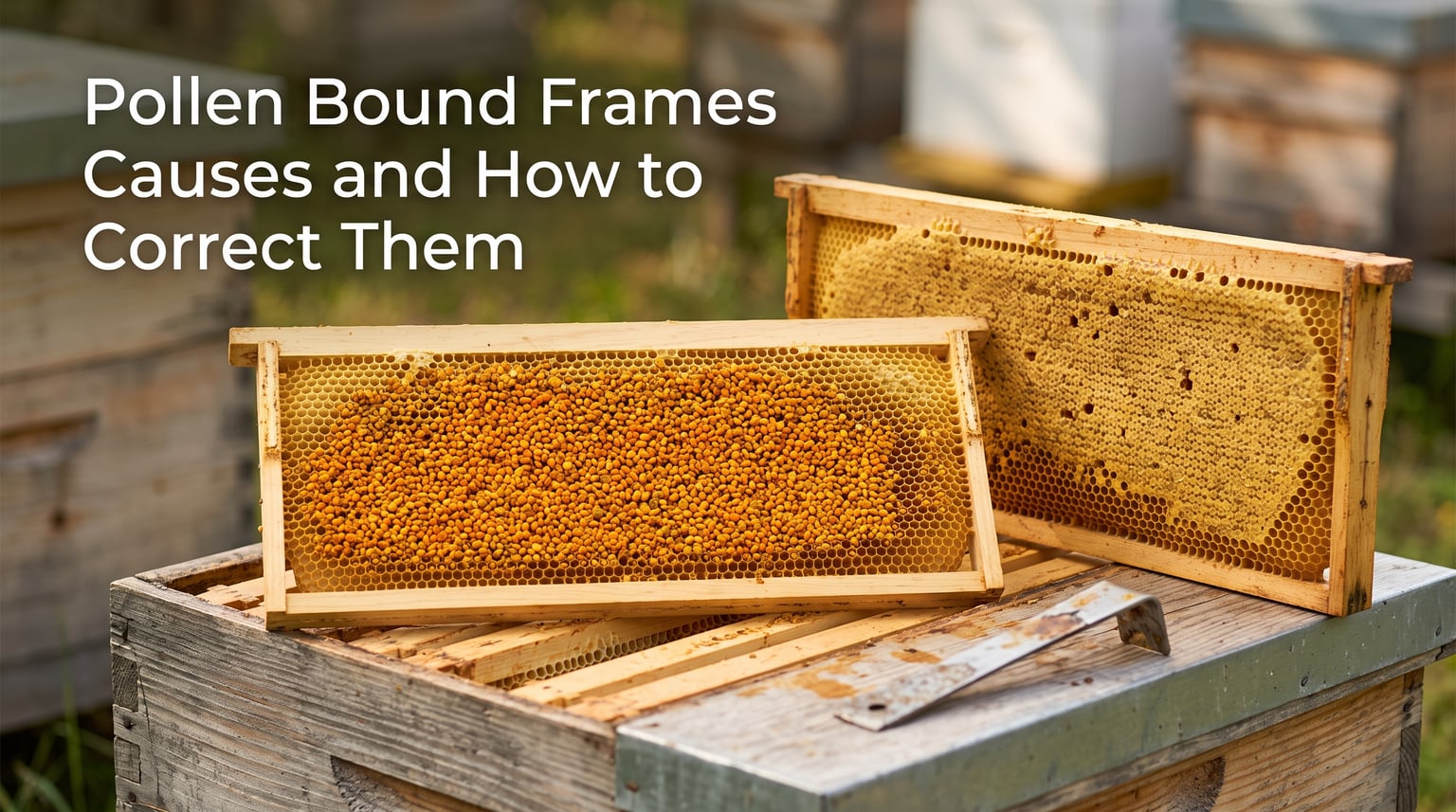
Opening a hive and finding every frame stuffed tight with pollen is a moment of confusion for many beekeepers, especially newer ones. The brood nest looks full, the colony seems strong, but the queen has nowhere to lay eggs. This is what beekeepers call pollen bound frames, and if left uncorrected, the colony population can crash within weeks.
In this guide, we cover what pollen bound frames are, the main causes behind them, how they differ from honey-bound hives, and the exact step-by-step methods to correct the problem. Whether you are dealing with a heavy fall pollen flow or inherited frames packed with old stores, you will find practical, field-tested solutions here.
Table of Contents
What Is a Pollen-Bound Frame?
A pollen-bound frame is a frame in the brood nest where bees have packed so much pollen into the comb that little or no space remains for the queen to lay eggs. The bees fill worker cells with pollen instead of leaving them open for brood, which directly restricts colony growth.
This differs from normal pollen storage. Every healthy hive keeps some pollen near the brood to feed developing larvae. The trouble starts when pollen storage overflows into the core laying area, pushing the queen out of usable cells week after week.
The condition is less common than being honey-bound, but it does occur in regions with exceptionally heavy or prolonged pollen flows. Beekeepers on forums report opening hives to find 60 to 90 percent of brood frames choked with old pollen.
Signs Your Hive Is Pollen Bound
Telling the difference between a well-provisioned hive and a pollen-bound one comes down to where the pollen sits and how much laying space is left. Here are the clearest signs to watch for during inspection.
Pollen packed wall to wall across multiple brood frames, leaving few or no open cells for eggs.
The queen is present and healthy but the brood pattern is small, patchy, or shrinking week over week.
Capped brood areas are surrounded by solid bands of pollen rather than the usual ring of nectar or honey.
The brood nest fails to expand even during a nectar flow or after adding drawn comb.
Frames feel noticeably heavy for their position in the brood box, similar to honey frames.
Excessive burr comb or brace comb appears between frames as bees work around the congestion.
If you notice two or more of these signs, the hive is likely pollen bound and needs intervention.
Pollen-Bound vs Honey-Bound: What Is the Difference?
Both conditions crowd the queen out of laying space, but the culprit is different. A honey-bound hive has nectar and capped honey filling the brood cells, usually during a strong nectar flow when supers are full or absent. A pollen-bound hive has pollen filling those same cells, typically during a heavy pollen flow that outpaces brood consumption.
The fixes differ too. Relieving a honey-bound hive involves adding supers, extracting honey, or moving honey frames up and out of the brood box. Correcting pollen-bound frames requires removing or redistributing pollen-heavy frames and replacing them with empty drawn comb so the queen can resume laying.
A hive can technically suffer from both at once if nectar and pollen flows overlap. In that case, address whichever resource is taking up the most brood-cell space first.
What Causes Pollen Bound Frames
Pollen bound frames happen when pollen collection outpaces pollen consumption. Several overlapping factors push a colony into this state.
1. Heavy or extended pollen flows. Some regions experience intense spring or fall pollen events from dominant blooming species. The bees gather far more than the brood can use, and the surplus lands in the brood nest.
2. Shrinking brood nest in fall. As the queen reduces laying in late season, the brood area contracts. Bees keep collecting pollen into the newly empty cells, packing them solid just as winter approaches.
3. Too few empty drawn frames. If the brood box lacks blank comb, bees have nowhere to put surplus pollen except in the cells the queen needs. New packages and small colonies on foundation are especially vulnerable.
4. Colony population imbalance. A colony with plenty of foragers but a small amount of brood consumes less pollen than the foragers bring in. The gap shows up as packed pollen frames.
5. Regional pollen richness. Areas with diverse, abundant pollen sources through long seasons see pollen-bound hives more often than regions with short, moderate flows.
How to Correct Pollen-Bound Frames
The fix for pollen bound frames is straightforward: remove the excess pollen from the brood nest and give the queen fresh comb to lay in. Here is the step-by-step process our team and experienced beekeepers rely on.
Step 1: Inspect and identify the worst frames. Pull each brood frame and look for solid pollen packing that blocks laying space. Flag the frames that are more than half filled with pollen.
Step 2: Remove the heaviest pollen frames. Take out one to three of the most pollen-packed frames. Move them to the edge of the brood box, up into a super, or set them aside entirely. Do not remove too many at once or you may throw the colony into stress.
Step 3: Replace with empty drawn comb. Slide frames of empty drawn comb into the gap you created. Drawn comb is better than foundation here because the queen can lay immediately without waiting for bees to draw wax.
Step 4: Position the replacement frames in the brood core. Place the empty comb right next to existing brood so the queen finds it quickly. Bees placed in the middle of the brood nest will often clear out and reuse stored pollen from moved frames.
Step 5: Let bees rob out removed frames. Place pollen-heavy frames outside the hive entrance or in a spare box a short distance away. Worker bees will rob the pollen out and carry it back, recovering the resource instead of wasting it.
Step 6: Recheck in seven to ten days. Return to confirm the queen is laying in the new comb and that pollen packing has not returned. Repeat the swap if needed.
If bees are also building comb between frames, or burr comb, scrape it off during this inspection and keep proper bee space between frames to discourage rebuilding.
What to Do With Old Pollen Frames
Old pollen frames are a common headache. Beekeepers on forums frequently ask whether to scrape them, save them, or toss them. The good news is that most pollen frames can be reused rather than destroyed.
Give them to nucs or weak colonies. A growing nuc will consume stored pollen quickly, turning a problem frame into a valuable resource for buildup.
Let bees rob them clean. Set frames outside the hive and let workers transfer the pollen back to where it is needed.
Save them for spring. Store pollen frames in a cool, dry, mouse-proof location and return them to colonies in early spring when pollen is scarce. Many beekeepers report this gives packages a strong head start.
Scrape and reset moldy frames. If pollen has gone moldy, scrape the comb down to the foundation and let bees rebuild. Badly degraded frames should be retired entirely.
Soaking frames to soften old pollen is another method beekeepers report success with. A warm water soak followed by gentle brushing can free up comb for reuse without destroying the wax.
Prevention Strategies for Pollen-Bound Hives
Preventing pollen bound frames is easier than correcting them. The goal is to keep the brood nest open and make sure the queen always has fresh cells available for laying.
1. Maintain plenty of empty drawn comb in the brood box. Add drawn frames as the colony expands so foragers have storage space outside the core laying area.
2. Monitor during heavy pollen flows. Inspect weekly during spring and fall flows and rotate pollen-heavy frames out before they crowd the queen.
3. Manage the brood-to-storage ratio. If the brood nest is shrinking but pollen collection continues, add space or remove surplus frames promptly.
4. Use the 3 3 3 rule for management rhythm. Many beekeepers follow a simple check: inspect on a steady schedule, keep about 3 frames of open brood in the core, and maintain at least 3 frames of empty drawn comb available for the queen. This keeps laying space open and gives you an early warning if pollen starts crowding in.
5. Plan around regional flows. Know your local pollen calendar. In areas with dominant fall flows, preemptively open the brood nest before pollen overwhelms it.
Consistent inspections are the single best prevention tool. The earlier you catch pollen packing into brood cells, the easier it is to fix with a quick frame swap.
FAQs
What to do with pollen-bound frames?
Remove the heaviest pollen frames from the brood nest and replace them with empty drawn comb so the queen can resume laying. Move the pollen frames to the edge of the box, up to a super, or place them outside the hive so bees rob out the pollen and carry it back. You can also save pollen frames for spring use or give them to nucs.
How do I fix a honey-bound hive?
To fix a honey-bound hive, add supers or extract honey to relieve pressure on the brood nest. Move honey-filled frames up and out of the brood box, then replace them with empty drawn comb in the core so the queen has room to lay. This differs from pollen-bound correction, where pollen frames rather than honey frames are removed.
What is the 3 3 3 rule for bees?
The 3 3 3 rule is a simple management guideline some beekeepers use to keep colonies balanced: inspect on a steady schedule, maintain about 3 frames of open brood in the core, and keep at least 3 frames of empty drawn comb available for the queen. It helps prevent both pollen-bound and honey-bound conditions by ensuring the queen always has laying space.
Can bees have too much pollen?
Yes, bees can collect more pollen than the colony needs. When pollen overflows into brood cells and the queen runs out of space to lay eggs, the hive becomes pollen bound. A healthy colony always stores some pollen near the brood, but excessive packing that restricts laying is a problem that needs correction.
Conclusion
Pollen bound frames can quietly stall a colony by squeezing the queen out of laying space, but the fix is simple once you spot it. Remove the packed frames, swap in empty drawn comb, and let bees recover the surplus pollen through robbing or by handing frames off to nucs.
Regular inspections during heavy pollen flows, combined with keeping plenty of empty comb on hand, will prevent the problem from returning. Apply the steps above at your next hive check, and your colonies will have the room they need to keep building strong populations all season.