
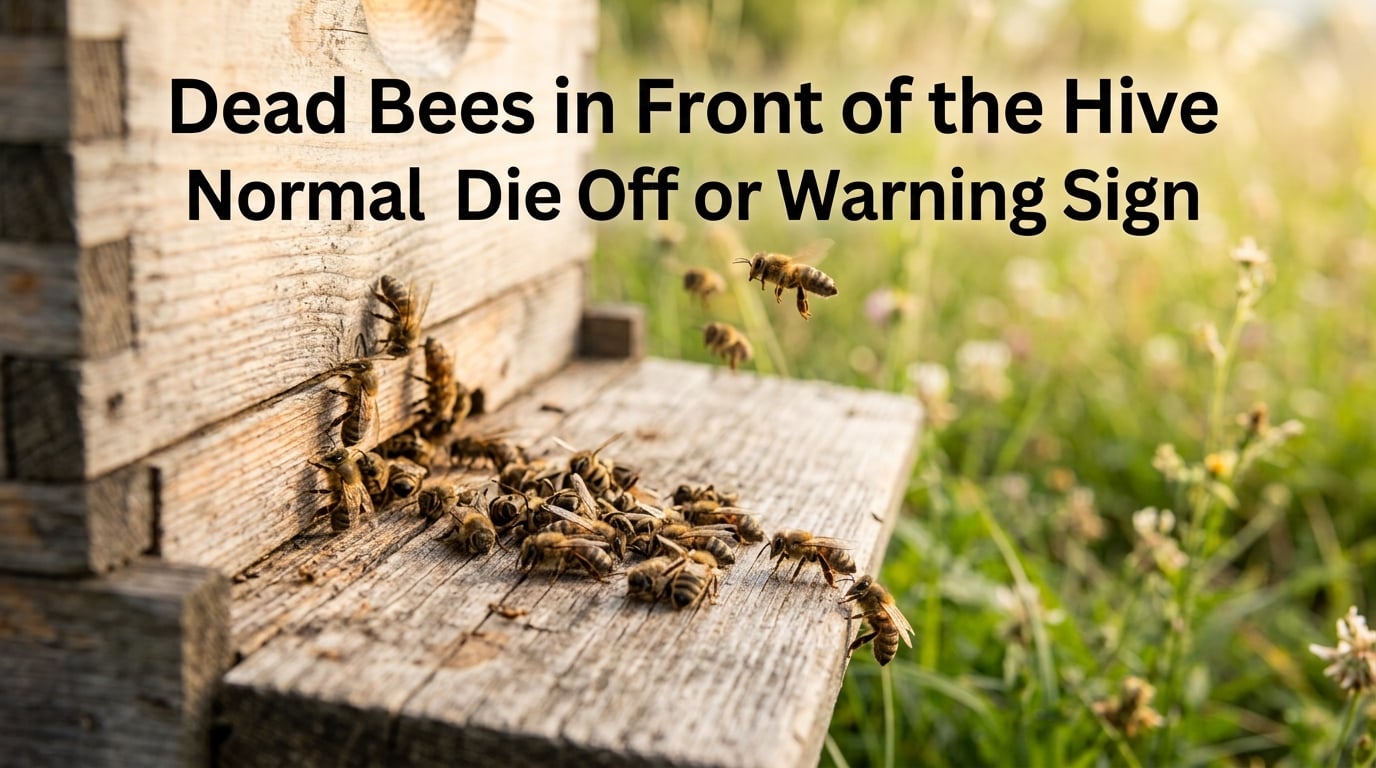
Seeing dead bees in front of the hive can stop a beekeeper in their tracks. Most of the time, a small pile of dead bees is a perfectly normal sign that your colony is doing its job.
The honest answer is this: a few dead bees each day is healthy behavior. Anything that looks like a sudden spike, hundreds of bodies, or dead pupae is your signal to investigate. In this guide, I’ll walk you through how to tell the difference, what causes each pattern, and exactly what to do when you’re not sure.
Table of Contents
Dead Bees in Front of the Hive: What Normal Die-Off Actually Looks Like
Yes, finding dead bees in front of the hive is normal. A healthy colony of roughly 50,000 bees loses somewhere between 1,000 and 2,000 bees every single day during peak season.
Most of those workers die while out foraging and never return to the hive at all. The ones you actually see piled at the entrance are the bees that died close to home, or the bodies that undertaker bees carried out and dumped just outside the door.
The Role of Undertaker Bees
Honeybees are obsessive about hygiene. Within hours of a bee dying inside the colony, undertaker bees grab the body and fly it away from the hive. This behavior keeps disease, mold, and parasites from spreading through the wax and brood.
When you see a small scatter of dead bees just outside the entrance on a warm afternoon, that’s almost always the result of undertaker bees at work. Our team has seen hives drop a dozen bodies in a single hour right after a cleansing flight, and the colony was completely healthy the next morning.
Cleansing Flights and Winter Accumulation
In winter, bees hold their waste inside the hive for weeks until a warm day triggers a cleansing flight. During that flight, the cold-stunned bees that can’t make it back to the cluster often drop just outside the entrance.
Long-time beekeepers in our network say a layer of dead bees in front of the hive in winter is actually a good sign. It means the colony is alive, warm enough to break cluster, and grooming the dead out the door.
When Dead Bees Signal a Warning Sign You Shouldn’t Ignore
A warning sign is anything that breaks the normal pattern. A pile of a dozen or two on a quiet day is fine. A pile of two hundred, or dead bees in the snow in single-digit weather, means trouble.
Whether you are checking your hive in 2026 or a future season, the rule I follow is this: if the number of dead bees looks like more than a handful per day in summer, or more than a cup in winter, it’s time to open the hive and look inside.
Sudden Spikes in Numbers
A sudden spike in dead bees is the single biggest warning sign. It often happens overnight, sometimes after a pesticide spray in the neighborhood. You’ll see fresh-bodied dead bees, sometimes with their tongues out, piled at the entrance.
Field bees die away from the hive. So if you see a sudden pile at the door, those bees were close enough to make it home before they died. That’s almost always a sign of poisoning, starvation, or a nosema flare-up.
Dead Pupae or Larvae
Dead pupae or larvae in front of the hive is a separate warning sign. Mature bees don’t usually die and get carried out as obvious pupae. If you see white, curled, or partially-formed young bees on the landing board, suspect American foulbrood, European foulbrood, or chilled brood.
Take a photo and send it to your local beekeeping association. These brood diseases move fast and can wipe out a whole apiary if you don’t act.
Discolored or Deformed Bodies
Adult bees that come out shriveled, hairless, or with deformed wings are usually a sign of varroa mites or chronic bee paralysis virus. A few here and there is normal. Twenty or more in a single inspection means the mite load is too high.
The Four Main Causes of Excessive Dead Bees in Front of the Hive
Once you know the colony is in trouble, the next step is figuring out which one of four causes is to blame. Each one has a clear symptom pattern, and each one has a different fix.
1. Starvation and Empty Honey Stores
Starving hives lose hundreds of bees quickly, especially in winter. The cluster shrinks as the cold moves inward, and bees at the edge of the cluster die from cold and lack of food at the same time. You’ll find heads buried in empty comb and many dead bees on the bottom board.
The fix is immediate sugar feeding: a 1:1 sugar syrup in spring and summer, or a sugar cake or fondant in winter. A starving colony can collapse in 48 hours, so don’t wait.
2. Varroa Mite Infestations
Varroa destructor is the most common reason bees die in front of the hive during late summer and fall. The mites feed on bee fat bodies, spread viruses, and weaken the bees until they can’t fly. The result is bees crawling out of the entrance, dragging deformed wings, and dying in the grass.
Test your mite load with an alcohol wash or sugar roll every 4 to 6 weeks. If you find more than 3 mites per 100 bees in late summer, treat immediately. Options include oxalic acid, formic acid, and thymol-based treatments.
3. Pesticide Poisoning
Pesticide poisoning causes sudden, mass deaths with bees at the entrance. You’ll see fresh-looking bodies, often with their tongues fully extended. Sometimes there are other pollinators in the same pile.
If you suspect poisoning, call your local agricultural extension office. They can test the dead bees and trace the source. In the meantime, move the hive away from the sprayed area or cover it with a wet sheet during the next spray window.
4. Cold Weather and Chilled Brood
Chilled brood happens when the cluster can’t keep the brood nest warm enough. This is most common in early spring when the brood area expands faster than the bee population can heat it. The brood dies in the cells and gets pulled out as curled, white, or grey bodies.
The fix is to insulate the hive, reduce the entrance, and make sure the colony has enough adult bees to cover the brood. A healthy spring cluster is roughly the size of a grapefruit; anything smaller needs supplemental heat or a frame swap with a stronger hive.
Seasonal Patterns: What to Expect Throughout the Year
Dead bees in front of the hive follow a seasonal rhythm. Knowing what to expect each month saves you from reacting to a normal pattern as if it were a crisis.
Winter (December-February)
Winter is when dead bees pile up the most. The cluster is small, the undertaker bees can’t fly far, and bodies often drop just outside the entrance. A thin layer of dead bees in the snow is normal. A thick mat of bodies is a starvation warning.
Spring (March-May)
Spring is the great cleanup. The colony drops the winter dead, drags out debris, and replaces up to 30% of the population each month. You’ll see more dead bees in early spring than at any other time of year, and this is healthy renewal.
Summer (June-August)
Summer mortality is the lowest of the year. Foragers die in the field, not at the entrance. If you see large numbers of dead bees in summer, treat it as a warning sign and inspect immediately.
Fall (September-November)
Fall is the second-most common time to see piling at the entrance. Varroa populations peak, food sources drop, and the colony starts trimming its population for winter. Treat for mites in late summer so winter bees are healthy enough to live until spring.
How to Inspect a Hive When You’re Concerned
When the dead bee pattern breaks the norm, a calm inspection tells you everything you need to know. The goal is to identify the cause in under 15 minutes without opening more than you need.
Step 1: Check the Bottom Board
Pull the bottom board or screened tray. Count the bodies, look at their color, and check for deformed wings or tongues sticking out. This single step tells you 80% of what you need to know.
Step 2: Look at the Brood Pattern
Pull one or two frames from the brood box. Healthy brood is solid, white, and tightly packed. Spotty brood, dead larvae, or perforated cappings are signs of disease or mite damage.
Step 3: Weigh the Hive
Lift the back of the hive with one hand. A light hive in late winter is starving. Heft it every two weeks from October through March.
Step 4: Perform a Deadout Inspection
If the cluster is silent, perform a deadout inspection. Look for the last cluster location, check for honey stores nearby, and see if bees died with heads in cells (starvation) or scattered on the floor (poisoning or disease). This tells you exactly what killed them and helps you protect the next colony.
Quick Reference: Is This Normal or a Warning Sign?
Here’s the quick checklist I keep taped inside my bee truck. Use it the next time you walk past your hive and feel that spike of worry.
Normal: A few dead bees per day in summer, a thin layer at the entrance in winter, occasional dead foragers on the landing board, and visible undertaker bee activity.
Warning sign: Hundreds of dead bees in one day, dead pupae or larvae, fresh bodies with tongues out, deformed wings, or a sudden silence from the hive.
Frequently Asked Questions
Is it normal to see dead bees in front of a hive?
Yes, a small number of dead bees in front of the hive is normal, especially in winter. A healthy colony loses 1,000 to 2,000 bees per day during peak season, and undertaker bees carry the bodies out the entrance. Anything that looks like a sudden spike or hundreds of bodies is a warning sign.
What does it mean if a bee dies in front of you?
A bee dying in front of you usually means she was already weak or close to the end of her natural lifespan. Foragers work themselves to death in 4 to 6 weeks. If many bees are dying in front of you at once, it points to poisoning, starvation, or disease.
Why have my bees start dying and falling out the front of my hive?
The four most common reasons are starvation, varroa mite infestation, pesticide exposure, and cold weather. Each one has a different pattern: starvation shows heads buried in empty comb, varroa shows deformed wings, pesticides show sudden mass death with tongues out, and cold weather shows chilled brood that gets pulled out of the hive.
Do bees send out a signal when they die?
Not a specific death signal, but dying bees release an alarm pheromone that prompts other workers to investigate. This is why you sometimes see a small group of bees hovering around a dead hive mate. Their main signal is hygienic behavior: undertaker bees detect lifeless bodies within hours and remove them to keep the colony healthy.
Final Thoughts on Dead Bees in Front of the Hive
Dead bees in front of the hive are usually a sign of a healthy colony doing its job. The trick is learning the difference between normal die-off and the warning signs your colony gives you when it’s in trouble.
Check the entrance every visit, keep an eye on the count, and don’t wait to investigate a sudden spike. With these habits, you’ll catch starvation, varroa, pesticides, or cold damage early enough to save the colony. And if you ever aren’t sure, your local beekeeping association is one of the best resources you can call on.